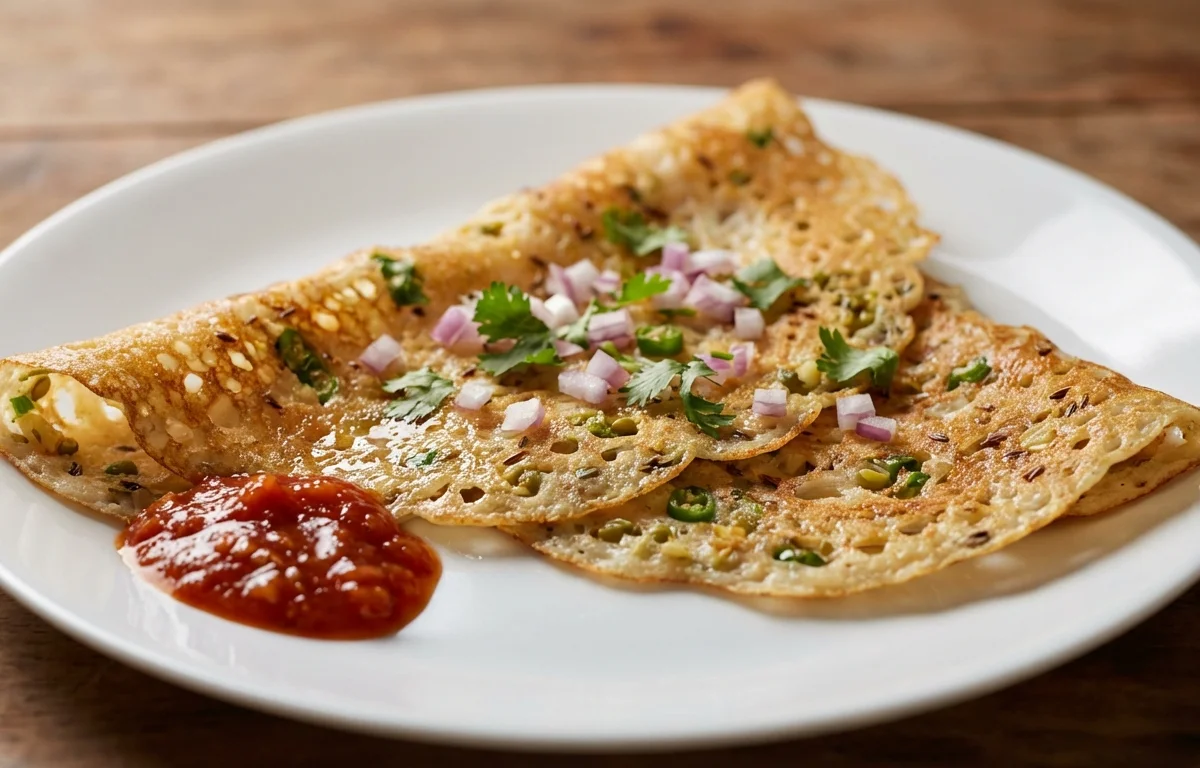
Moong Dal Dosa
Thin, savory crepes made with soaked moong dal, ginger, and green chili, cooked until lightly crisp at the edges. This easy Indian breakfast is filling, protein-rich, and tastes great with chutney.
For 8 servings
- prep · ~240 min
Soak the moong dal.
Rinse the moong dal well and soak it in enough water for 4 hours. Drain completely before grinding.
TIPA well-soaked dal grinds smoother and helps the dosa spread easily. - mix · ~7 min
Grind the batter.
1.Add soaked moong dal, ginger, green chili, cumin seeds, and water to a blender.2.Grind to a smooth, pourable batter, adding only enough water needed to keep it moving.3.Transfer the batter to a bowl.4.Add rice flour, salt, and cilantro, then mix well.TIPKeep the batter slightly thick like regular dosa batter; a very thin batter will not hold shape well. - rest · ~10 min
Rest the batter.
Let the batter sit for 10 minutes so the rice flour hydrates and the bubbles settle.
- fry · ~4 min
Cook the dosas.
1.Heat a tawa or flat pan over medium heat and lightly grease it with oil.2.Pour a ladle of batter onto the center and spread it in a thin circle.3.Drizzle a little oil around the edges and cook until the bottom turns golden and the edges lift easily.4.Flip and cook the second side briefly, then remove.TIPIf the pan is too hot, the batter will stick and won't spread. Lower the heat for a few seconds before pouring the next dosa. - serve
Serve the moong dal dosa hot.
What to keep in mind.
7 tips from the recipe — small details that make a real difference to the final dish.
- 1Drain the soaked moong dal very well before grinding, or the batter turns watery and spreads unevenly.
- 2Aim for a smooth, pourable batter that coats the back of a spoon; too thick gives patchy dosas, too thin makes them tear.
- 3Let the tawa come to medium heat, then lower briefly before spreading each dosa so it forms a thin circle instead of setting instantly.
- 4After pouring, spread from the center outward with a light hand; pressing hard can create holes in this lentil batter.
- 5Cook until the edges lift on their own and the underside is golden before flipping; the second side needs only a brief cook.
- 6Stir the batter before each dosa because rice flour and ground dal can settle at the bottom as it rests.
- 7For make-ahead use, refrigerate the batter up to a day and add a splash of water if it thickens before cooking.
Adapt it for your goals.
Low-oil
Use a well-seasoned nonstick or cast-iron tawa and brush on just a few drops of oil for a lighter breakfast.
spicierSpicier
Add an extra green chili or a pinch of black pepper to the batter for a sharper, more assertive heat.
stuffedStuffed
Fill the cooked dosa with a simple potato masala or paneer bhurji to make it more filling, like a hearty brunch.
jainJain
Skip the ginger and green chili if needed, and use cumin and cilantro for a milder but still savory dosa.
Why this is on our healthy list.
Rich in Plant Protein
Moong dal makes this dosa filling and satisfying, helping turn a simple breakfast into a more balanced meal.
Good Source of Fiber
Lentils contribute fiber, which supports fullness and pairs well with this lightly spiced, savory batter.
Digestive Spice Support
Ginger and cumin are classic additions that add flavor while making lentil-based dishes feel lighter and more digestible.
Frequently asked questions
The pan is often too hot, not seasoned enough, or the batter is too thin. Keep the tawa at medium heat, grease lightly, and adjust the batter so it is pourable but not watery.