Mutton Bhaji
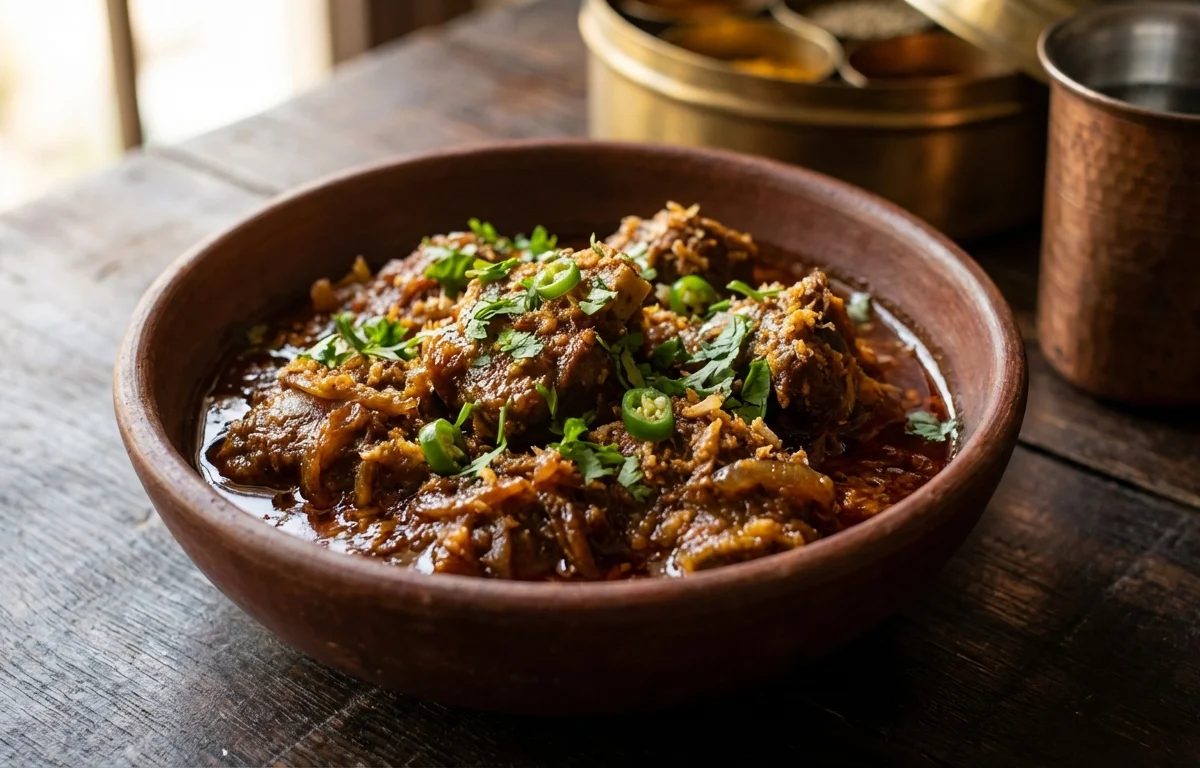
A homestyle mutton bhaji with tender pieces of meat cooked down with onions, tomatoes, and everyday spices until the masala turns rich and clingy. It is deeply savory, lightly spicy, and made to pair with roti, pav, or steamed rice.
For 4 servings
- prep · ~10 min
Prep the mutton and masala ingredients.
1.Wash the mutton pieces and drain well.2.Finely chop the onions and tomatoes.3.Slit the green chilies and chop the coriander leaves.TIPDrain the mutton well so it sears better and the masala does not turn watery. - saute · ~12 min
Cook the onion base.
1.Heat oil in a pressure cooker over medium heat.2.Add cumin seeds and let them sizzle for a few seconds.3.Add onions and cook until deep golden, stirring often.4.Add green chilies and ginger-garlic paste, then cook until the raw smell goes away.TIPTake your time with the onions; this gives the bhaji its deep flavor. - saute · ~8 min
Build the masala.
1.Add tomatoes and cook until soft.2.Add turmeric powder, red chili powder, coriander powder, and salt.3.Cook the masala until it thickens and the oil starts to show at the edges. - pressure cook · ~25 min
Pressure cook the mutton.
1.Add the mutton pieces and mix well to coat them in the masala.2.Cook for 4 to 5 minutes, stirring to lightly brown the meat.3.Pour in water and scrape the bottom well.4.Cover and pressure cook until the mutton is tender.TIPBone-in mutton can vary in cooking time; cook until it is tender, not chewy. - simmer · ~10 min
Dry the bhaji to a clingy finish.
1.Let the pressure release naturally and open the cooker.2.Simmer uncovered on medium heat until the gravy reduces and coats the mutton.3.Sprinkle garam masala and mix well.TIPFor bhaji, keep it semi-dry rather than fully saucy. - garnish
Finish with lemon juice and coriander leaves.
- serve
Serve the mutton bhaji hot.
What to keep in mind.
7 tips from the recipe — small details that make a real difference to the final dish.
- 1Brown the onions to a deep golden stage, not just soft, or the bhaji will taste flat.
- 2After adding mutton, sauté it for a few minutes so the pieces pick up the masala before pressure cooking.
- 3Scrape the cooker bottom well after adding water to prevent stuck masala from catching during pressure cooking.
- 4If the mutton is still chewy after opening the cooker, add a splash of water and cook a little longer before reducing.
- 5Reduce uncovered only after the meat is tender; otherwise the masala can dry out before the mutton softens.
- 6Add lemon juice after switching off the heat so the finish stays bright and doesn't turn bitter.
- 7This bhaji tastes even better after resting 15 to 20 minutes, as the masala clings more tightly to the meat.
Adapt it for your goals.
Spicier
Add 1 to 2 extra green chilies or a little more red chili powder for a hotter, sharper bhaji that pairs well with pav.
low oilLow-oil
Use slightly less oil and cook the onions slower with frequent stirring; good if you want a lighter everyday version.
potato addedPotato-added
Add cubed potatoes with the mutton for a heartier bhaji; the potatoes soak up the masala beautifully.
kheema styleKheema-style
Make the same masala with minced mutton instead of bone-in pieces for a faster-cooking version that is great with pav.
Why this is on our healthy list.
Rich in Protein
Mutton provides substantial protein, making this bhaji filling and helpful for a satisfying main meal.
Mineral-Rich Meat
Goat meat naturally supplies important minerals such as iron and zinc, which are commonly associated with red meat dishes.
Built on Aromatics
Onions, tomatoes, ginger, garlic, chilies, and coriander add flavor and plant compounds without needing heavy cream or butter.
Frequently asked questions
The pieces should be fully tender and easy to pull from the bone with a spoon or fork, not chewy or tight.