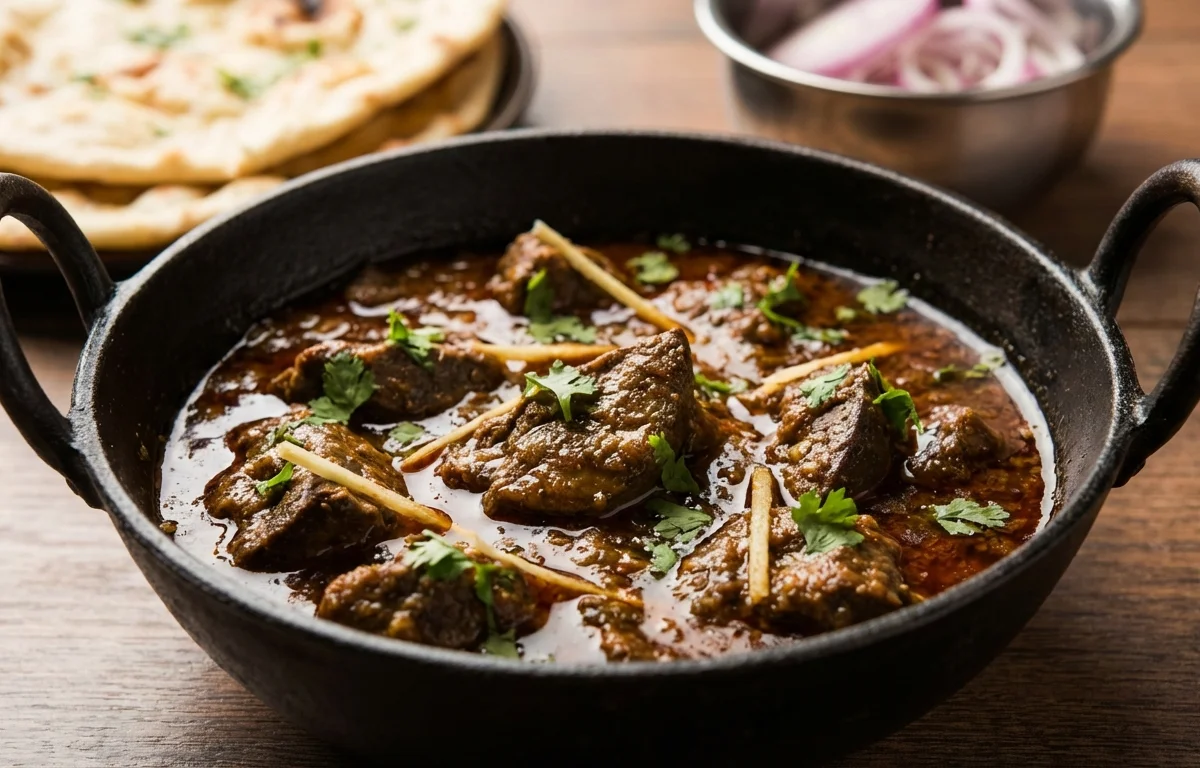
Mutton Kaleji Masala
Tender mutton liver cooked with bold spices and caramelized onions in a thick, rustic masala. This robust North Indian dish packs a rich, iron-heavy flavor balanced by yogurt and warming garam masala. Perfect with hot rotis or naan.
For 4 servings
- prep · ~15 min
Marinate the liver.
1.Place cleaned liver pieces in a bowl.2.Add whisked yogurt, 1 pinch turmeric, 1 pinch salt, and half the ginger-garlic paste.3.Mix well, cover, and set aside for 15 minutes.TIPDon't marinate liver longer than 20 minutes — the yogurt can make it too soft and mushy. - temper · ~1 min
Bloom the whole spices.
1.Heat oil in a heavy-bottomed pan over medium heat.2.Add cumin seeds, bay leaves, black cardamom, green cardamoms, cloves, and cinnamon stick.3.Sauté for 30-40 seconds until aromatic and the cumin crackles. - saute · ~11 min
Caramelize the onions.
1.Add sliced onions to the pan and a pinch of salt.2.Cook on medium heat, stirring occasionally, until deep golden brown (8-10 minutes).3.Add the remaining ginger-garlic paste and slit green chilies.4.Sauté for 1 minute until the raw aroma disappears.TIPTake your time browning the onions — this builds the deep, savory base of the masala. - saute · ~7 min
Cook the masala base.
1.Add chopped tomatoes to the pan.2.Cook until they turn soft and the oil begins to separate (4-5 minutes).3.Stir in the red chili powder, coriander powder, and remaining turmeric.4.Sauté for another 1-2 minutes until the spices are fragrant. - saute · ~3 min
Sear the liver.
1.Add the marinated liver pieces to the pan, reserving any leftover marinade.2.Sear on high heat for 2-3 minutes, turning the pieces until they are lightly browned on all sides.3.Add any leftover marinade and 0.25 cup water. Stir well.TIPHigh heat searing locks in the juices. Don't overcrowd the pan — liver releases water quickly. - simmer · ~8 min
Simmer until just cooked.
1.Reduce the heat to low and cover the pan.2.Simmer for 6-8 minutes, stirring once halfway. The liver should be just cooked through.3.Check seasoning and adjust salt if needed.TIPOvercooking makes liver rubbery and grainy. It's done when it is still slightly pink inside — carryover heat will finish it. - mix · ~1 min
Finish with garam masala, ghee, and lemon juice.
1.Turn off the heat.2.Sprinkle garam masala over the dish.3.Drizzle with ghee and lemon juice. Gently fold to combine. - garnish
Garnish with fresh coriander and serve hot.
Sprinkle chopped coriander leaves on top. Serve immediately with hot rotis, naan, or parathas.
What to keep in mind.
7 tips from the recipe — small details that make a real difference to the final dish.
- 1Clean the mutton liver thoroughly by removing any white membrane or veins before cutting — this ensures a tender texture.
- 2Marinate for exactly 15 minutes; longer than 20 minutes makes the liver mushy due to the yogurt's enzymes.
- 3Caramelize the onions until deep golden brown (8-10 minutes) — this builds the rich, sweet-savory base of the masala.
- 4Sear the marinated liver on high heat for 2-3 minutes to lock in juices; do not overcrowd the pan.
- 5Simmer the liver for only 6-8 minutes — it's done when still slightly pink inside; carryover heat finishes the cooking.
- 6Finish off the heat with garam masala, ghee, and lemon juice for a final burst of aroma and brightness.
- 7Leftovers keep refrigerated for up to 2 days; reheat gently in a pan to avoid toughening the liver.
Adapt it for your goals.
Keto-Friendly
Skip the yogurt and marinate the liver with lemon juice, salt, and turmeric instead. Replace water with a splash of bone broth and use ghee instead of oil — ideal for low-carb diets.
Less SpicyLess Spicy
Reduce red chili powder to 1/2 tsp and omit slit green chilies. Add 1/4 cup of cream or coconut milk during simmering for a milder, creamier gravy.
PaleoPaleo
Use coconut yogurt instead of dairy yogurt and omit the garam masala (replace with extra coriander powder). This keeps it paleo-friendly while maintaining the dish's essence.
Why this is on our healthy list.
Rich in Iron
Mutton liver is an excellent source of heme iron, which is highly absorbable and supports healthy red blood cell production and energy levels.
High in Vitamin A
Liver is one of the best food sources of preformed vitamin A, essential for vision, immune function, and skin health.
Good Source of Protein
Mutton liver provides high-quality complete protein that aids muscle repair and satiety, making this dish a nutrient-dense meal option.
Contains B Vitamins
The liver is loaded with vitamin B12, riboflavin, and folate, which support nerve function, energy metabolism, and cellular health.
Frequently asked questions
Yes, chicken liver can be used, but reduce cooking time to 4-5 minutes as it cooks faster and can become dry and grainy if overcooked.

.webp)