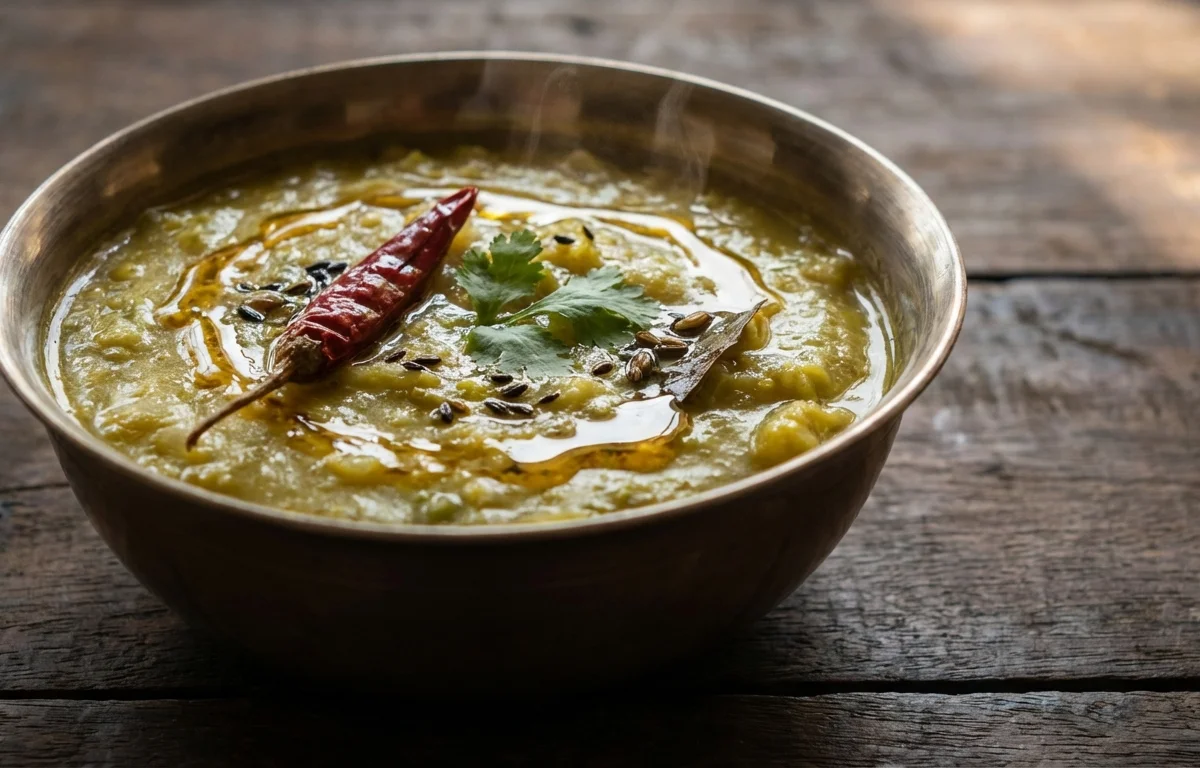
Omita aru Kaskol Khar
A light Assamese khar made with green papaya and raw banana, gently cooked with khar water, ginger, and a few whole spices. It has a clean, earthy taste and is usually served at the start of a traditional meal with rice.
For 4 servings
- prep · ~10 min
Prepare the papaya and raw banana.
1.Peel the green papaya and cut it into medium cubes.2.Peel the raw bananas and cut them into medium rounds.3.Rinse both vegetables well and keep them ready. - saute · ~2 min
Heat the oil and cook the aromatics.
1.Heat mustard oil in a pan over medium heat until it loosens up.2.Add the bay leaf, crushed black peppercorns, and crushed ginger.3.Cook for 30 to 40 seconds until fragrant.TIPKeep the heat moderate so the ginger and pepper do not scorch. - boil · ~15 min
Cook the vegetables until almost tender.
1.Add the green papaya and raw banana to the pan and mix well.2.Pour in the water and add the salt.3.Bring to a boil, then cook uncovered until the vegetables are almost tender. - simmer · ~7 min
Add the khar and finish the dish.
Lower the heat and stir in the khar. Simmer gently for 6 to 8 minutes until the vegetables are fully cooked and the liquid reduces lightly. The dish should stay light and not turn into a thick gravy.
TIPAdd the khar only after the vegetables have softened a bit, or they can stay too firm. - serve
Serve hot with plain rice.
What to keep in mind.
7 tips from the recipe — small details that make a real difference to the final dish.
- 1Add the khar only after the papaya and banana are nearly tender; early addition can keep them stubbornly firm.
- 2Keep the cubes and rounds medium-sized so both vegetables finish cooking at about the same time.
- 3Do not brown the ginger or peppercorns; this dish should taste gentle and clean, not roasted or bitter.
- 4Simmer uncovered at the end so the liquid reduces slightly while still staying brothy, not gravy-like.
- 5If using strong homemade khar, start with a little less and adjust; the alkaline taste should be subtle, not harsh.
- 6Serve it hot as the first course with plain rice, when its light earthy flavour comes through best.
- 7Leftovers can be refrigerated for a day, but reheat very gently so the banana pieces do not break down.
Adapt it for your goals.
Low-oil
Use less mustard oil and a smaller tempering; the dish stays light while keeping its characteristic khar broth.
more pepperyMore-peppery
Increase the crushed black pepper slightly for a warmer finish that still suits the restrained flavour of this khar.
mixed vegetable kharMixed-vegetable khar
Add a few cubes of bottle gourd or ash gourd along with the papaya for a softer, more delicate vegetable mix.
no bananaNo-banana
Make it with only green papaya if you want a lighter texture and less starch in the broth.
Why this is on our healthy list.
Fiber-Rich Vegetables
Green papaya and raw banana add filling fiber, which makes this light rice-side dish more satisfying.
Gentle, Light Preparation
With minimal oil and no heavy masala, this khar is a clean, simple preparation suited to a light meal.
Digestive Spice Support
Ginger and black pepper bring warmth and traditional digestive appeal while keeping the flavour subtle.
Frequently asked questions
Khar is a traditional Assamese alkaline water made from strained banana peel ash. It gives the dish its distinctive earthy, clean finish.