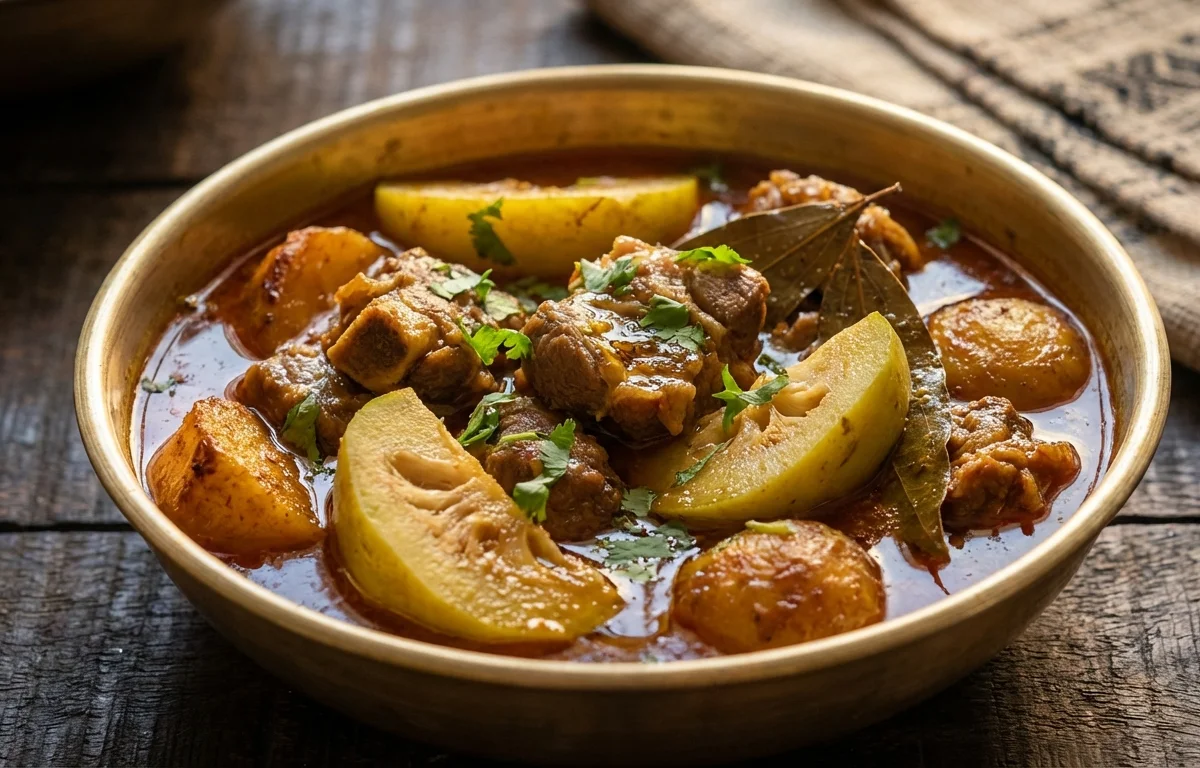
Ou Tenga Mutton Curry
A tangy, slow-cooked Assamese mutton curry where succulent goat meat meets the distinctive sourness of elephant apple. Whole spices, fresh ginger and garlic build deep layers of flavor that mingle with the earthy heat of black pepper and green chilies. Best devoured with a steaming bowl of joha rice.
For 4 servings
- prep · ~15 min
Wash and marinate the mutton.
1.Rinse 500 g curry-cut goat meat well under cold running water.2.Drain and rub the pieces with turmeric powder and a pinch of salt.3.Set aside for 15 minutes while prepping other ingredients.TIPGoat meat with bone gives the richest curry. Trim excess fat before washing for a cleaner taste. - prep · ~3 min
Prepare the elephant apple.
1.Wash the ou tenga thoroughly and cut into 6-8 wedges.2.Remove the hard core and seeds.3.Place wedges in a small bowl with 0.5 cup water and set aside so they don't discolour.TIPThe elephant apple oxidises quickly and turns brown. Dunking it in water immediately after cutting preserves its colour. - temper · ~2 min
Heat the oil and crackle the whole spices.
1.Pour 2 tablespoons mustard oil into the pressure cooker and heat until it just begins to smoke lightly.2.Reduce heat to medium. Add 2 bay leaves, 3 crushed cardamom pods, 1 inch cinnamon stick, and 0.5 tsp cumin seeds.3.Sauté until the spices sizzle and release their fragrance, about 30 seconds.TIPLetting mustard oil reach its smoking point removes its raw pungency. Then immediately reduce the heat so the whole spices don't burn. - saute · ~8 min
Brown the onions and ginger-garlic paste.
1.Add the sliced onion to the tempered oil and fry until soft and golden brown, about 5-7 minutes.2.Stir in 2 tablespoons ginger-garlic paste and cook until the raw aroma fades and it turns a shade darker, about 1 minute.3.Add the marinated goat meat to the cooker.TIPScrape the bottom of the cooker often — the ginger-garlic can stick. A splash of water loosens anything that catches. - saute · ~5 min
Sear the meat.
1.Turn the heat up to high and sear the mutton pieces on all sides until they lose their pink colour, about 4-5 minutes.2.Keep stirring so the meat browns evenly and the spices coat every piece.TIPBrowning the meat deeply at this stage adds immense savoury backbone to the curry. Don't rush it. - pressure cook · ~40 min
Pressure cook the mutton with potatoes.
1.Add the cubed potatoes, slit green chilies, black pepper, the remaining salt, and the ou tenga wedges along with their soaking water.2.Pour in 2 cups of water and give everything a good stir.3.Close the pressure cooker lid and cook on high heat until the first whistle.4.Reduce heat to low and cook for 6-7 more whistles, about 25-30 minutes.5.Turn off the heat and let the pressure release naturally.TIPThe elephant apple is the souring agent here — add all the wedges including the soaking water for maximum tang. Taste the gravy after pressure cooking; it should be pleasantly sour and warming. - simmer · ~8 min
Adjust consistency and simmer.
1.Open the lid once the pressure has fully released. Check if the meat is fork-tender.2.If the gravy looks too thin, simmer uncovered on medium heat for 5-8 minutes until it coats the back of a spoon.3.If too thick, add a splash of hot water and simmer for 2 minutes. Check seasoning and adjust salt.TIPA properly cooked elephant apple wedge will be soft but still hold its shape. It should melt into the gravy slightly, thickening it naturally. - garnish
Garnish with fresh coriander and serve.
Scatter chopped coriander leaves over the curry right before serving. Ladle into bowls while piping hot.
TIPOu Tenga Mutton Curry tastes even better the next day. The sourness deepens overnight letting the mutton soak up all the tangy goodness.
What to keep in mind.
7 tips from the recipe — small details that make a real difference to the final dish.
- 1Marinate the mutton for at least 30 minutes to let the turmeric penetrate deeper for better color and flavor.
- 2Always let the mustard oil reach its smoking point to mellow its harsh bite before adding whole spices.
- 3Sear the mutton in batches if necessary — overcrowding the pan steams the meat and prevents proper browning.
- 4Use fresh elephant apple (ou tenga) for the signature sourness; frozen or dried versions need longer cooking to release their tang.
- 5Let the pressure release naturally for 10-15 minutes — quick release can make the mutton tough.
- 6Taste the gravy before simmering; adjust salt and add a pinch of sugar if the sourness is too sharp.
- 7Store leftovers in an airtight container in the fridge for up to 3 days; the curry improves in flavor overnight.
Adapt it for your goals.
Mild version
Reduce green chilies to 1 and skip the black pepper for a family-friendly curry that still retains the signature sourness of elephant apple.
No potatoNo-potato
Omit potatoes for a lighter, low-carb version. Add an extra cup of water and simmer longer to develop a thinner, more intensely sour gravy.
Vegan adaptationVegan adaptation
Substitute mutton with 400g cubed butternut squash or king oyster mushrooms, and use coconut oil instead of mustard oil. Pressure cook for only 2 whistles — the sourness pairs beautifully with sweet squash.
Smoky finishSmoky finish
After simmering, place a hot charcoal piece in a small steel bowl inside the open pot, pour a teaspoon of ghee over it, and cover for 2 minutes to infuse a subtle smoky aroma.
Why this is on our healthy list.
Rich in Collagen
Bone-in goat meat provides collagen that supports joint health and improves skin elasticity, especially when slow-cooked.
High-Quality Protein
Goat meat is a lean, dense source of complete protein, essential for muscle repair and satiety.
Gut-Friendly Tang
Elephant apple contains natural acids and dietary fiber that aid digestion and promote gut microbiome diversity.
Anti-Inflammatory Spices
Turmeric, black pepper, and ginger in this curry offer antioxidant and anti-inflammatory benefits without needing artificial additives.
Low in Saturated Fat
When trimmed of excess fat, goat meat has significantly less saturated fat than beef or lamb, supporting heart health.
Frequently asked questions
Yes, lamb works well, but it will be slightly milder. Goat meat is leaner and has a gamier flavor that pairs better with elephant apple's sourness.