Palli Pachadi
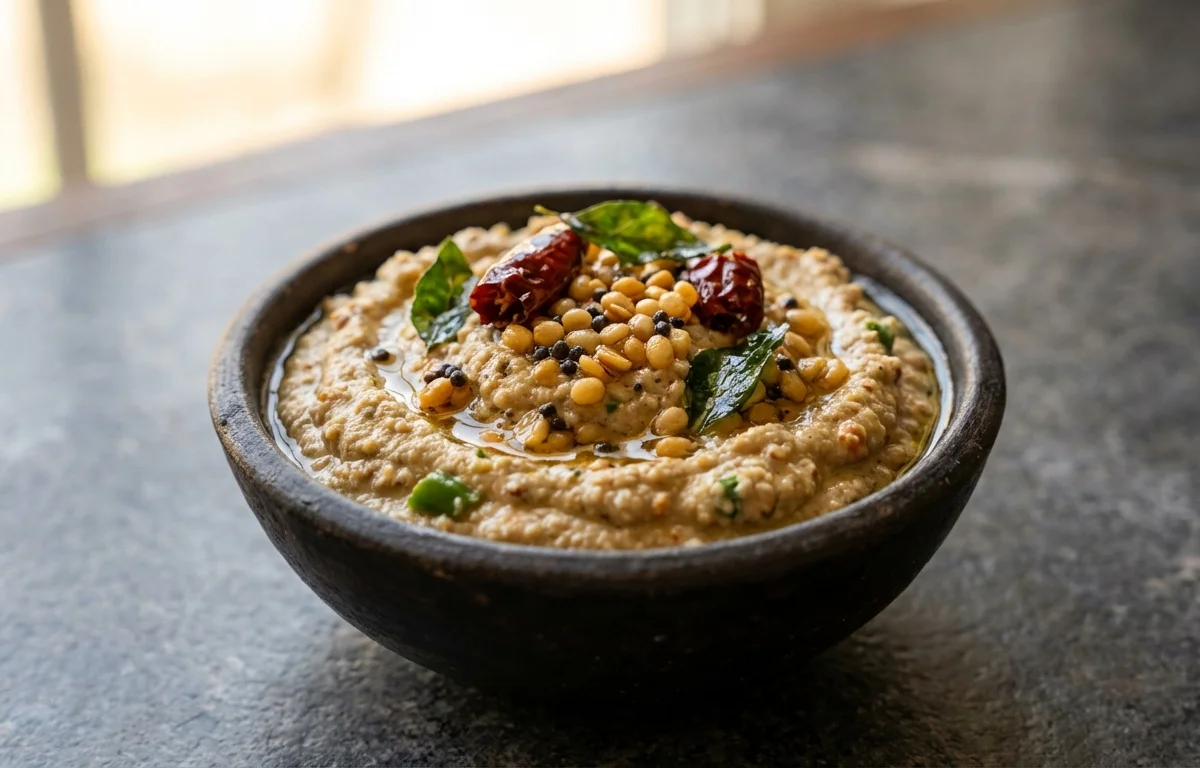
A nutty, gently spicy Andhra-style peanut chutney with roasted peanuts, tamarind, garlic, and a simple tempering. It is smooth, savory, and tangy, making a perfect partner for idli, dosa, and hot rice.
For 8 servings
- prep · ~10 min
Soak the tamarind.
Place the tamarind in a small bowl with a little warm water and let it soften for 10 minutes.
- roast · ~6 min
Roast the peanuts and chilies.
1.Heat a small pan over medium heat.2.Dry roast the peanuts, stirring often, until golden and aromatic (4-5 min).3.Add the dried red chili for the last 30 seconds and toss briefly.4.Take the pan off the heat and let everything cool slightly.TIPKeep the heat medium so the peanuts roast evenly without turning bitter. - mix · ~3 min
Grind the pachadi.
1.Add the roasted peanuts, dried red chili, garlic, soaked tamarind, salt, and water to a grinder jar.2.Grind to a smooth or slightly coarse chutney, depending on how you like it.3.Scrape down the sides once if needed and grind again for an even texture.4.Transfer the chutney to a serving bowl. - temper · ~2 min
Make the tempering.
1.Heat oil in a small pan over medium heat.2.Add mustard seeds and let them splutter (20-30 sec).3.Add urad dal and cook until lightly golden (30-40 sec).4.Add curry leaves and fry briefly until crisp (10 sec).TIPStand back when the curry leaves hit the oil because they can splutter. - assemble · ~1 min
Pour the tempering over the pachadi.
Pour the hot tempering over the ground chutney and mix well so the flavors spread through the pachadi.
- serve
Serve the palli pachadi.
Serve with idli, dosa, pesarattu, or hot rice.
What to keep in mind.
7 tips from the recipe — small details that make a real difference to the final dish.
- 1Roast the peanuts only to a deep golden aroma; dark brown spots can make the chutney taste bitter.
- 2If using peanuts with skin, rub off some of the loose skins after roasting for a smoother, less earthy pachadi.
- 3Add the dried red chilies only at the end of roasting so they toast without scorching.
- 4Use tamarind soaking water while grinding for better flavor instead of plain water if the chutney feels too thick.
- 5Keep the grind slightly coarse if serving with hot rice; a smoother texture pairs especially well with idli and dosa.
- 6Pour the tempering over the chutney while it is still hot so the mustard, urad dal, and curry leaf aroma spreads through it.
- 7Store refrigerated in a clean dry container and mix in a spoonful of hot water before serving if it thickens.
Adapt it for your goals.
Spicier
Add 1-2 extra dried red chilies or use a hotter variety for a sharper, more fiery pachadi that stands up well to plain rice.
jaggery balancedJaggery-balanced
Add a small pinch of jaggery while grinding to round out the tamarind's tang and the chilies' heat without making it sweet.
sesame richSesame-rich
Grind in a spoonful of roasted sesame seeds for extra nuttiness and a slightly thicker, more complex chutney.
no garlicNo-garlic
Skip the garlic for a simpler, more traditional fasting-friendly style that still tastes full from peanuts, tamarind, and tempering.
Why this is on our healthy list.
Healthy Fats from Peanuts
Peanuts provide satisfying fats and plant-based protein, making this chutney more filling than many lighter condiments.
Digestive Tang from Tamarind
Tamarind adds natural tartness and helps balance the richness of peanuts, making the chutney feel less heavy.
Aromatic Plant Ingredients
Garlic, dried red chilies, and curry leaves bring flavor depth from whole ingredients rather than relying on heavy additives.
Frequently asked questions
Yes, but the chutney will taste flatter and heavier. A little lemon juice can help in a pinch, though tamarind gives the most traditional tang.



.webp)