Pani Kakharu Rai
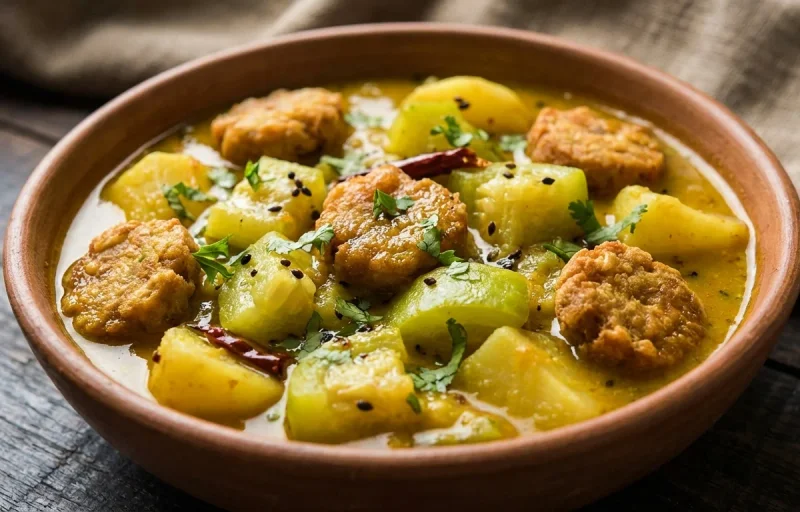
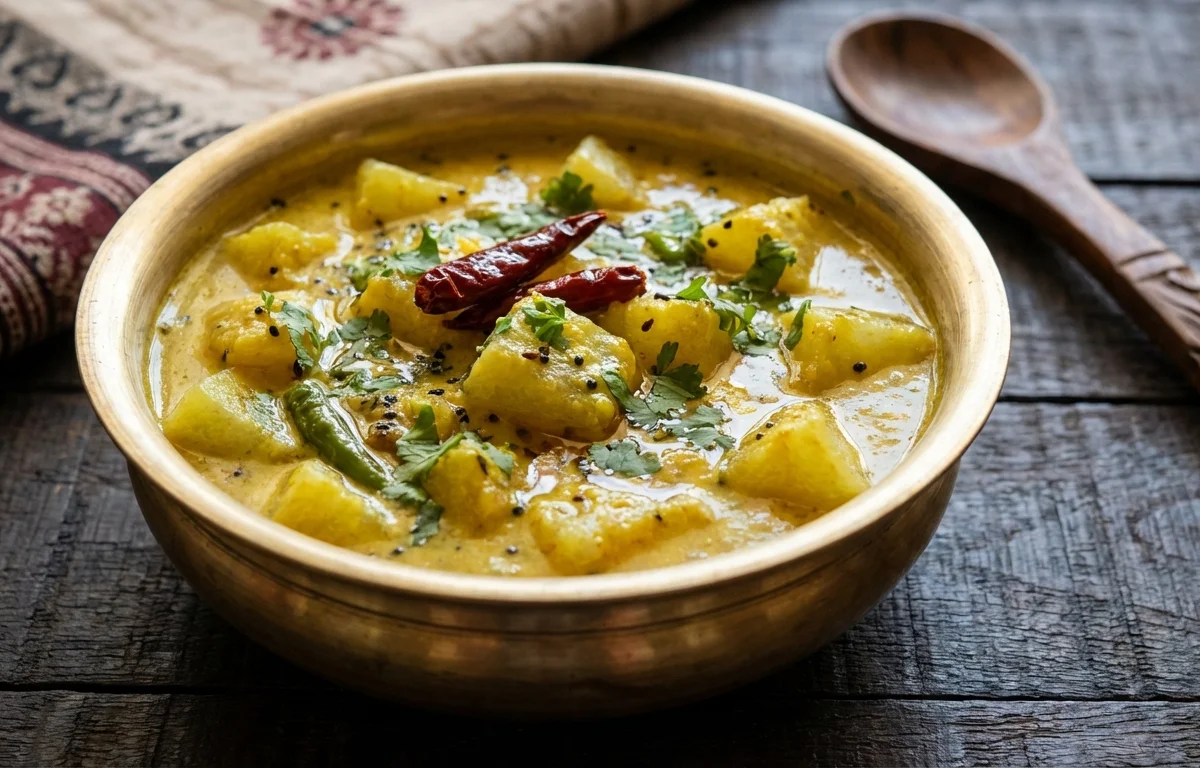
A light Odia pumpkin curry with a gentle mustard kick and a thin, comforting gravy. Soft cubes of pumpkin simmer in a simple spice base, making it a lovely everyday side for rice and dal.
For 4 servings
- prep · ~10 min
Make the mustard paste.
1.Soak 1 tsp mustard seeds in 2 tbsp water for 10 minutes.2.Grind the soaked mustard seeds with a little water to a smooth paste.3.Keep the paste aside so it is ready to add later.TIPGrind the mustard smoothly and do not overblend, or the paste can turn bitter. - temper · ~2 min
Make the tempering.
1.Heat oil in a pan over medium heat.2.Add the remaining 1 tsp mustard seeds and cumin seeds.3.Let them crackle for 20 to 30 seconds.4.Add the slit green chilies and cook for a few seconds. - saute · ~3 min
Cook the pumpkin with the spices.
1.Add the pumpkin cubes to the pan and mix well.2.Add turmeric powder, red chili powder, and salt.3.Stir for 2 to 3 minutes so the pumpkin gets coated with the oil and spices. - simmer · ~12 min
Simmer the curry until the pumpkin is soft.
Add water and bring the curry to a gentle simmer. Cover and cook until the pumpkin is tender but still holds its shape.
- mix · ~3 min
Stir in the mustard paste.
Lower the heat and add the prepared mustard paste. Mix well and cook for 2 to 3 minutes without boiling hard, so the mustard keeps its clean flavor.
TIPOnce the mustard paste goes in, keep the heat low. A hard boil can make the curry taste sharp. - serve
Serve hot with rice.
What to keep in mind.
7 tips from the recipe — small details that make a real difference to the final dish.
- 1Cut the pumpkin into even medium cubes so they soften at the same rate and do not turn mushy.
- 2Soak and grind the mustard just until smooth; over-grinding or overheating it can make the paste taste bitter.
- 3Let the mustard and cumin crackle fully before adding pumpkin, or the thin gravy can taste flat.
- 4Keep the simmer gentle after adding water so the pumpkin cooks through without breaking apart.
- 5Once the mustard paste goes in, cook only on low heat and avoid a rolling boil to keep the flavor clean.
- 6If the curry thickens too much on standing, loosen it with a splash of hot water before serving with rice.
- 7This dish tastes even better after a short rest, when the pumpkin absorbs the mustard and chili flavors.
Adapt it for your goals.
Low-oil
Use 1 tsp oil and a nonstick pan for tempering; the curry stays light and everyday-friendly while keeping its Odia flavor profile.
spicierSpicier
Add an extra slit green chili or a little more red chili powder if you want more heat against the mild sweetness of pumpkin.
garlic free sattvikGarlic-free sattvik
This recipe is already naturally free of onion and garlic, making it a simple sattvik-style side for rice and dal meals.
mixed vegMixed-veg
Add a small amount of potato with the pumpkin for a heartier curry; it also absorbs the mustard gravy well.
Why this is on our healthy list.
Rich in Vegetable Goodness
Pumpkin brings fiber and plant compounds to this light curry, making it a gentle, everyday side dish.
Light and Easy on the Meal
With a thin gravy, minimal oil, and no heavy masala base, this dish pairs well with simple rice-and-dal meals.
Mustard and Chili Add Depth
Mustard seeds and green chilies provide strong flavor without needing rich ingredients, helping keep the curry simple yet satisfying.
Frequently asked questions
This usually happens if the mustard was over-ground, heated too much while grinding, or boiled hard in the curry. Add it at low heat and cook gently.