Parwal Bhujia
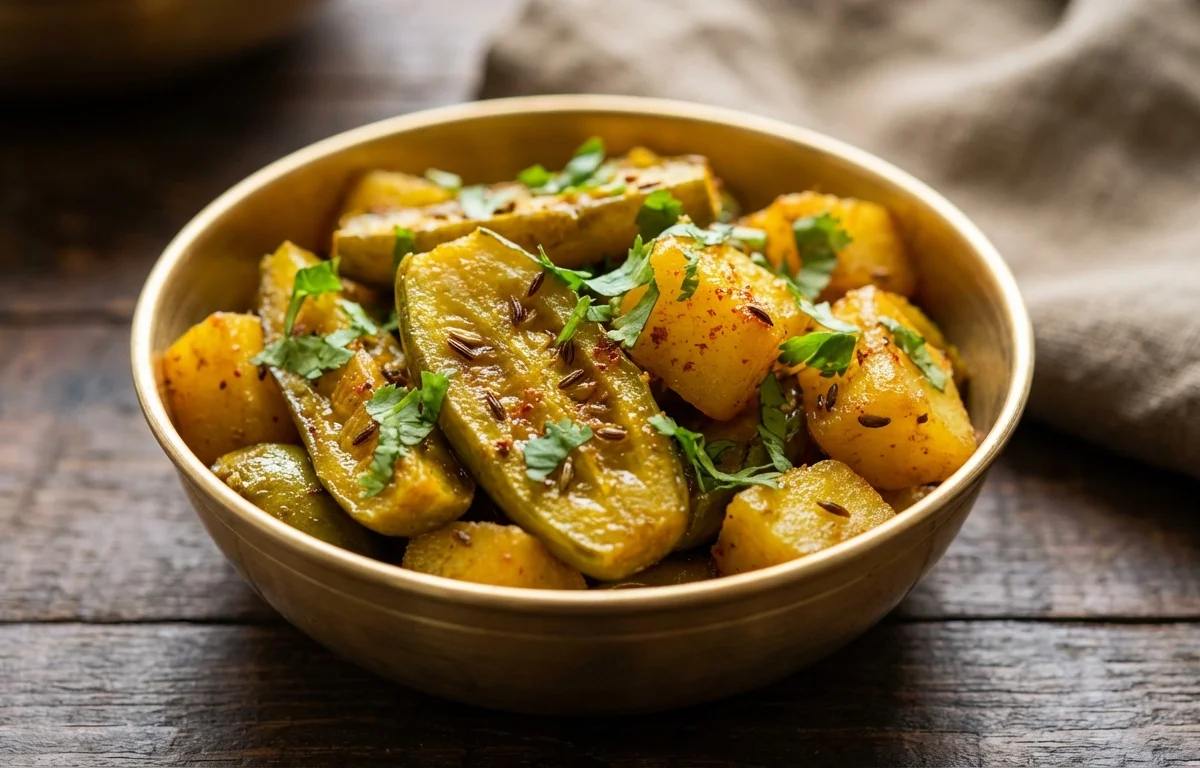
A simple dry parwal sabzi with thin slices of pointed gourd cooked with onion, tomato, and everyday spices. It turns tender, lightly crisp at the edges, and goes really well with roti or dal-rice.
For 4 servings
- prep · ~15 min
Prepare the vegetables.
1.Wash the parwal well and trim both ends.2.Slice the parwal thinly so it cooks quickly and evenly.3.Slice the onion, chop the tomato, slit the green chili, and grate the ginger.TIPKeep the parwal slices fairly even so some pieces do not stay undercooked while others turn mushy. - temper · ~1 min
Heat the oil and crackle the cumin.
Heat oil in a wide pan over medium heat. Add cumin seeds and let them sizzle for a few seconds until fragrant.
- saute · ~6 min
Cook the onion, chili, and ginger.
1.Add the onion and green chili to the pan.2.Cook until the onion turns soft and light golden, about 4 to 5 minutes.3.Add the grated ginger and cook for 30 seconds. - saute · ~4 min
Add the tomato and ground spices.
Add the tomato, turmeric powder, red chili powder, coriander powder, and salt. Cook for 3 to 4 minutes, stirring now and then, until the tomato softens and the masala looks well mixed.
- saute · ~5 min
Cook the parwal with the masala.
Add the sliced parwal and mix well so the pieces are coated in the masala. Cook uncovered for 4 to 5 minutes, stirring occasionally.
TIPUse a wide pan instead of a deep pot so the parwal fries lightly instead of steaming too much. - simmer · ~8 min
Cover and cook until tender.
Add water, mix once, then cover and cook on low heat for 6 to 8 minutes until the parwal is tender. Remove the lid and cook for 2 more minutes if you want it a little drier.
- garnish
Garnish with coriander leaves.
- serve
Serve hot with roti or dal-rice.
What to keep in mind.
7 tips from the recipe — small details that make a real difference to the final dish.
- 1Slice the parwal evenly and fairly thin so it turns tender before the onions overbrown.
- 2Use a wide kadhai or frying pan; a crowded deep pot will steam the parwal instead of giving lightly crisp edges.
- 3Cook the onions only to light golden, not deep brown, so the sabzi stays clean-tasting and not sweet-heavy.
- 4After adding tomato and spices, cook until the masala looks slightly dry; this helps it cling to the parwal instead of turning watery.
- 5Add only a splash of water while covering, because parwal releases some moisture as it cooks.
- 6For a drier bhujia, uncover at the end and let it sit undisturbed for a minute or two before the final stir.
- 7This sabzi reheats well; warm it in a pan rather than the microwave to bring back the dry texture.
Adapt it for your goals.
Aloo-parwal
Add thin potato slices with the parwal for a heartier North Indian-style bhujia that pairs especially well with roti.
low oilLow-oil
Reduce the oil slightly and use a good nonstick pan; the dish will be lighter but still works because it uses only a little masala.
no onion no garlicNo-onion-no-garlic
Skip the onion and keep the ginger, cumin, tomato, and coriander powder for a simpler satvik-style version.
spicierSpicier
Add extra slit green chili or a little more red chili powder if you want the mild sweetness of parwal balanced by more heat.
Why this is on our healthy list.
Vegetable-forward Side
Parwal, onion, and tomato make this a home-style sabzi centered on vegetables rather than heavy creams or rich gravies.
Moderate Oil Cooking
The recipe uses a small amount of oil for the whole pan, keeping the bhujia lighter than deep-fried vegetable dishes.
Herbs and Spices for Digestive Warmth
Cumin, ginger, coriander powder, and green chili add aroma and warmth while making a simple vegetable dish more satisfying.
Frequently asked questions
No, not necessarily. Just trim the ends and slice it thin; the skin cooks well and helps the slices hold their shape.