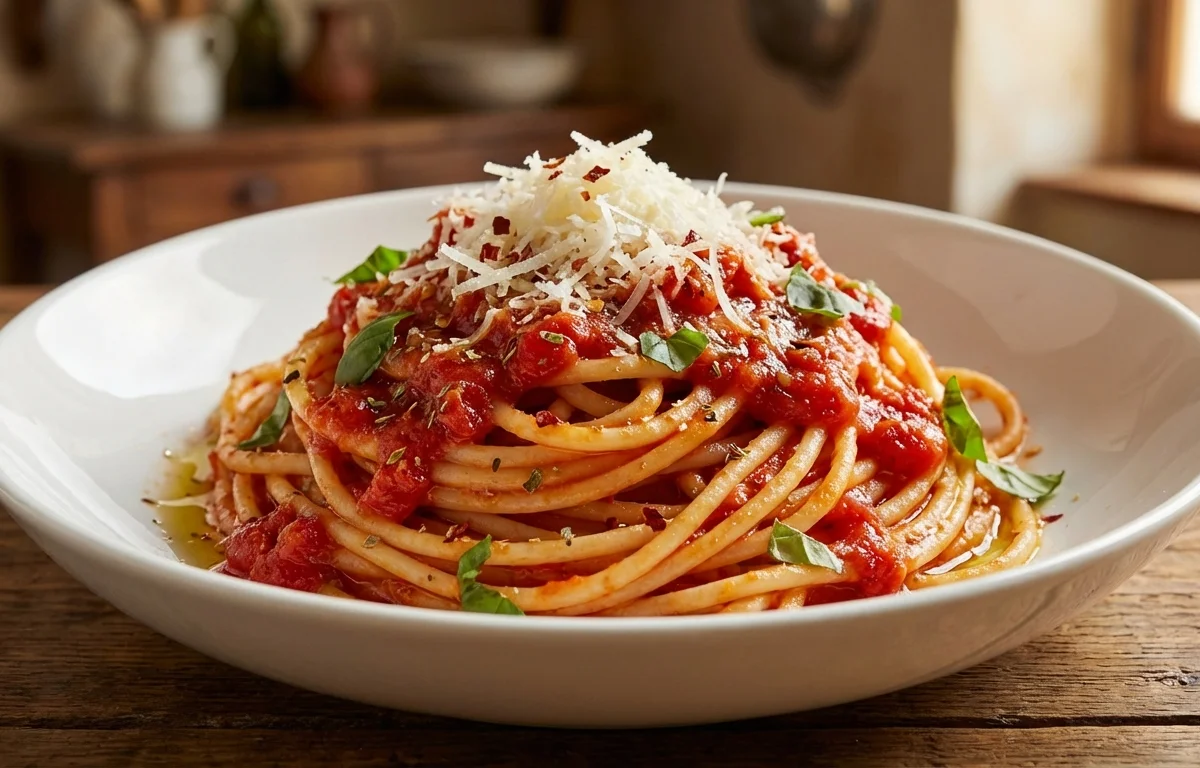
Pasta with Marinara Sauce
A simple, rustic Italian-American classic with al dente pasta tossed in a bright, garlicky tomato sauce. The marinara comes together in about 30 minutes using pantry staples—canned tomatoes, garlic, and olive oil—creating a light yet satisfying meal that lets the tomato shine.
For 4 servings
- boil
Bring a large pot of salted water to a boil.
Fill a large pot with water and add a pinch of salt. Bring to a rolling boil over high heat.
TIPSalting the pasta water seasons the pasta from the inside out. - saute · ~2 min
Sauté the garlic in olive oil.
1.Heat olive oil in a large skillet over medium-low heat.2.Add sliced garlic and cook gently until fragrant and lightly golden, about 2 minutes. Do not let it brown.TIPLow heat is key—burnt garlic turns bitter and will ruin the sauce. - boil · ~10 min
Cook the spaghetti until al dente.
Add spaghetti to the boiling water and cook according to package directions until just tender with a firm bite. Reserve 1 cup of pasta water before draining.
TIPSave that starchy pasta water—it's liquid gold for loosening the sauce. - simmer · ~20 min
Simmer the marinara sauce.
1.Pour the hand-crushed tomatoes into the skillet with the garlic and oil.2.Add dried oregano, chili flakes, and salt for sauce.3.Bring to a gentle simmer and cook for 15-20 minutes, stirring occasionally, until the sauce thickens slightly.TIPCrush the tomatoes by hand for a rustic, chunky texture—it makes a difference. - mix · ~2 min
Toss the pasta with the sauce.
1.Add the drained spaghetti directly into the skillet with the marinara sauce.2.Toss well to coat every strand, adding splashes of reserved pasta water as needed to create a glossy, cohesive sauce.TIPFinish the pasta in the sauce—it absorbs flavor better than just spooning sauce on top. - garnish
Tear fresh basil over the pasta and serve immediately.
Remove from heat. Tear fresh basil leaves over the top, give it a final gentle toss, and plate immediately.
TIPTearing basil instead of chopping prevents bruising and keeps the flavor bright.
What to keep in mind.
5 tips from the recipe — small details that make a real difference to the final dish.
- 1Always salt the pasta water generously — it should taste like the sea.
- 2Cook garlic on medium-low heat to avoid bitterness.
- 3Reserve at least 1 cup of pasta water before draining to adjust sauce consistency.
- 4Finish cooking the pasta in the sauce for better flavor absorption.
- 5Crush whole peeled tomatoes by hand for a chunky, rustic texture.
Adapt it for your goals.
High-protein
Add 200g of cooked Italian sausage or meatballs during the sauce simmer. This turns the marinara into a heartier meal with extra protein and savory depth.
low oilLow-oil
Reduce olive oil to 1 teaspoon and use a non-stick pan. Perfect for those watching fat intake, though the garlic will cook faster and need more careful attention.
veganVegan
The recipe is already vegan as written. Just confirm your pasta is egg-free (most dried spaghetti is). No changes needed.
jainJain
Omit the garlic and onion family entirely. Use asafoetida (hing) and a pinch of black salt for a similar savory depth, and replace olive oil with ghee if acceptable in your diet.
Why this is on our healthy list.
Rich in Lycopene
Cooked tomatoes in the marinara sauce provide a concentrated source of lycopene, an antioxidant linked to heart health and reduced inflammation.
Low in Saturated Fat
This dish uses olive oil as its only fat, keeping saturated fat low while offering heart-healthy monounsaturated fats.
Contains Anti-Inflammatory Compounds
Garlic and oregano both contain compounds with anti-inflammatory properties, supporting immune function and overall wellness.
Frequently asked questions
Yes, but you'll need about 900g of ripe plum tomatoes. Blanch, peel, and crush them, then simmer for an extra 10 minutes to concentrate flavor, as fresh tomatoes are more watery.