Peanut Sauce
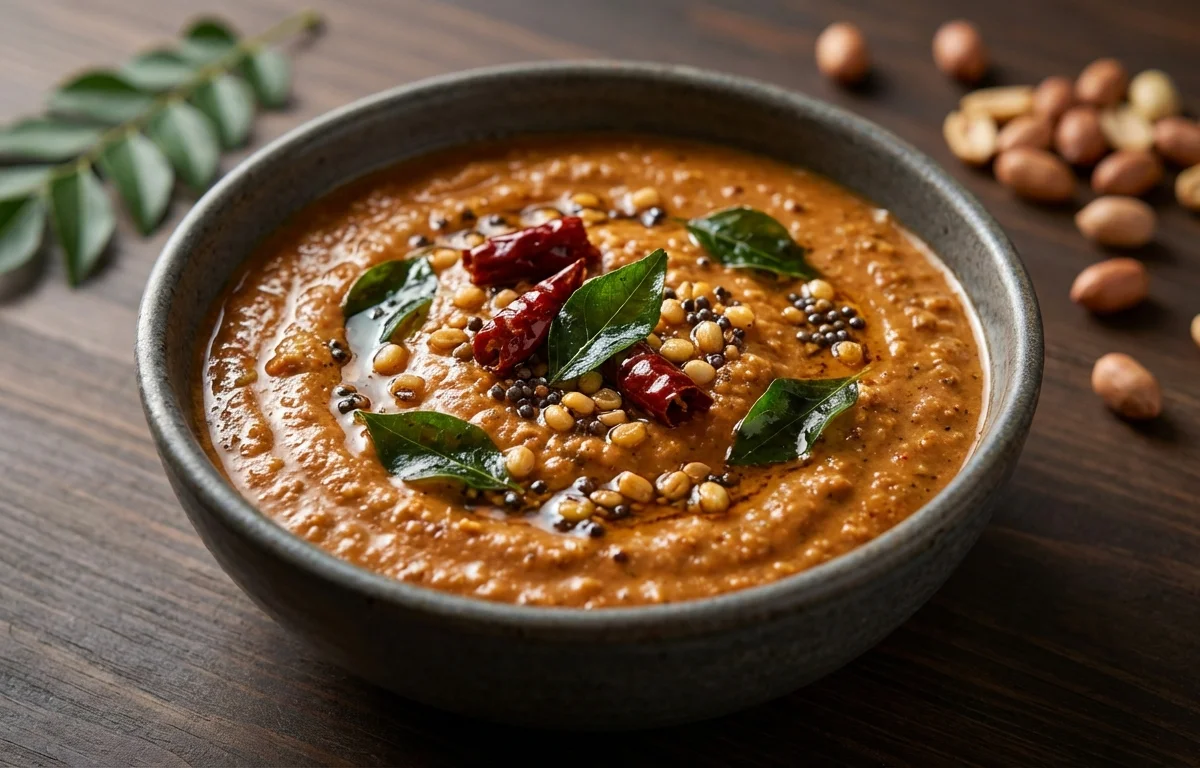
A creamy, nutty South Indian-style chutney made with roasted peanuts, tangy tamarind, and a crackling mustard seed tempering. Perfect as a dip for idli, dosa, or simply spread on warm roti.
For 8 servings
- roast · ~4 min
Dry roast the peanuts.
1.Place a pan over medium heat and add 1 cup raw peanuts.2.Dry roast, stirring continuously, until the skins darken and the peanuts turn fragrant (3-4 min).3.Transfer to a plate and let them cool completely.TIPRoast on medium heat — high heat burns the outside and leaves the inside raw. - prep · ~5 min
Soak the tamarind.
Soak 1 tsp seedless tamarind in 2 tbsp warm water for 5 minutes. Squeeze to extract the pulp and discard the fiber.
- mix · ~2 min
Grind the peanut base.
1.In a small blender jar, add the cooled roasted peanuts, green chili, garlic, cumin seeds, and salt.2.Add the tamarind pulp along with the soaking water.3.Pour in ¼ cup fresh water and grind to a slightly coarse, thick paste.4.Scrape down the sides and add a splash more water if needed — the chutney should be a thick, spoonable consistency.TIPDon't over-grind — a little texture from the peanuts makes the chutney more interesting. - temper · ~2 min
Make the tempering.
1.Heat 2 tsp oil in a small pan over medium heat.2.Add ½ tsp mustard seeds and let them splutter (30 sec).3.Tear in 1 dried red chili and 8 fresh curry leaves; fry until the leaves crisp (20 sec).4.Pour the sizzling tempering over the ground peanut chutney and stir well.TIPCover the pan with a lid when the mustard pops — it keeps the splutter off the counter. - mix · ~1 min
Adjust the consistency.
Stir the tempering through the chutney. If it has thickened on standing, whisk in a tablespoon of water to loosen it to a silky, dip-like consistency. Serve at room temperature.
What to keep in mind.
7 tips from the recipe — small details that make a real difference to the final dish.
- 1Dry roast peanuts on medium heat until fragrant and skins darken to avoid burnt, raw centers.
- 2Cool peanuts completely before grinding to prevent the chutney from becoming sticky or pasty.
- 3Reserve a few roasted peanuts for garnish to add a pleasant crunchy texture on top.
- 4Adjust water gradually while grinding to control consistency – start with less, add more as needed.
- 5Pour the hot tempering immediately over the chutney and stir to infuse the smoky, aromatic flavors.
- 6Store leftover chutney in an airtight container in the fridge for up to 5 days; stir before serving.
- 7Let the chutney rest for 5 minutes after tempering to allow flavors to meld and the consistency to set.
Adapt it for your goals.
Low-oil
Skip the oil-based tempering and instead stir in a pinch of asafoetida (hing) and a few curry leaves dry-roasted for 10 seconds. Cuts calories while still preserving the authentic South Indian flavor.
coconut peanut blendCoconut-peanut blend
Replace half the peanuts with ½ cup fresh or desiccated coconut (soaked if dry) for a creamier, milder chutney with a tropical note. Great for those who find all-peanut versions too heavy.
spicy mint twistSpicy mint twist
Add ¼ cup fresh mint leaves along with the green chili while grinding. This variation gives a refreshing, herby kick and is especially nice as a dip for samosas or pakoras.
jainJain
Omit garlic and replace with a pinch of asafoetida (hing) during tempering. This keeps the chutney fully vegetarian-friendly for Jain diets without losing the savory umami depth.
extra proteinExtra-protein
Stir in 1 tablespoon of roasted chickpea flour (besan) after grinding, then add a little extra water. Boosts protein content and gives a thicker, more robust texture perfect for spreading on toast.
Why this is on our healthy list.
Rich in Plant Protein
Peanuts provide a substantial amount of plant-based protein, making this chutney a satisfying addition to vegetarian meals and snacks.
Heart-Healthy Fats
Peanuts contain monounsaturated and polyunsaturated fats that can support heart health when eaten in moderation as part of a balanced diet.
Digestive Support from Tamarind
Tamarind is naturally rich in dietary fiber and mild laxative properties, aiding digestion and promoting gut regularity.
Antioxidant-Rich Spices
Cumin, curry leaves, and garlic are sources of antioxidants that help combat oxidative stress and support immune function.
No Added Sugar or Preservatives
This chutney relies on whole, minimally processed ingredients without refined sugar or artificial additives, making it a clean condiment choice.
Frequently asked questions
Yes, but reduce the dry roasting time slightly — just warm them for 1 minute to revive the aroma, as pre-roasted nuts can burn quickly.