
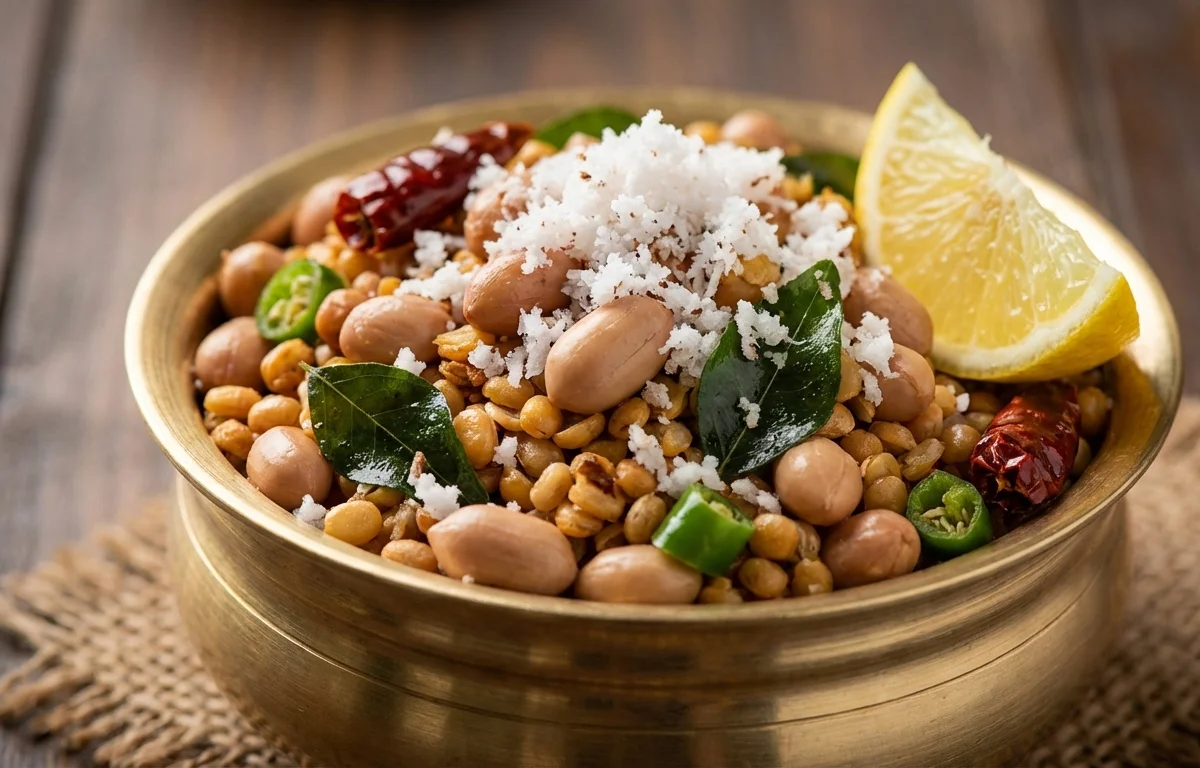
Peanut Sundal
A simple, protein-packed South Indian stir-fry made with tender boiled peanuts, finished with a crackling coconut and mustard seed tempering. This beachside classic comes together in minutes and is perfect as a light snack or festive offering.
For 4 servings
- prep · ~10 min
Wash and soak the peanuts.
Rinse the raw peanuts well under running water. Soak them in enough water to cover for 10 minutes to soften slightly.
- boil · ~15 min
Boil the peanuts until tender.
Drain the soaked peanuts and transfer to a pressure cooker with 3 cups of water and a pinch of salt. Pressure cook for 3 whistles on medium heat, then let the pressure release naturally. If using a pot, boil for 25–30 minutes until tender but still holding their shape. Drain off any excess water completely.
TIPPeanuts should be cooked through but not mushy — they should have a slight bite. - temper · ~2 min
Make the coconut tempering.
1.Heat coconut oil in a kadai over medium heat until shimmering.2.Add mustard seeds and let them splutter completely.3.Add cumin seeds and sauté until fragrant (10 seconds).4.Add dried red chili, slit green chili, and curry leaves. Fry until leaves crisp (20 seconds).5.Add a pinch of asafoetida and stir once. - saute · ~2 min
Toss the boiled peanuts with the tempering.
Add the drained boiled peanuts to the pan. Stir well to coat every peanut with the tempered spices. Sauté for 2 minutes on medium heat, letting the peanuts absorb the flavors and dry out slightly.
TIPKeep stirring so the peanuts don't stick to the pan. - mix · ~1 min
Finish with fresh coconut.
Turn off the heat. Add the freshly grated coconut and mix gently until well combined. The residual heat will warm the coconut and release its aroma without cooking it.
- garnish
Garnish with coriander and serve warm.
Transfer to a serving bowl, sprinkle with chopped coriander leaves, and serve immediately while warm. Peanut Sundal also tastes excellent at room temperature.
What to keep in mind.
7 tips from the recipe — small details that make a real difference to the final dish.
- 1Use raw shelled peanuts, not roasted or salted, for the best texture and flavor.
- 2Pressure cook peanuts for exactly 3 whistles so they stay tender with a slight bite.
- 3Drain boiled peanuts thoroughly before adding to the tempering to avoid a watery sundal.
- 4Let mustard seeds finish spluttering completely before adding other spices for full aroma.
- 5Add grated coconut only after switching off the heat to keep it fresh and creamy.
- 6Serve warm or at room temperature, but refrigerate leftovers and consume within 2 days.
- 7If using a pot instead of a pressure cooker, check peanut doneness after 25 minutes by tasting one.
Adapt it for your goals.
Low-oil
Reduce coconut oil to 1 teaspoon and dry-roast the mustard seeds and cumin before adding a splash of water for tempering — cuts fat without sacrificing taste.
high proteinHigh-protein
Add a handful of cooked chickpeas or edamame along with the peanuts for an even heartier protein boost, ideal for post-workout snacks.
jainJain
Skip the asafoetida if it contains wheat starch and use a Jain-friendly brand; replace onions and garlic that are not in the recipe anyway, so it's already suitable.
spicierSpicier
Add an extra dried red chili or a pinch of red chili powder during tempering for those who love more heat without altering the core flavor.
Why this is on our healthy list.
Rich in Plant Protein
Peanuts provide a solid dose of plant-based protein, making this snack both energizing and satisfying.
Heart-Friendly Fats
Coconut oil and fresh coconut supply medium-chain triglycerides (MCTs) that support metabolism and heart health.
Antioxidant Boost
Curry leaves and coriander are rich in antioxidants that help combat oxidative stress.
Gut-Soothing Spices
Asafoetida and cumin seeds aid digestion and reduce bloating, traditional in South Indian cooking.
Frequently asked questions
Roasted peanuts will be too dry and crunchy; raw peanuts boiled until tender give the soft, creamy texture that makes sundal authentic.


