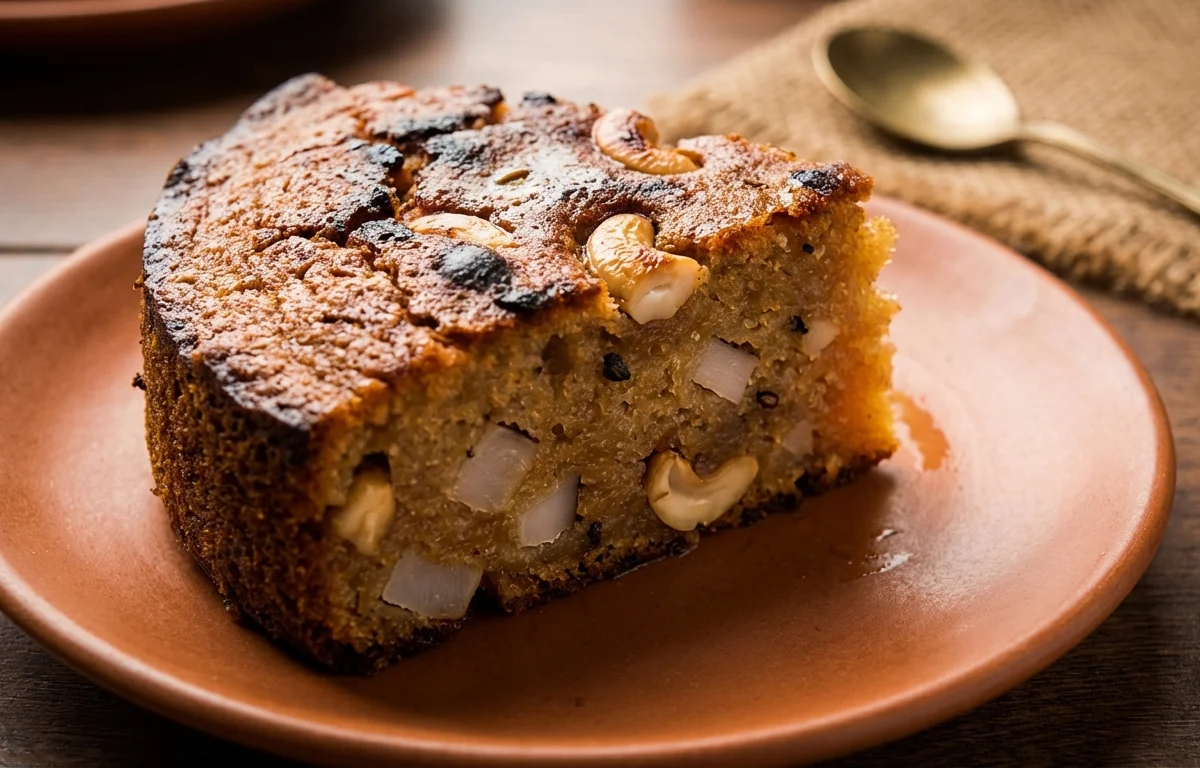
Poda Pitha
A beloved Odia rice cake with a gently caramelized crust and soft, fragrant center. Made with rice, coconut, jaggery, and black pepper, it is slow cooked until lightly smoky and deeply comforting.
For 8 servings
- prep · ~360 min
Soak the rice and urad dal.
Wash the rice and urad dal well. Soak them separately in enough water for 6 hours, then drain completely before grinding.
- mix · ~15 min
Grind the batter.
1.Grind the soaked rice to a slightly coarse batter with a little milk as needed.2.Grind the soaked urad dal to a smooth batter.3.Mix both batters in a large bowl until evenly combined.TIPKeep the rice batter slightly grainy for the classic texture. - mix · ~10 min
Add the sweet and aromatic ingredients.
1.Add grated jaggery and stir until it starts dissolving into the batter.2.Mix in grated coconut, crushed black pepper, crushed cardamom seeds, fennel seeds, and salt.3.Pour in the remaining milk and mix well to make a thick pouring batter. - rest · ~30 min
Rest the batter.
Cover the bowl and let the batter rest for 30 minutes so the jaggery melts fully and the flavors settle.
- assemble · ~3 min
Prepare the pan and pour the batter.
Grease a heavy deep pan or thick-bottomed kadai well with ghee. Pour in the batter and drizzle the remaining ghee on top.
- bake · ~70 min
Cook the poda pitha on low heat.
1.Place the pan on very low heat and cover it tightly.2.Cook until the edges set and the bottom turns deep golden brown, 45 to 50 minutes.3.Carefully turn the pitha over using a plate or flat lid.4.Cook the second side covered until firm and lightly charred in spots, 15 to 20 minutes more.TIPUse very low heat so the inside cooks through before the crust darkens. - rest · ~15 min
Cool the pitha slightly.
Take the pan off the heat and let the pitha rest for 15 minutes. This helps it firm up and slice neatly.
- serve
Slice and serve the poda pitha.
What to keep in mind.
7 tips from the recipe — small details that make a real difference to the final dish.
- 1Keep the rice batter slightly coarse; a fully smooth grind will lose the classic nubbly poda pitha texture.
- 2Dissolve the jaggery well during the 30-minute rest so you do not get dense sweet pockets in the finished cake.
- 3Use a heavy kadai or thick pan to prevent the bottom from scorching before the center cooks through.
- 4Seal the lid tightly while cooking on low heat to trap steam and help the middle set evenly.
- 5When turning, wait until the edges look firm and pull away slightly from the pan; that is the safest flip point.
- 6Let it rest after cooking before slicing, or the warm center can seem underdone and break apart.
- 7Leftover poda pitha tastes excellent the next day; reheat lightly on a tawa to refresh the crust.
Adapt it for your goals.
Baked
Bake the batter in a greased tin for a more even cook and easier unmolding, while still aiming for a dark caramelized top and edges.
dairy freeDairy-free
Replace milk with thin coconut milk and use coconut oil instead of ghee if needed; this keeps it rich and fragrant without dairy.
extra coconutExtra-coconut
Increase the grated coconut slightly for a moister, richer center and a more pronounced traditional coconut flavor.
milder spiceMilder-spice
Reduce the black pepper for a sweeter, softer profile if serving children or anyone new to the pepper-jaggery combination.
Why this is on our healthy list.
Energy-Giving Grains
Rice and jaggery make this a sustaining festive dish that provides comforting carbohydrate energy.
Some Plant Protein
Urad dal adds protein and makes the rice-based batter more balanced than using rice alone.
Digestive Aromatics
Fennel, cardamom, and black pepper bring aroma and are traditional spices often used to support easier digestion in rich sweets.
Frequently asked questions
The heat was likely too high or the pan too light. Cook on very low heat, keep it covered, and wait for the edges to set well before turning.