Podo Pitha
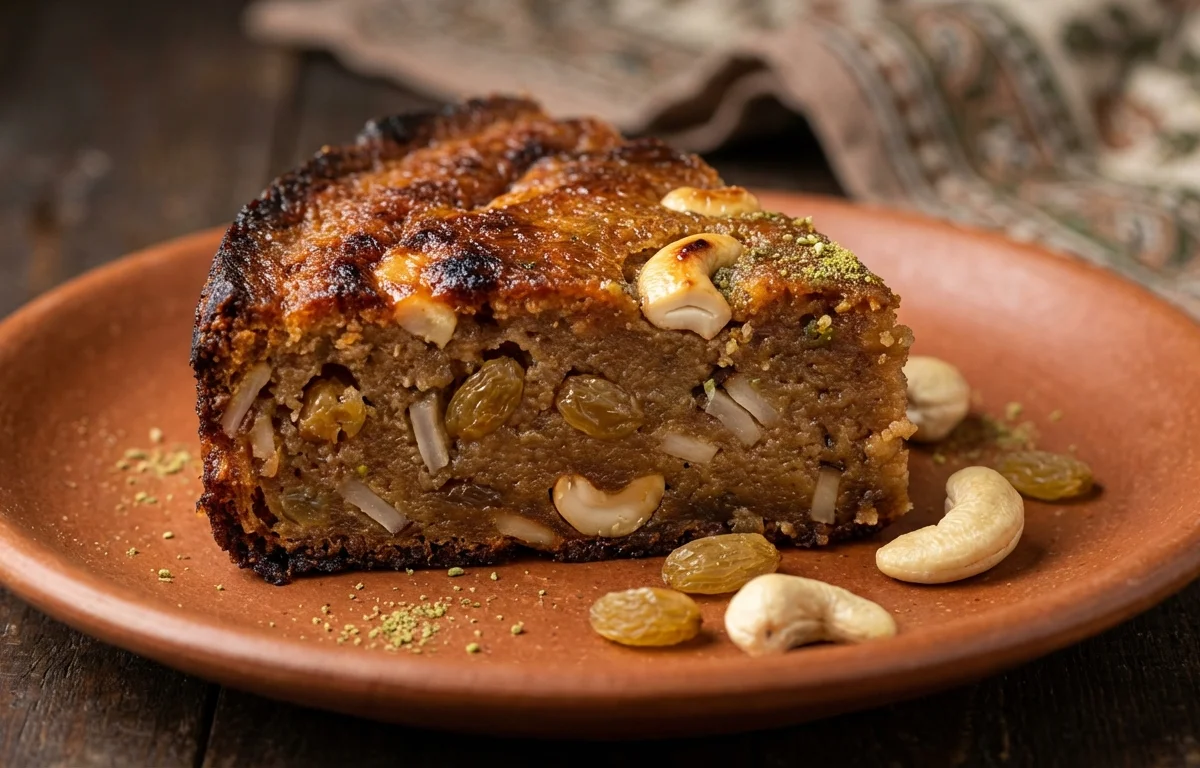
A slow-baked Odia rice cake with a gently caramelized crust and soft, dense center. Made with rice, black gram, coconut and jaggery, this festive pitha has deep toasty flavor and keeps well for a couple of days.
For 8 servings
- prep
Soak the rice and urad dal.
Wash the rice and urad dal well. Soak them together in enough water for 6 hours until softened.
- mix · ~10 min
Grind a thick batter.
1.Drain the soaked rice and urad dal.2.Grind them with grated coconut, adding a little water as needed.3.Keep the batter slightly coarse and thick, not pourable like dosa batter.4.Transfer it to a large bowl.TIPA slightly coarse batter gives Podo Pitha its traditional dense texture. - mix · ~5 min
Mix in the sweetening and flavorings.
1.Add grated jaggery to the batter and mix until it begins to dissolve.2.Add crushed black pepper, powdered cardamom and salt.3.Stir in 1 tbsp ghee and mix well. - rest · ~20 min
Rest the batter briefly.
Leave the batter aside for 20 minutes so the jaggery melts further and the flavors settle.
- prep
Grease the baking pan.
Grease a deep round or square baking pan generously with the remaining ghee. Preheat the oven to 170°C.
- bake · ~75 min
Bake the pitha until browned.
1.Pour the batter into the greased pan and level the top.2.Bake until the top is deep brown and the edges caramelize well, about 70 to 75 minutes.3.Check with a skewer; it should come out mostly clean with a few moist crumbs.TIPThe dark top is part of the character of podo pitha, so do not pull it out too early. - rest · ~20 min
Cool the pitha before slicing.
Let it cool in the pan for at least 20 minutes. This helps it firm up and slice neatly.
- serve
Slice and serve the Podo Pitha.
What to keep in mind.
7 tips from the recipe — small details that make a real difference to the final dish.
- 1Grind the rice-dal mixture only slightly coarse; a smooth batter makes the pitha lose its traditional dense bite.
- 2Dissolve any large jaggery lumps before baking, or they can leave wet pockets inside the cake.
- 3Grease the pan generously, especially the corners, so the caramelized crust releases without tearing.
- 4Bake until the top looks deeply browned, not just golden; that dark roasted layer is a hallmark of podo pitha.
- 5Cool it well before slicing, because the crumb sets as it rests and cuts much more cleanly once warm, not hot.
- 6If the top darkens too quickly before the center sets, loosely tent with foil for the last part of baking.
- 7This pitha keeps well for 2 days at room temperature in cool weather; rewarm slices lightly to revive the aroma.
Adapt it for your goals.
Banana
Mash in a ripe banana for a softer, more fragrant pitha with natural sweetness and extra moisture.
smoky traditionalSmoky-traditional
Bake it in a heavy handi or earthen pot instead of a metal tin for a more rustic, old-style roasted flavor.
less sweetLess-sweet
Reduce the jaggery slightly if you prefer the rice, coconut and spice notes to come through more clearly.
nuttyNutty
Add chopped cashews for extra texture and a festive feel that pairs well with jaggery and cardamom.
Why this is on our healthy list.
Plant Protein from Urad Dal
Urad dal adds plant-based protein and makes the pitha more sustaining than a rice-only sweet.
Energy-Rich Festive Food
Rice and jaggery provide steady energy, making this a hearty traditional treat for celebrations and long days.
Contains Coconut Goodness
Fresh coconut contributes richness, fiber and a satisfying texture that makes small portions feel filling.
Frequently asked questions
The batter was likely too loose or the pitha was pulled out before the center fully set. Keep the batter thick and bake until a skewer comes out with moist crumbs, not raw batter.