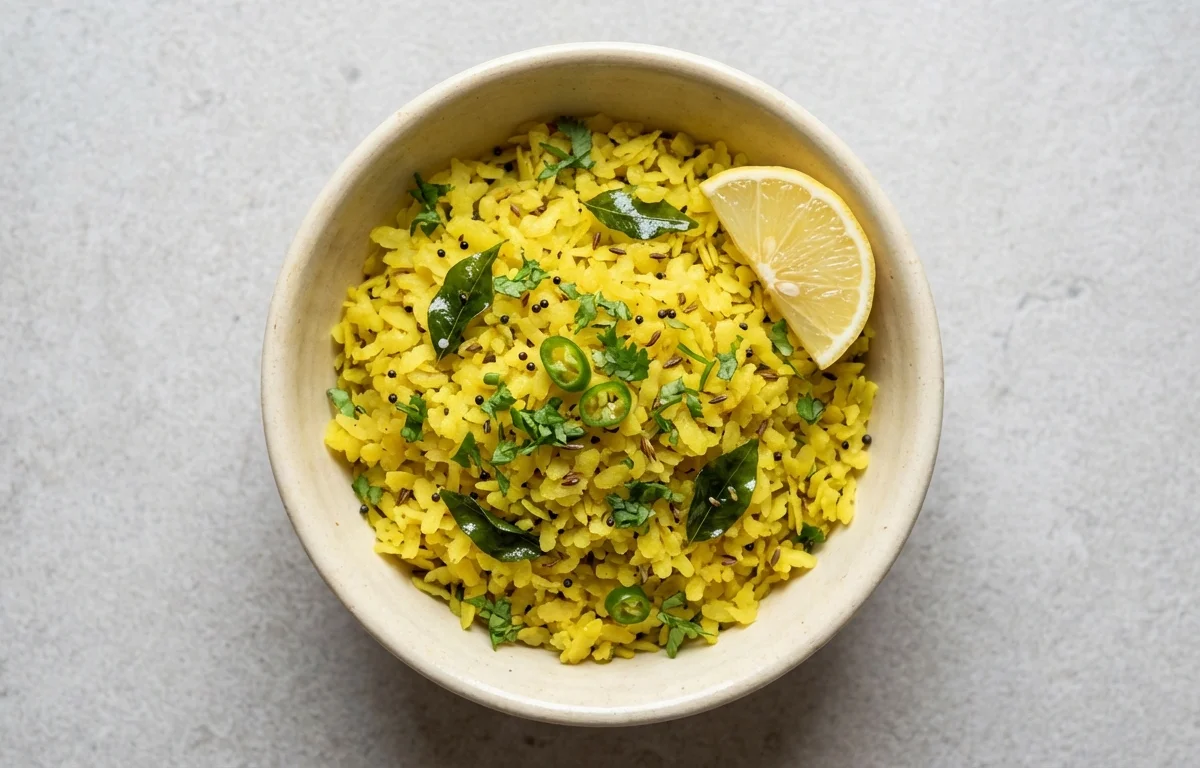
Poha
A light, fluffy, and flavorful breakfast staple from Western India, made without onion or garlic. This simple dish comes together in minutes with flattened rice, gentle spices, and a fresh squeeze of lemon.
For 4 servings
Prepare the Poha (5-7 minutes)
1.Place the thick poha in a large sieve or colander.2.Rinse it under cool running water for about 30-40 seconds, gently moving your fingers through the flakes to ensure they are all moistened. Do not soak.3.Drain all the water completely. Let the poha rest in the sieve for 5-7 minutes. It will absorb the residual moisture and become soft and fluffy.4.After resting, add salt and sugar to the poha and gently toss with a fork to mix and separate the flakes.Create the Tempering (2 minutes)
1.Heat oil in a wide, heavy-bottomed pan (kadai) over medium heat.2.Once the oil is hot, add the mustard seeds and wait for them to splutter completely.3.Add the cumin seeds, asafoetida, curry leaves, and finely chopped green chilies. Sauté for about 30 seconds until the curry leaves are crisp and aromatic.Cook the Poha (3 minutes)
1.Reduce the heat to low. Add the turmeric powder to the pan and stir for 5 seconds. Be careful not to burn it.2.Immediately add the prepared, fluffed poha to the pan.3.Gently mix and fold everything together until the poha is evenly coated in the yellow tempering. Avoid mashing the flakes.4.Cover the pan with a lid and let the poha steam on low heat for 2-3 minutes. This step is crucial for making the poha soft and flavorful.Garnish and Serve (1 minute)
1.Turn off the heat. Uncover the pan, drizzle the fresh lemon juice over the poha, and add the chopped coriander leaves.2.Give it a final gentle toss to combine.3.Serve immediately, garnished with roasted peanuts and sev for extra texture and flavor.
What to keep in mind.
8 tips from the recipe — small details that make a real difference to the final dish.
- 1Use thick poha for the best fluffy texture. Thin poha will become mushy.
- 2The key to perfect poha is rinsing, not soaking. A quick rinse is all that's needed.
- 3Fluff the rinsed poha with a fork before adding it to the pan to ensure the flakes are separate.
- 4Always let mustard seeds pop completely to release their pungent flavor; otherwise, they can taste bitter.
- 5The final 2-minute steaming step is essential for soft, moist poha. Don't skip it.
- 6Add lemon juice only after turning off the heat to preserve its fresh flavor and nutrients.
- 7If the poha seems too dry before steaming, sprinkle 1-2 tablespoons of water over it.
- 8Poha is best enjoyed fresh and hot, as it can become dry if left for too long.
Adapt it for your goals.
Add Vegetables
For a more nutritious version, add finely chopped carrots, green peas, or bell peppers to the tempering and sauté until tender before adding the poha.
Coconut FlavorCoconut Flavor
Add 2-3 tablespoons of freshly grated coconut along with the coriander leaves at the end for a coastal Indian flavor.
Spicier VersionSpicier Version
For extra heat, add a pinch of red chili powder along with the turmeric powder.
Why this is on our healthy list.
Good Source of Energy
Poha is rich in healthy carbohydrates, providing a steady release of energy to keep you active throughout the morning without causing a sudden spike in blood sugar.
Easily Digestible
The process of making flattened rice involves parboiling, which makes it very light and easy on the digestive system. It's an excellent choice for a light breakfast or for those with sensitive stomachs.
Rich in Iron
Flattened rice is a good source of iron. The addition of lemon juice helps in the absorption of this iron, making it beneficial for preventing iron deficiency.
Gluten-Free
Poha is naturally gluten-free, making it a safe and delicious option for individuals with celiac disease or gluten sensitivity.
Frequently asked questions
Yes, Jain Poha is a healthy breakfast option. It is light, low in calories, and easy to digest. Poha is a good source of carbohydrates for energy, iron, and fiber. Being plant-based and free from heavy spices makes it gentle on the stomach.



.webp)