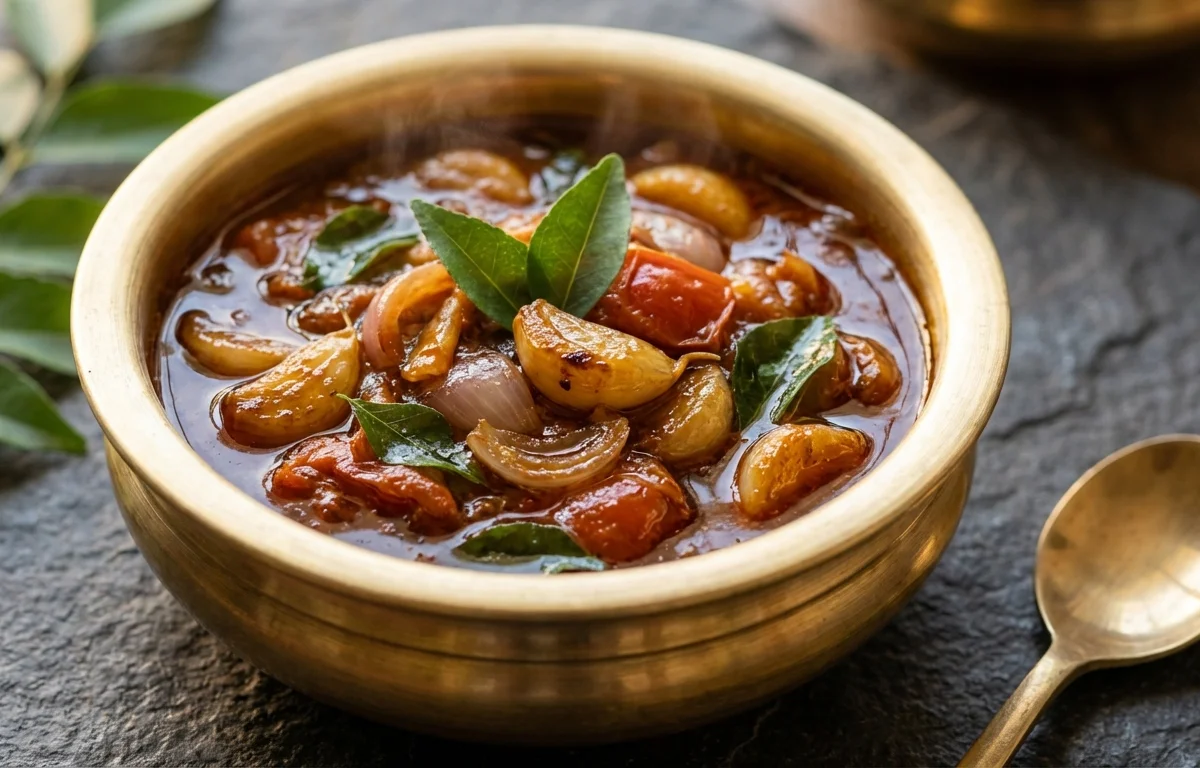
Poondu Kulambu
A bold, tangy Tamil-style garlic kulambu with a deep tamarind base and gentle spice. Whole garlic cloves turn soft and mellow as they simmer, making this a comforting side for hot rice and simple poriyal.
For 4 servings
- prep · ~15 min
Soak the tamarind and prep the garlic.
1.Soak tamarind in warm water for 15 minutes.2.Peel the garlic cloves and shallots.3.Chop the tomato and keep the spices ready. - mix · ~2 min
Make the tamarind extract.
Squeeze the soaked tamarind well and strain it with 2 cups water to make a smooth extract. Keep it aside.
- temper · ~1 min
Make the tempering.
1.Heat sesame oil in a kadai over medium heat.2.Add mustard seeds and let them splutter.3.Add fenugreek seeds and curry leaves and cook for a few seconds.TIPKeep the heat medium once fenugreek goes in so it turns aromatic, not bitter. - saute · ~8 min
Cook the shallots and garlic.
1.Add shallots and sauté until they start to soften, 2 to 3 minutes.2.Add the garlic cloves and cook until lightly glossy and fragrant, 2 minutes.3.Add tomato and cook until soft and pulpy, 3 to 4 minutes. - saute · ~1 min
Add the spice powders.
Lower the heat and add sambar powder, red chili powder, and turmeric powder. Mix for 20 to 30 seconds so the spices bloom without burning.
- simmer · ~15 min
Simmer the kulambu.
1.Pour in the tamarind extract and add salt.2.Bring it to a boil, then reduce to a steady simmer.3.Cook uncovered until the raw tamarind smell fades and the garlic turns tender, 12 to 15 minutes. - mix · ~1 min
Thicken the gravy lightly.
Stir rice flour with 2 tbsp water to make a smooth slurry. Add it to the kulambu along with jaggery and mix well.
- simmer · ~3 min
Finish the kulambu.
Simmer for 2 to 3 minutes more until the gravy looks slightly glossy and lightly thickened. Turn off the heat.
- serve
Serve hot with rice.
What to keep in mind.
6 tips from the recipe — small details that make a real difference to the final dish.
- 1Do not brown the fenugreek seeds; even a few seconds too long can make the whole kulambu taste bitter.
- 2Cook the garlic only until glossy before adding tamarind so the cloves stay whole and turn buttery-soft while simmering.
- 3Simmer uncovered until the sharp raw tamarind smell disappears; that is the best cue that the kuzhambu base is cooked.
- 4Stir the rice flour slurry again just before pouring it in, or it can settle and form lumps in the gravy.
- 5Let the kulambu rest for 15 to 20 minutes before serving if possible; the garlic, tamarind, and sesame oil meld better.
- 6This dish keeps well and often tastes deeper the next day; reheat gently so the garlic cloves do not break apart.
Adapt it for your goals.
No-onion
Skip the shallots for a simpler, more garlic-forward kulambu that suits onion-free cooking days.
spicierSpicier
Increase red chili powder or add a couple of dried red chilies in the tempering for a sharper, hotter finish.
shallot heavyShallot-heavy
Add extra small onions for a sweeter, fuller gravy that pairs especially well with hot rice and appalam.
without rice flourWithout-rice-flour
Reduce the gravy a little longer instead of using slurry if you prefer a more traditional, naturally concentrated finish.
Why this is on our healthy list.
Garlic-Rich Comfort Dish
Whole garlic cloves are the star here, offering their distinctive savory depth while becoming mellow and easy to eat after simmering.
Digestive Spice Support
Fenugreek, curry leaves, tamarind, and garlic are classic South Indian ingredients often used in comforting, digestion-friendly home cooking.
Moderate, Plant-Based Side
This kulambu is built from pantry spices, aromatics, and tamarind, making it a flavorful plant-based accompaniment for rice.
Frequently asked questions
Yes. Dissolve a small amount in water and adjust to match the same tangy strength, then simmer well so no raw taste remains.