
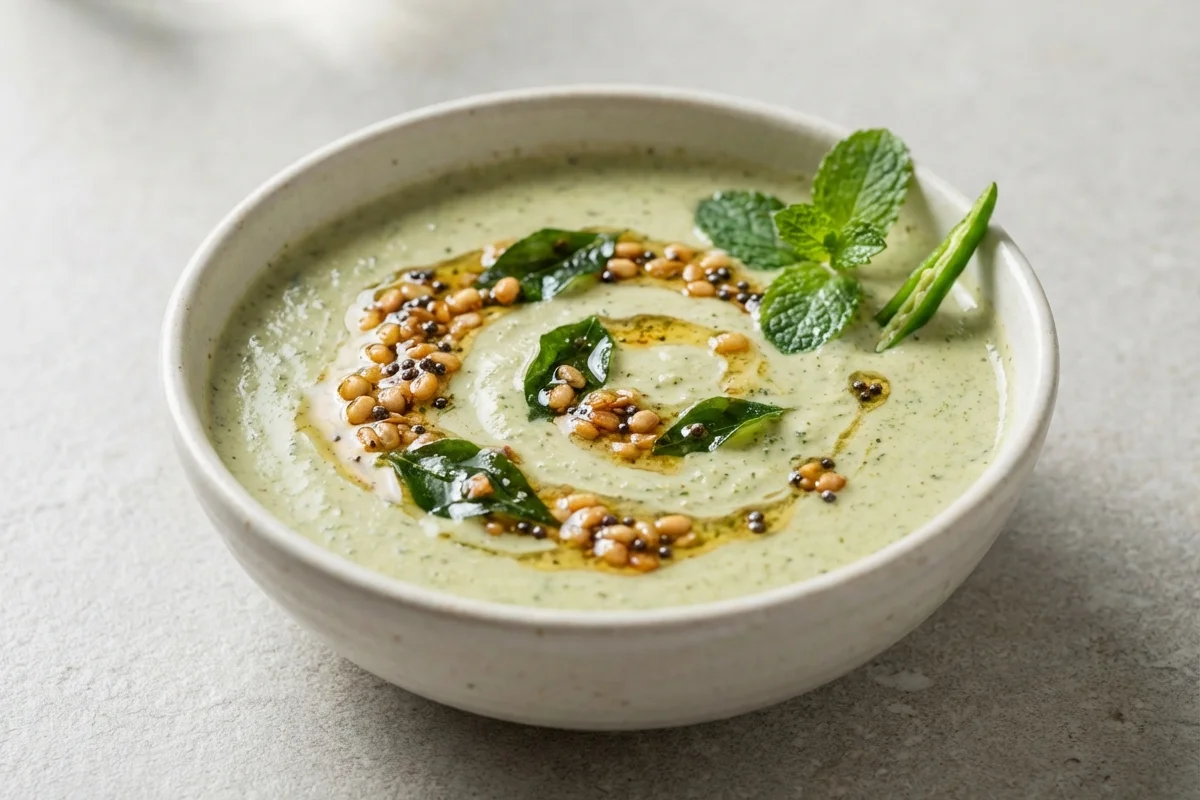
Pudina Thambuli
A cooling, no-cook yogurt-based side from Karnataka, where fresh mint leaves are ground with coconut, cumin, and green chili, then whisked into creamy curd. Light and refreshing, this thambuli soothes the palate and pairs perfectly with hot rice or spicy mains.
For 4 servings
- prep · ~2 min
Grind the mint-coconut paste.
1.In a mixer jar, add fresh mint leaves, grated coconut, green chili, cumin seeds, black pepper, and salt.2.Add 2 tbsp water and grind to a smooth, thick paste, scraping down the sides once.3.Avoid adding too much water — the paste should be thick.TIPGrind with minimal water for a thick paste; excess water dilutes the yogurt later. - mix · ~1 min
Whisk yogurt and combine with the paste.
1.In a bowl, whisk the chilled yogurt until completely smooth and lump-free.2.Add the ground mint-coconut paste and stir gently until evenly blended.3.Check consistency — it should coat the back of a spoon. Add a splash of water only if too thick.TIPUse fresh, thick curd for the creamiest result. Watery yogurt will make the thambuli too thin. - temper · ~2 min
Make the tempering.
1.Heat ghee in a small tempering pan over medium heat.2.Add mustard seeds and let them splutter (30 sec).3.Add cumin seeds and sauté until fragrant (10 sec).4.Toss in the dried red chili and curry leaves; fry until leaves turn crisp (15-20 sec).5.Immediately pour the hot tempering over the thambuli.TIPPour the tempering while it's still sizzling — the aroma infuses into the thambuli best that way. - mix · ~5 min
Mix and rest briefly.
Give the thambuli a gentle stir to incorporate the tempering. Let it rest for 5 minutes so the flavors meld.
TIPResting allows the mint and spices to bloom into the yogurt, deepening the flavor. - serve
Serve chilled or at room temperature.
Transfer Pudina Thambuli to a serving katori. Enjoy as a cooling side with steamed rice, dosa, or any spicy main dish.
What to keep in mind.
6 tips from the recipe — small details that make a real difference to the final dish.
- 1Use thick, fresh curd (preferably set overnight) for a creamy, non-watery base.
- 2Grind the mint-coconut paste with minimal water; a thick paste prevents thinning the yogurt.
- 3Pour the sizzling tempering immediately over the thambuli for maximum aroma infusion.
- 4Chill the yogurt before whisking — cold curd blends better and keeps the thambuli refreshing.
- 5Taste the paste before mixing; adjust green chili and salt to your preferred heat level.
- 6Let the finished thambuli rest for 5 minutes so the flavors meld beautifully.
Adapt it for your goals.
Vegan
Substitute yogurt with thick cashew or coconut yogurt for a fully plant-based version that keeps the creamy, cooling texture.
Nut freeNut-free
Replace grated coconut with roasted chana dal (split chickpeas) soaked and ground — it adds body and a mild nuttiness without using coconut.
Extra herb forwardExtra herb-forward
Add a small handful of fresh coriander leaves along with the mint for a more complex herbal flavor.
Low oilLow-oil
Skip the ghee tempering; instead dry roast mustard seeds and cumin in a non-stick pan and crush before stirring into the thambuli.
Why this is on our healthy list.
Digestive Aid
Cumin, mint, and curry leaves are traditionally known to support digestion, making this thambuli a soothing post-meal or side dish.
Cooling for the Body
Yogurt and mint naturally help cool the body, ideal for balancing spicy meals or warm weather.
Rich in Probiotics
The live cultures in fresh yogurt support gut health and immunity.
Source of Antioxidants
Mint and curry leaves provide antioxidants that help combat oxidative stress.
Frequently asked questions
Fresh mint is strongly recommended for its vibrant color and flavor; dried mint will lack the same fresh, aromatic quality and may taste muted.



.webp)


.webp)