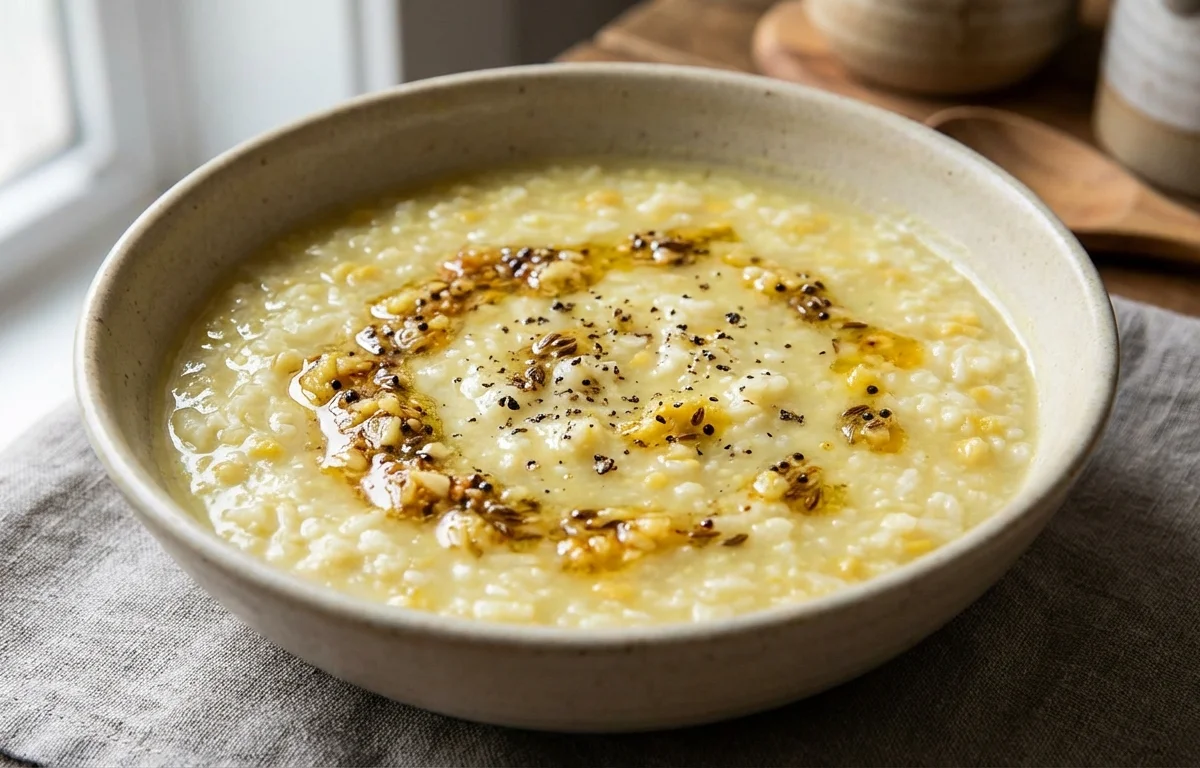
Rice Kanji
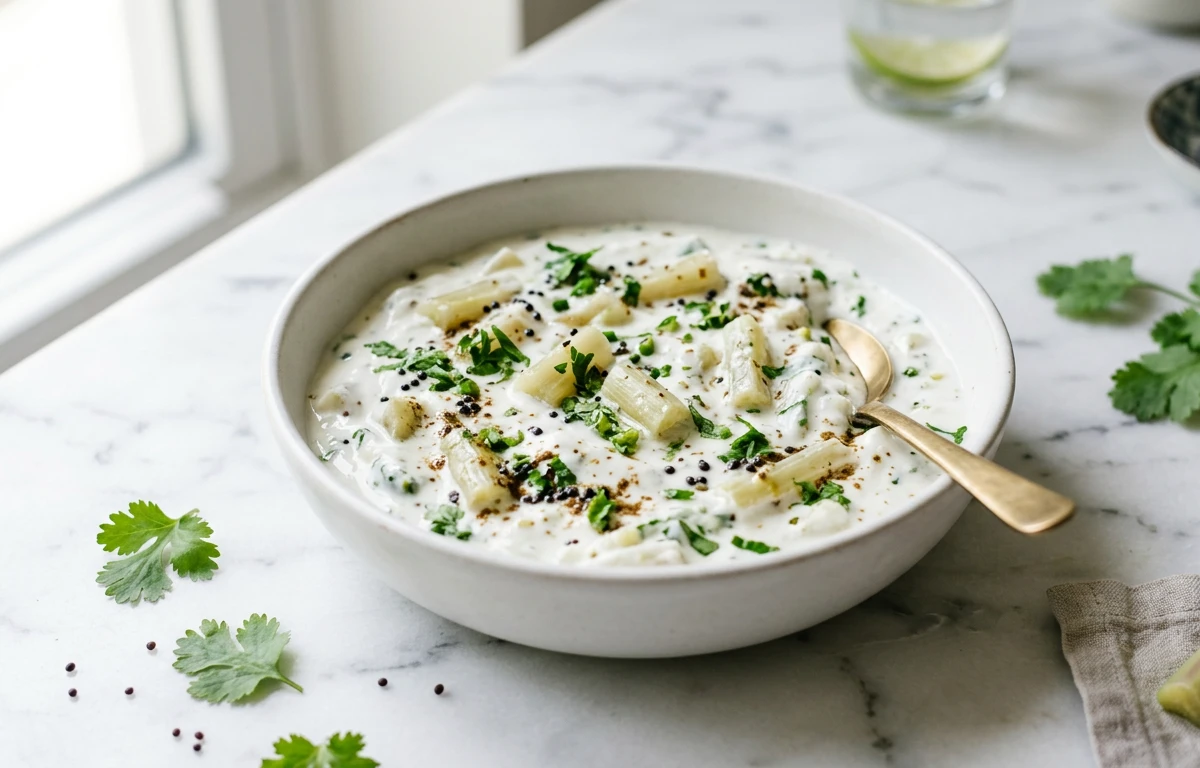
A warm, comforting bowl of creamy rice porridge that's soft, easily digestible, and incredibly light. This South Indian staple is made by slowly cooking rice in plenty of water until it breaks down into a luscious, soupy consistency. Often served as a simple breakfast or a gentle meal for all ages, it pairs beautifully with a drizzle of ghee and a side of tangy pickle.
For 4 servings
- prep · ~10 min
Wash and soak the rice.
Wash the rice thoroughly under running water 2-3 times until the water runs clear. Soak in fresh water for 10 minutes, then drain.
TIPSoaking helps the rice break down faster during cooking, yielding a creamier texture. - boil · ~5 min
Boil the rice with water.
1.In a heavy-bottomed pot, add the drained rice and 6 cups of water.2.Bring to a rolling boil over high heat.3.Once boiling, reduce the heat to low and add a pinch of salt. - simmer · ~25 min
Simmer until creamy and soft.
Cover the pot partially and let it simmer gently for 20-25 minutes. Stir occasionally to prevent sticking. The rice should break down completely into a thin, porridge-like consistency. If it becomes too thick, add a splash of hot water.
TIPDon't rush the simmer. Low and slow heat is the secret to perfectly creamy kanji. - mix · ~1 min
Mash or blend to desired texture.
Once the rice is very soft, use a whisk or the back of a ladle to mash it lightly against the sides of the pot. This releases the starch and creates a uniform, creamy consistency. Taste and adjust salt if needed.
- serve
Serve warm with a drizzle of ghee.
Ladle the hot kanji into bowls. Drizzle a drop of ghee on top of each serving. Serve immediately with a side of pickle, or a simple dry sabzi.
TIPKanji thickens as it cools. Stir in a little hot water or milk to loosen it up before reheating.
What to keep in mind.
7 tips from the recipe — small details that make a real difference to the final dish.
- 1Soak the rice for at least 10 minutes to help it break down faster for a creamier texture.
- 2Use a heavy-bottomed pot and stir occasionally to prevent the kanji from sticking and burning.
- 3Simmer on low heat for the full 20-25 minutes — rushing on high heat will leave the rice grainy.
- 4If the kanji thickens too much as it cools, stir in a splash of hot water or warm milk before serving.
- 5For an extra silky texture, mash the cooked rice with a whisk or ladle to release more starch.
- 6Leftover kanji can be refrigerated for up to 2 days; reheat gently with a little water to restore consistency.
- 7To make it more flavorful, cook the rice in a mix of water and leftover vegetable broth instead of plain water.
Adapt it for your goals.
Savory-spiced
Temper the kanji with a tadka of mustard seeds, cumin, dried red chilies, curry leaves, and asafoetida in ghee before serving for a fragrant, spiced South Indian twist.
high proteinHigh-protein
Add a handful of cooked moong dal (split yellow gram) along with the rice for a protein boost that also thickens the porridge naturally.
veganVegan
Replace ghee with a drizzle of coconut oil or a spoonful of coconut milk for a creamy, plant-based version that still feels rich.
sweet kanjiSweet-kanji
Skip the salt and ghee. Instead, stir in a tablespoon of jaggery or palm sugar and a pinch of cardamom powder for a comforting sweet breakfast porridge.
Why this is on our healthy list.
Easy to Digest
Rice kanji is a single-ingredient, gently cooked starch that is very soft and low in fibre, making it ideal for people with sensitive stomachs or recovering from illness.
Naturally Hydrating
With 6 cups of water per cup of rice, this porridge is high in fluid content and helps maintain hydration, especially useful in hot weather or for those who need extra liquids.
Low in Fat
The base recipe contains only a tiny drizzle of ghee, keeping the dish very low in fat and calories while still providing comfort and satiety.
Gluten-Free and Grain-Based
Made entirely from rice, this dish is naturally gluten-free and suitable for those with gluten intolerance or celiac disease.
Frequently asked questions
Yes, but brown rice takes longer to cook and won't break down as creamy. Use 8 cups of water and simmer for 40–50 minutes, stirring often.