
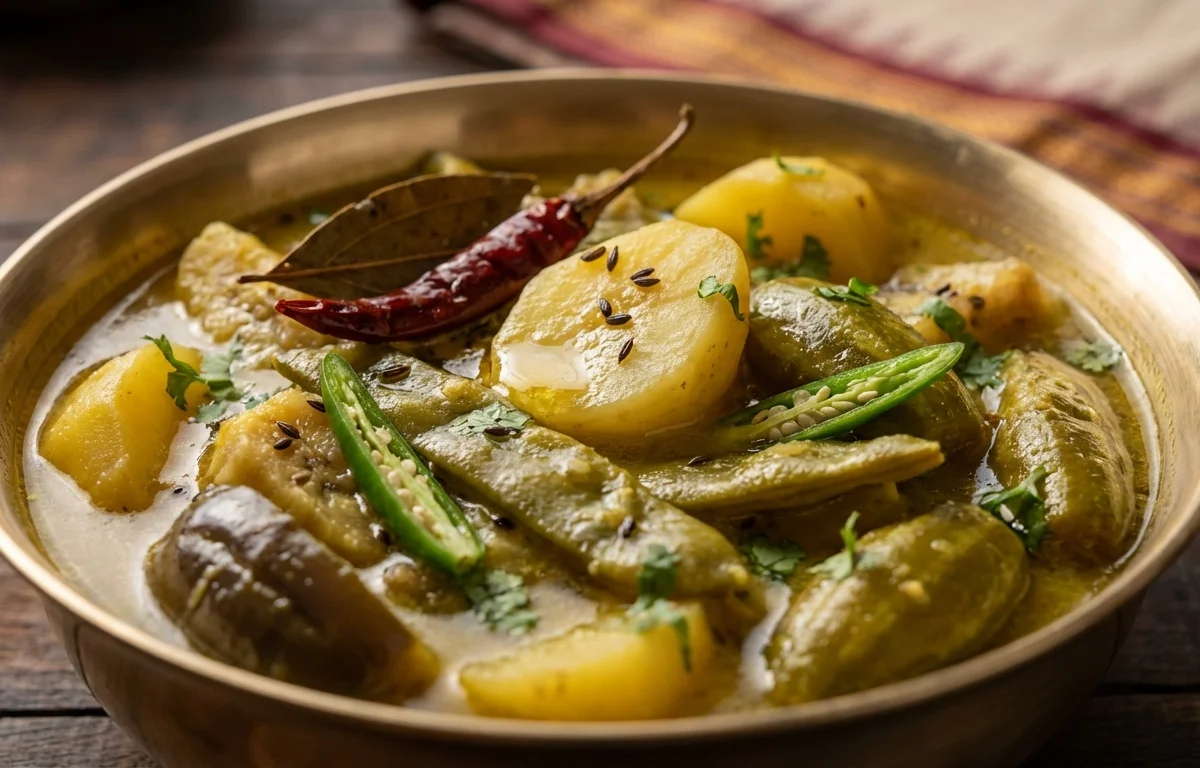
Sada Torkari
A light, everyday Bengali mixed vegetable curry that lets the natural sweetness of seasonal produce shine. Minimal spices, a gentle cumin-phoron temper, and a touch of ginger create a comforting, soupy dish perfect with steamed rice.
For 4 servings
- prep
Prep all the vegetables.
Peel and cube the potatoes, pumpkin, and eggplant into 1-inch pieces. Peel and slice the radish. Trim and chop the green beans. Grate the ginger and slit the green chilies.
- temper · ~2 min
Make the phoron (tempering).
1.Heat mustard oil in a deep pan or kadai over medium heat until it reaches smoking point.2.Lower the heat and add cumin seeds and bay leaves.3.Let the cumin splutter and become fragrant (about 30 seconds).TIPMustard oil must smoke to lose its raw pungency. If you don't have it, use any neutral vegetable oil. - saute · ~1 min
Bloom the ginger and turmeric.
Add the grated ginger and turmeric powder to the pan. Sauté for about 30 seconds until the raw smell disappears.
- saute · ~3 min
Sauté the vegetables.
Add all the cubed and chopped vegetables (potato, pumpkin, eggplant, green beans, radish) to the pan. Sprinkle in the salt and sugar. Stir gently for 2 to 3 minutes, coating the vegetables with the spices and oil.
TIPA quick sauté helps the vegetables hold their shape and absorb the tempering flavors. - simmer · ~20 min
Add water and simmer until tender.
1.Pour in 2 cups of water and add the slit green chilies.2.Increase the heat and bring the mixture to a boil.3.Once boiling, reduce the heat to low, cover the pan, and let it simmer for 15 to 20 minutes, or until all the vegetables are fork-tender and the gravy has a light, soupy consistency.TIPDon't over-stir during simmering. The vegetables are delicate and may break down. - garnish
Finish and serve.
Taste and adjust salt if needed. Turn off the heat and garnish generously with freshly chopped cilantro. Serve hot with steamed rice.
TIPSada Torkari tastes best when allowed to rest for 5 minutes before serving; the flavors settle beautifully.
What to keep in mind.
6 tips from the recipe — small details that make a real difference to the final dish.
- 1Cut all vegetables into uniform 1-inch cubes so they cook evenly and hold their shape.
- 2Let the mustard oil reach its smoking point before adding cumin seeds to tame its pungency and deepen the flavor.
- 3Add the vegetables in order of density (potatoes first) if you want some texture variation, though this recipe cooks them together for a soft, homogenous texture.
- 4Resist over-stirring during simmering; the tender vegetables can break apart and turn the curry mushy.
- 5Let the curry rest for 5 minutes off the heat before serving — the flavors meld and the gravy thickens slightly.
- 6This curry thickens as it cools; if reheating, add a splash of water to loosen the gravy.
Adapt it for your goals.
Low-oil
Reduce mustard oil to 1 tbsp and dry-roast cumin seeds before adding water; the vegetables will steam in their own juices for a lighter, oil-free version.
high proteinHigh-protein
Add ½ cup of cooked chana dal (Bengal gram) along with the water for a heartier meal with extra protein and a creamy texture.
veganVegan
Replace sugar with jaggery or date syrup for a vegan sweetener; the dish is already dairy-free and plant-based.
jainJain
Skip the onion and garlic (already absent) and replace potato with raw banana (plantain) to keep the dish Jain-friendly while maintaining the soft, starchy base.
Why this is on our healthy list.
Rich in Dietary Fiber
The mix of pumpkin, eggplant, green beans, and radish provides a variety of soluble and insoluble fibers that support digestion and gut health.
Low in Fat
With only 2 tablespoons of mustard oil for the entire dish, this curry is a light, low-fat option ideal for everyday meals.
Natural Sweetness Without Added Sugar
Pumpkin and carrot (if added) release their natural sugars during cooking, reducing the need for refined sugar; the small amount listed enhances savoriness, not sweetness.
Packed with Vitamins A and C
Pumpkin is an excellent source of vitamin A (beta-carotene) and green beans provide vitamin C, both supporting immune function and skin health.
Frequently asked questions
Yes, use any neutral vegetable oil like sunflower or canola, but the dish will lack the signature pungent flavor of mustard oil.



-curry.webp)
.webp)