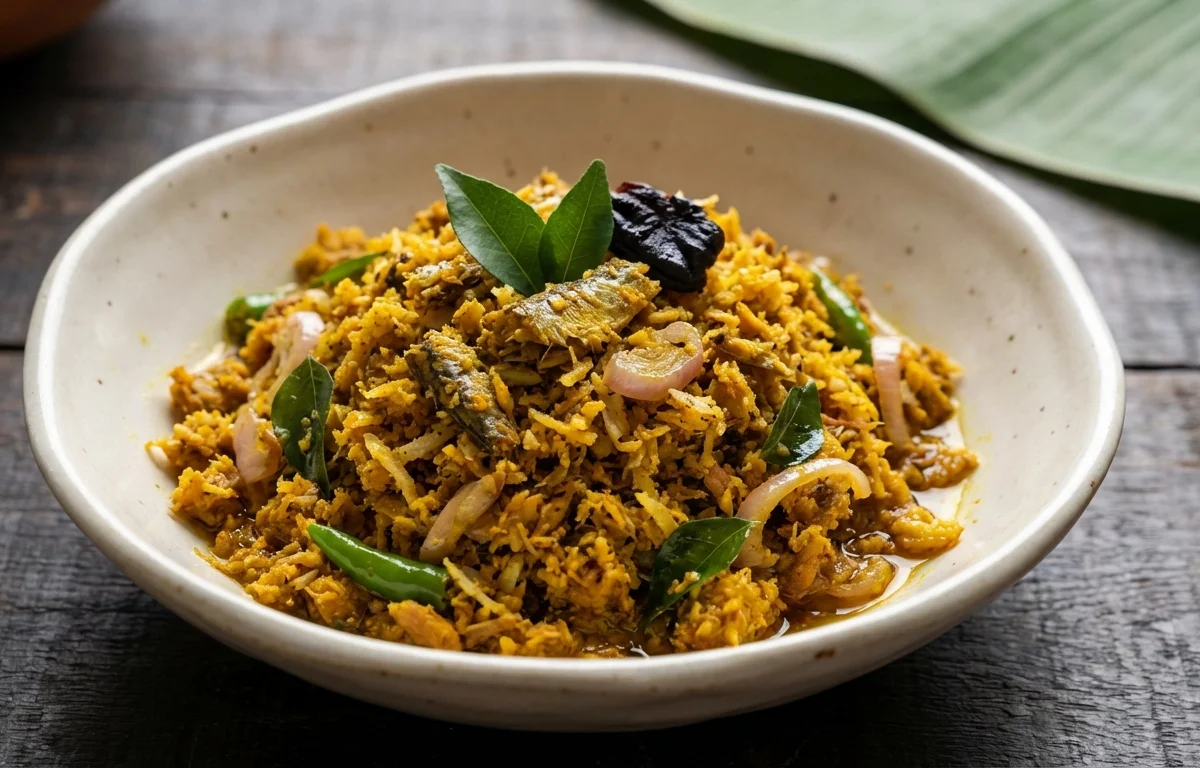
Sardine Peera
A classic Kerala delicacy where fresh sardines are slow-cooked with grated coconut, shallots, and green chilies. This semi-dry dish is packed with coastal flavors and pairs perfectly with steamed rice.
For 4 servings
Prepare the Coconut Masala
- In a small blender or food processor, combine the grated coconut, shallots, green chilies, ginger, garlic, and turmeric powder.
- Pulse 3-4 times for just a few seconds. The mixture should be coarse and crumbly, not a fine paste. Set aside.
Prepare the Kudampuli
- Rinse the kudampuli pieces under running water.
- Soak them in 1/4 cup of warm water for at least 15 minutes. This will soften them and release their sour flavor.
Combine Ingredients
- In a wide, heavy-bottomed pan or a traditional earthen pot (manchatti), add the cleaned sardines.
- Top the sardines with the prepared coarse coconut masala, salt, and one sprig of curry leaves.
- Gently mix everything with your hands, ensuring the fish is evenly coated without breaking it.
Slow-Cook the Peera
- Pour the soaked kudampuli along with its water over the fish mixture.
- Cover the pan with a lid and cook on low heat for 15-20 minutes.
- Do not stir with a spoon. Instead, hold the pan by its handles and gently swirl it every 5 minutes to prevent sticking and ensure even cooking.
- Cook until the sardines are tender and all the excess moisture has evaporated, resulting in a semi-dry consistency.
Finishing Touches
- Once cooked, turn off the heat.
- Drizzle the virgin coconut oil over the top and scatter the remaining sprig of curry leaves.
- Keep the pan covered and let it rest for at least 10 minutes. This allows the flavors to meld beautifully.
- Serve hot with steamed rice or Kerala matta rice.
What to keep in mind.
5 tips from the recipe — small details that make a real difference to the final dish.
- 1For the most authentic flavor, cook this dish in an earthen pot (manchatti).
- 2Always use fresh sardines for the best taste and texture. The fresher the fish, the better the peera.
- 3Never stir with a spatula or spoon as it will break the delicate fish. Gentle swirling is the key.
- 4Do not over-process the coconut mixture; a coarse, crumbly texture is essential for this dish.
- 5Letting the dish rest after cooking is crucial for the flavors to deepen and infuse.
Adapt it for your goals.
Fish Substitution
This recipe works wonderfully with other small fish like anchovies (netholi) or small mackerels.
Souring AgentSouring Agent
If kudampuli is unavailable, you can use a few pieces of raw green mango (pacha manga) added along with the coconut mix for a different tangy flavor.
Spice LevelSpice Level
For extra heat and a peppery flavor, add 1/2 teaspoon of coarsely crushed black peppercorns along with the coconut masala.
Why this is on our healthy list.
Heart and Brain Health
Sardines are an excellent source of omega-3 fatty acids (EPA and DHA), which are crucial for reducing inflammation, supporting cardiovascular health, and boosting brain function.
Strong Bones and Teeth
Sardines are typically eaten with their tiny, edible bones, making them a fantastic natural source of calcium and Vitamin D, both essential for maintaining strong bones and teeth.
High-Quality Protein
This dish provides high-quality protein from the sardines, which is vital for building and repairing tissues, muscle growth, and overall body function.
Rich in Micronutrients
Beyond omega-3s and calcium, sardines are packed with Vitamin B12, selenium, and phosphorus, which support energy production and cellular health.
Frequently asked questions
Yes, Sardine Peera is exceptionally healthy. Sardines are a powerhouse of omega-3 fatty acids, protein, vitamin D, and calcium. The use of fresh coconut provides healthy fats, and the dish is cooked with minimal oil, making it a highly nutritious choice.