
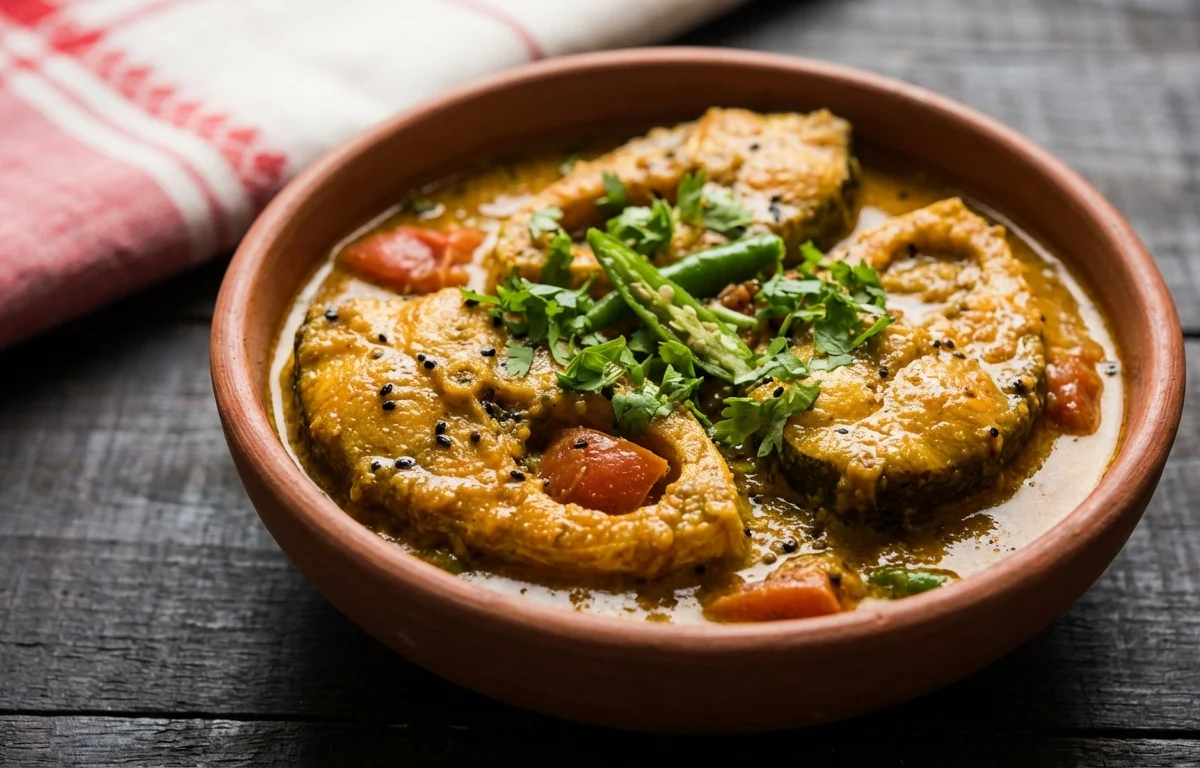
Sarso Machli
Fish gently cooked in a sharp, earthy mustard gravy with green chili and turmeric. This eastern Indian favorite is light on spices, deeply flavorful, and best enjoyed hot with plain rice.
For 4 servings
- prep · ~10 min
Season the fish.
Rub the fish with half of the turmeric powder and half of the salt. Set aside for 10 minutes while you prepare the mustard paste.
- mix · ~5 min
Grind the mustard paste.
1.Drain the soaked mustard seeds.2.Grind the mustard seeds with 2 green chili and a little water to a smooth paste.3.Strain if needed for a smoother gravy and to remove coarse husk.4.Mix the paste with the remaining turmeric powder and a little more water.TIPDo not over-grind the mustard seeds for too long, or the paste can turn bitter. - fry · ~4 min
Lightly fry the fish.
1.Heat mustard oil in a pan until it reaches smoking point, then lower the heat slightly.2.Slide in the fish pieces carefully.3.Fry lightly for about 1 minute per side without fully cooking them through.4.Lift the fish out gently and keep aside.TIPA light fry helps the fish hold its shape in the gravy. - temper · ~1 min
Make the base for the gravy.
In the same pan, add nigella seeds and let them sizzle for a few seconds. Add the slit green chili and stir briefly until fragrant.
- simmer · ~5 min
Cook the mustard gravy.
1.Pour the mustard paste into the pan carefully.2.Add the remaining water and stir well.3.Add the remaining salt and bring to a gentle simmer over low to medium heat.4.Cook for 4 to 5 minutes until the raw smell of mustard softens.TIPKeep the heat gentle once the mustard paste goes in, so the gravy stays smooth and not bitter. - simmer · ~6 min
Finish the fish in the gravy.
Place the lightly fried fish into the simmering mustard gravy. Cover and cook for 5 to 6 minutes, turning once if needed, until the fish is just cooked and the gravy lightly thickens.
- rest · ~5 min
Rest the curry for 5 minutes.
- serve
Serve hot with plain rice.
What to keep in mind.
8 tips from the recipe — small details that make a real difference to the final dish.
- 1Use rohu, bhetki, catla, or another firm steak-cut fish so it does not break in the thin mustard gravy.
- 2Soak the mustard seeds briefly and grind just until smooth; over-grinding or overheating them can make the paste bitter.
- 3If your mustard seeds have thick husk, strain the paste for a silkier jhol and a cleaner mustard flavor.
- 4Smoke the mustard oil first, then reduce the heat before frying, so its sharp raw edge mellows properly.
- 5Only lightly fry the fish; it should not be fully cooked before it goes into the gravy.
- 6Keep the mustard gravy at a gentle simmer, never a hard boil, or the sauce can split and taste harsh.
- 7Rest the curry for 5 minutes before serving so the fish absorbs the mustard-chili flavor.
- 8This dish tastes best fresh, but leftovers can be refrigerated for a day and reheated very gently to avoid overcooking the fish.
Adapt it for your goals.
Steamed-style
Skip the light fry and steam the fish in the mustard paste mixture for a softer, lighter result closer to Bengali bhapa-style flavors.
low oilLow-oil
Use less mustard oil and poach the fish directly in the simmering gravy; good for a lighter everyday version.
prawnPrawn
Replace the fish with large prawns and shorten the final simmer, for a quicker mustard seafood curry with sweeter flavor.
extra hotExtra-hot
Add more green chili or a little chili paste if you want a sharper, more fiery Bengali-style heat.
Why this is on our healthy list.
Protein-Rich Main Dish
The fish provides substantial protein, making this curry filling while still feeling light with its thin mustard gravy.
Contains Beneficial Fats
Fish and mustard oil contribute fats that add satiety and help carry the flavor of mustard, chili, and nigella well.
Lightly Spiced and Digestible
With few heavy spices and no cream, onion, or tomato, this dish stays relatively light and lets the fish remain the focus.
Turmeric and Mustard Goodness
Turmeric and mustard seeds bring plant compounds along with their strong savory character, adding depth beyond simple heat.
Frequently asked questions
Usually the mustard was over-ground, ground too hot, or cooked on high heat. Grind briefly and simmer the paste gently.


-curry.webp)
.webp)