Schweinshaxe
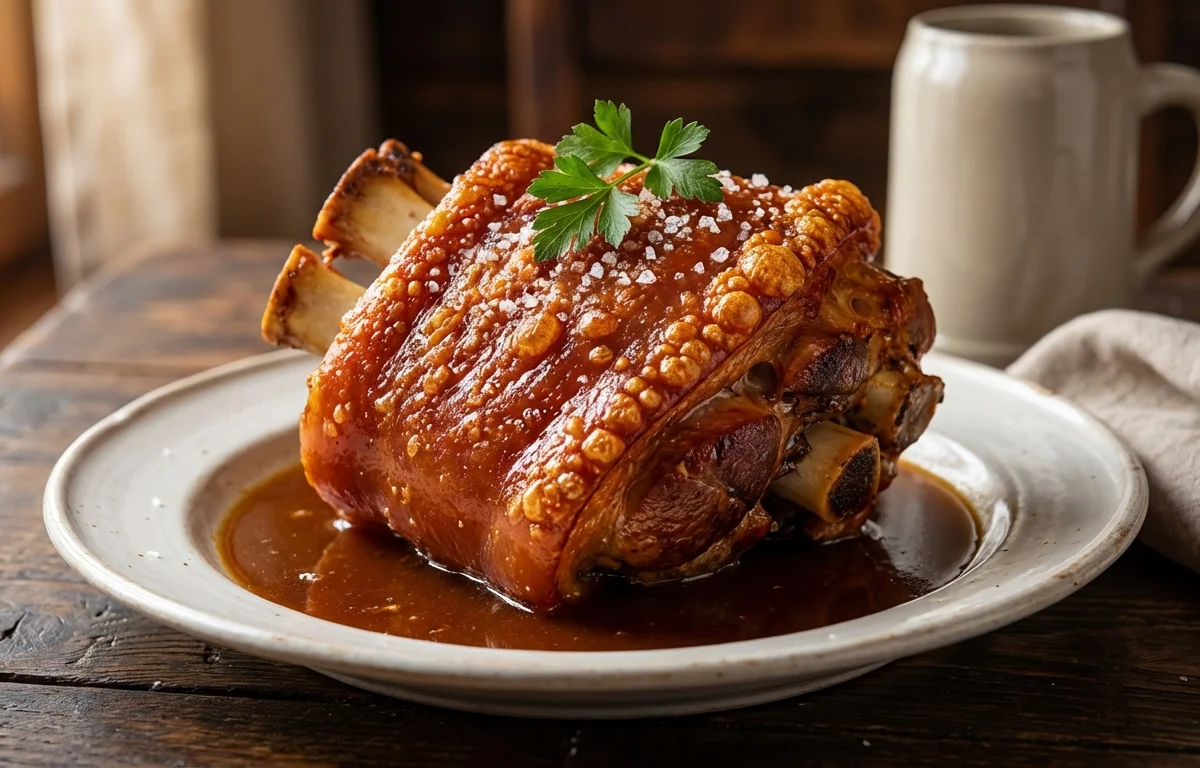
A showstopping Bavarian classic featuring a hefty pork knuckle roasted low and slow until the skin transforms into an impossibly crispy crackling, while the meat underneath stays fork-tender and juicy. Served with dark beer gravy and classic sides, this is Oktoberfest on a plate and worth every minute of its long roast.
For 4 servings
- prep · ~10 min
Preheat oven and prep the pork knuckles.
1.Preheat the oven to 350°F (175°C).2.Pat the pork knuckles completely dry with paper towels.3.Using a sharp knife, score the skin in a diamond pattern about 1 inch apart.4.Rub the skin with vegetable oil, then season all sides with salt, pepper, and caraway seeds.TIPScoring the skin deeply—without cutting into the meat—lets the fat render out and the skin blister into crackling. - prep · ~5 min
Build the roasting bed.
1.Scatter the chopped carrot, onion, celery, and smashed garlic cloves across the bottom of a large roasting pan.2.Place a roasting rack over the vegetables.3.Arrange the pork knuckles on the rack, skin side up. - roast · ~120 min
Pour in beer and water, then roast covered.
1.Pour the dark beer and water into the bottom of the roasting pan, being careful not to pour it over the pork skin.2.Cover the roasting pan tightly with aluminum foil.3.Roast for 2 hours, keeping the liquid level from fully drying out.TIPThe steam trapped under the foil gently braises the meat to fork-tender. Resist lifting the foil too often. - roast · ~40 min
Crank the heat and crisp the crackling.
1.Remove the foil and increase the oven temperature to 425°F (220°C).2.Continue roasting for 30 to 40 minutes, until the skin blisters and turns deeply golden and crisp.3.Check with an instant-read thermometer: the internal meat temperature must reach 190°F (88°C) for maximum tenderness.TIPIf some spots aren't crackling, tent those areas lightly with foil and keep roasting. Crackling can go from golden to burnt fast, so watch closely. - rest · ~15 min
Rest the knuckles and finish the beer gravy.
1.Transfer the pork knuckles to a cutting board and let them rest, uncovered, for 10 minutes.2.Strain the pan juices through a mesh strainer into a small saucepan. Discard the solids.3.Skim off excess fat from the surface of the juices, then bring to a simmer over medium heat.4.Whisk the cornstarch slurry into the simmering liquid and cook until slightly thickened, about 2 minutes. - serve
Serve with the dark beer gravy.
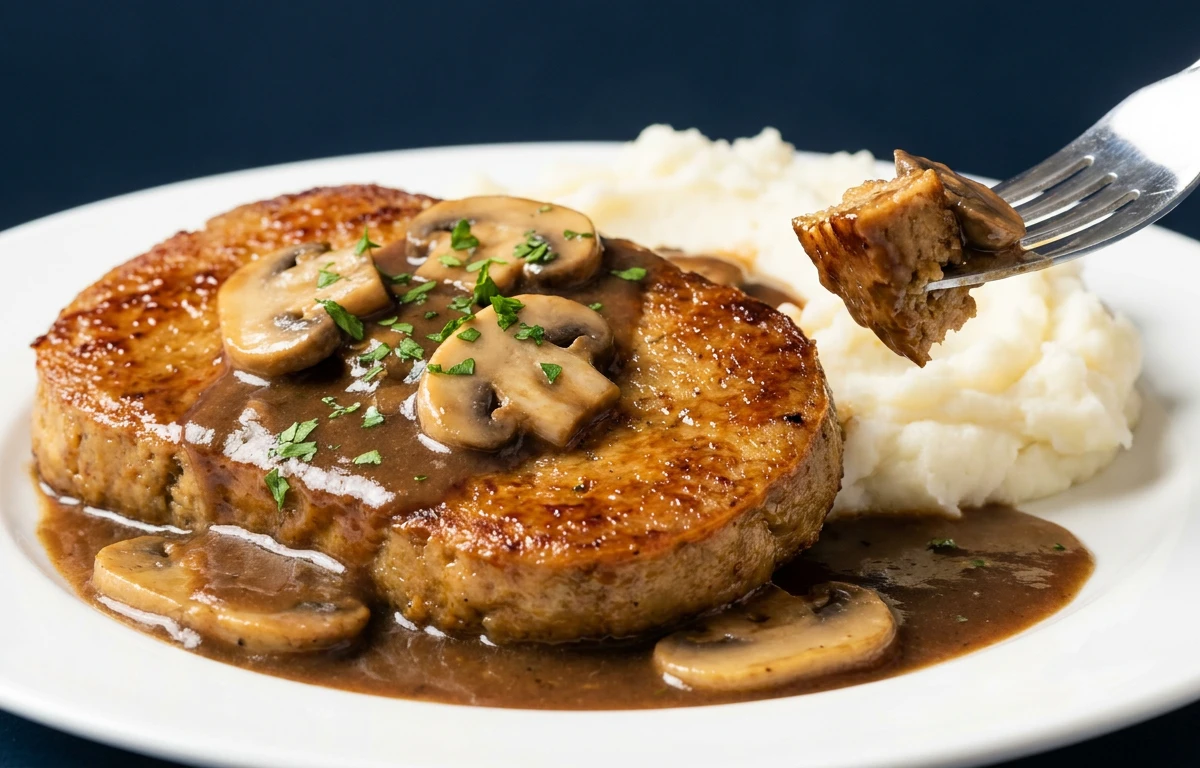
Place one pork knuckle on each plate. Drizzle generously with the dark beer gravy and serve immediately with potato dumplings, sauerkraut, or a crisp green salad.
What to keep in mind.
6 tips from the recipe — small details that make a real difference to the final dish.
- 1Pat the pork knuckles bone-dry before scoring—moisture is the enemy of crackling.
- 2Use a sharp, thin-bladed knife to score the skin; a dull knife will tear rather than cut cleanly.
- 3Keep the braising liquid from touching the skin during the covered roast to prevent steaming it soft.
- 4For extra-crisp skin, let the knuckles air-dry uncovered in the fridge overnight before roasting.
- 5If the crackling isn't blistering evenly, rotate the pan halfway through the high-heat stage.
- 6Let the meat rest uncovered after roasting so the skin stays crisp, not steamy.
Adapt it for your goals.
Low-oil
Skip the oil rub on the skin and instead mist it lightly with cooking spray before roasting. The crackling will still crisp, but with less fat—perfect for those watching oil intake.
beer freeBeer-free
Replace the dark beer with an equal amount of unsalted chicken or vegetable broth, plus 1 teaspoon of apple cider vinegar for acidity. The gravy will be lighter but still deeply savory.
gluten freeGluten-free
Use a gluten-free dark beer (or broth as above) and thicken the gravy with arrowroot or potato starch instead of cornstarch. Double-check that the caraway seeds are certified gluten-free.
spiced upSpiced-up
Add 2 star anise pods and a cinnamon stick to the roasting liquid for a warm, aromatic twist. The spices complement the dark beer and give the gravy a subtle mulled character.
Why this is on our healthy list.
Rich in Collagen
Pork knuckles are packed with connective tissue that breaks down into gelatin during slow roasting, supporting joint health and skin elasticity.
Good Source of B Vitamins
The pork meat provides B6 and B12, essential for energy metabolism and nerve function.
Contains Iron and Zinc
This cut of pork is naturally high in heme iron and zinc, supporting oxygen transport and immune health.
Caraway Aids Digestion
Caraway seeds are traditionally used to help digestion, especially with rich, heavy meats.
Vegetable Base Provides Fiber
The carrots, onion, and celery in the roasting bed contribute dietary fiber and antioxidants to the pan juices.
Frequently asked questions
Yes, but the crackling will soften. Roast fully, let cool, then reheat uncovered at 400°F for 10-15 minutes to re-crisp the skin just before serving.