
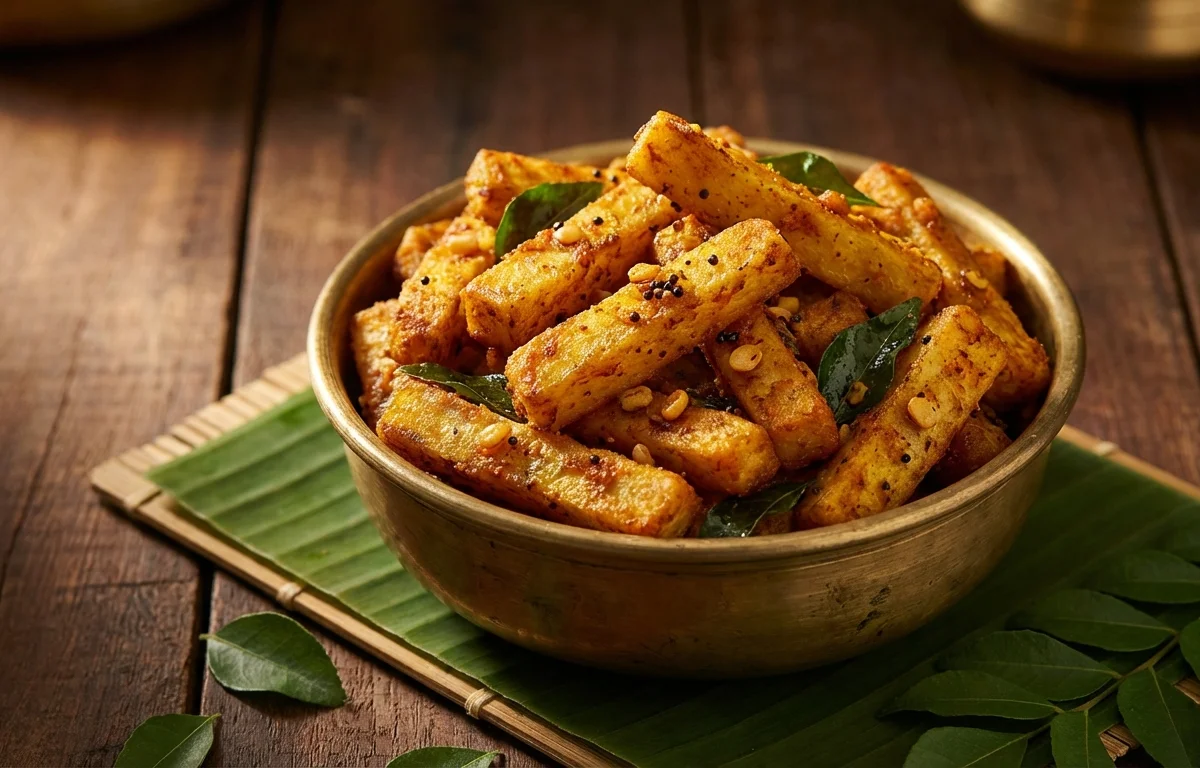
Seppankizhangu Roast
Crisp-edged colocasia roast with a soft center, tossed in simple South Indian spices. It is earthy, lightly spicy, and perfect alongside rasam rice, curd rice, or a homestyle sambar meal.
For 4 servings
- boil · ~20 min
Boil the seppankizhangu until just tender.
1.Add seppankizhangu, water, and the salt for boiling water to a pot.2.Bring to a boil over medium heat and cook until the roots are just tender but not falling apart, about 18 to 20 minutes.3.Drain the water and let the seppankizhangu cool enough to handle.TIPDo not overcook here or the pieces will break while roasting. - prep · ~7 min
Peel and slice the boiled seppankizhangu.
1.Rub off the loosened skin with your fingers or a small knife.2.Slice the seppankizhangu into thick rounds.3.Spread the pieces on a plate so excess moisture can dry for a few minutes. - mix · ~2 min
Coat the pieces with the spice mix.
Sprinkle red chili powder, turmeric powder, asafoetida, rice flour, and the salt for roasting over the sliced seppankizhangu. Toss gently so the pieces are evenly coated without breaking.
- temper · ~2 min
Make the tempering.
1.Heat oil in a wide pan over medium heat.2.Add mustard seeds and let them splutter.3.Add curry leaves and fry for a few seconds until fragrant.TIPUse a wide pan so the pieces sit in one layer and crisp better. - fry · ~16 min
Roast the seppankizhangu until crisp.
1.Add the coated seppankizhangu pieces to the pan in a single layer.2.Cook on medium heat for 4 to 5 minutes without stirring too often.3.Turn the pieces gently and continue roasting until golden and crisp on the edges, about 10 to 12 minutes more.TIPFlip gently with a flat spatula to keep the slices whole. - serve
Serve hot.
Serve the seppankizhangu roast hot as a side with rice, sambar, rasam, or curd rice.
What to keep in mind.
6 tips from the recipe — small details that make a real difference to the final dish.
- 1Boil only until a knife slides in with slight resistance; overcooked seppankizhangu will crumble in the pan.
- 2After slicing, let the rounds air-dry a few minutes so the rice flour clings better and the edges crisp faster.
- 3Use a wide, heavy pan and keep the pieces in a single layer; crowding makes them steam instead of roast.
- 4Do not stir constantly—give each side time to form a crust before flipping with a flat spatula.
- 5If the roots feel very starchy after boiling, wipe the slices lightly before seasoning to prevent gummy coating.
- 6Leftovers re-crisp best in a tawa or air fryer, not the microwave, which softens the crust.
Adapt it for your goals.
Low-oil
Roast the spice-coated slices on a well-greased tawa or in an air fryer with a light oil drizzle for a lighter version.
extra spicyExtra-spicy
Increase the red chili powder slightly and add a pinch of crushed black pepper for a sharper, hotter roast.
no asafoetidaNo-asafoetida
Skip the asafoetida if unavailable or if avoiding it; the mustard-curry leaf tempering still gives plenty of flavor.
garlicGarlic
Add a few sliced garlic cloves after the mustard splutters for a bolder roast that pairs especially well with rasam rice.
Why this is on our healthy list.
Root Vegetable Energy
Seppankizhangu provides satisfying carbohydrate-rich energy, making this side dish hearty and filling with a rice meal.
Digestive Spice Support
Asafoetida, curry leaves, and mustard seeds are commonly used in South Indian cooking to make starchy dishes feel lighter and more aromatic.
Moderate Ingredient List
This roast relies on a short list of pantry spices and a modest amount of oil instead of heavy batters or rich gravies.
Frequently asked questions
It was likely overboiled or stirred too much while roasting. Cook the roots only until just tender, dry the slices briefly, and flip gently.


