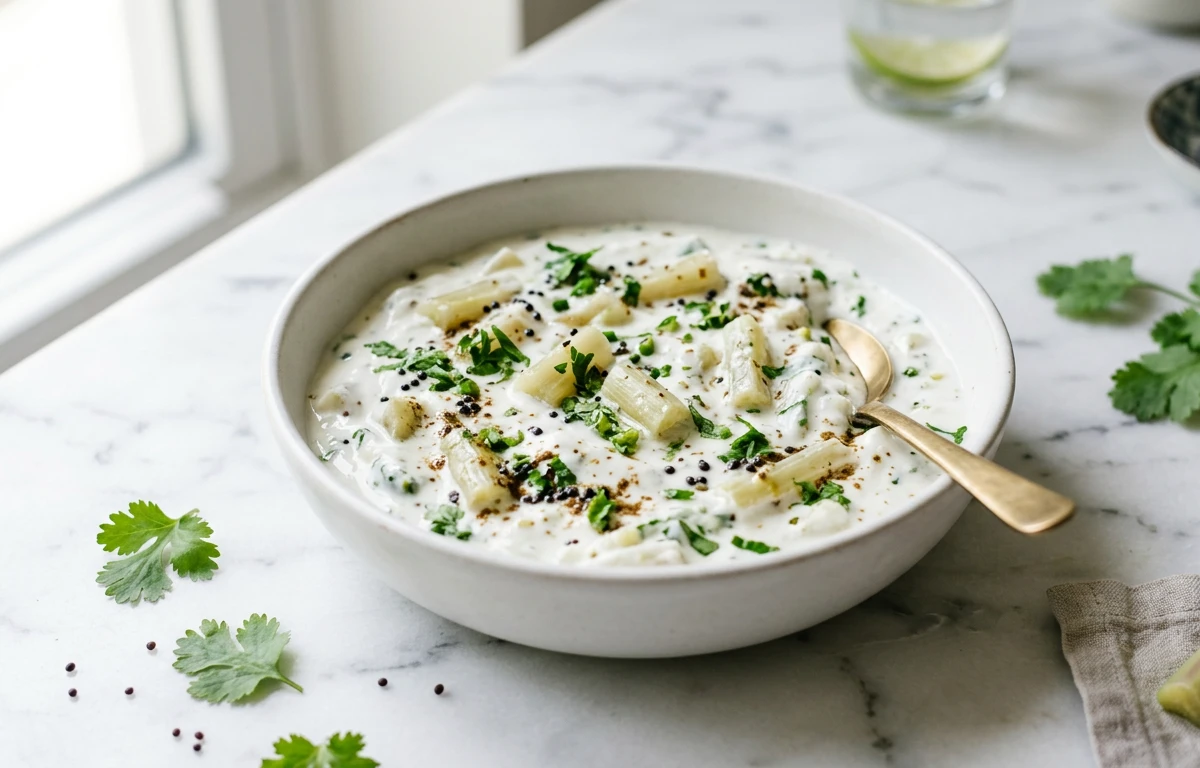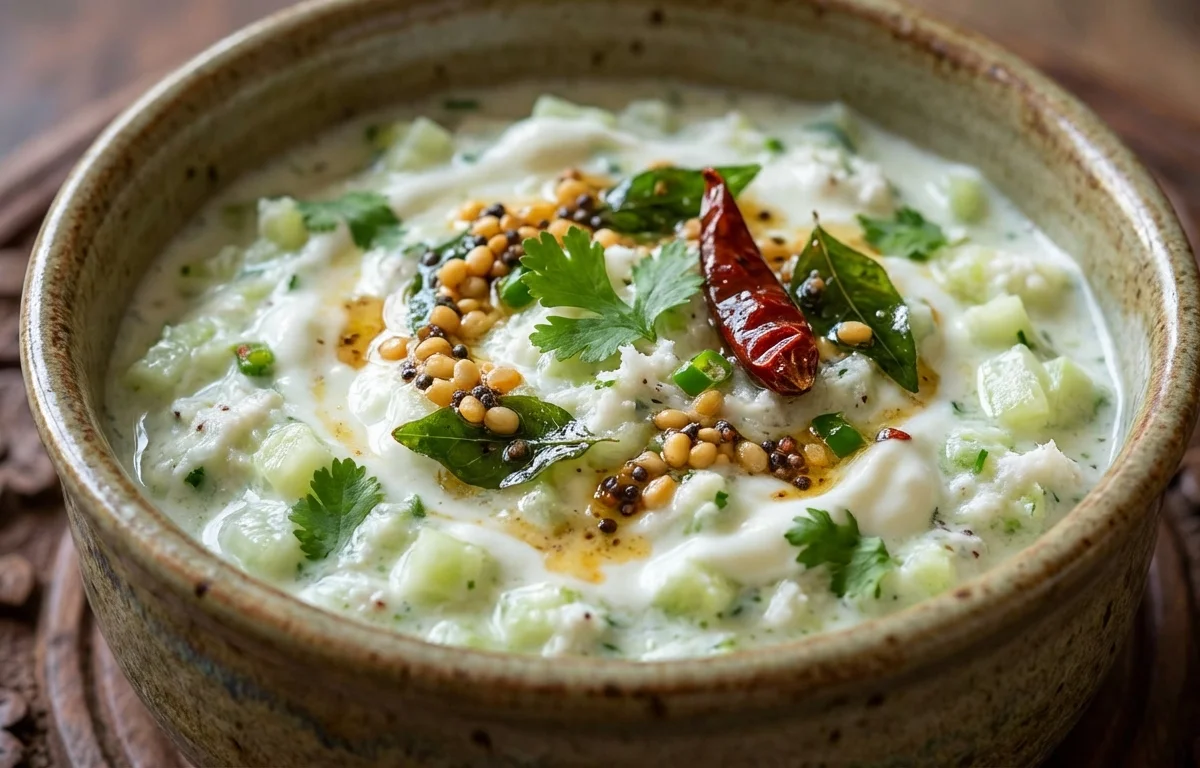
Southekayi Hasi Gojju
A vibrant, no-cook Karnataka-style chutney-like side dish made from fresh southekayi (yellow cucumber). The crisp grated cucumber mingles with fresh coconut, green chilies, and a zesty hit of tamarind, creating a cool, tangy, and spicy accompaniment. Ready in minutes without any cooking, it pairs beautifully with hot rice and a drizzle of ghee.
For 4 servings
- prep
Prepare the southekayi and coconut base.
1.Peel the southekayi and cut it in half lengthwise. Scoop out any hard seeds, then grate the flesh using the large holes of a box grater.2.Squeeze the grated cucumber lightly with your hands to remove excess water. Save the water for adjusting consistency later if needed.3.In a mixing bowl, combine the grated coconut, green chilies, tamarind paste, jaggery, and salt.TIPDon't discard the cucumber water — the dish is meant to be slightly juicy, and you can add small splashes of it back if the mixture feels too dry. - mix
Grind or crush the coconut-spice mixture.
1.Transfer the coconut mixture to a mortar and pestle or a small mixer jar.2.Pulse or crush coarsely — about 3 to 4 pulses in a mixer. The texture should be rough and crumbly, not a smooth paste.3.Add the coconut-spice mixture to the grated southekayi and mix well.TIPAvoid making a fine paste. The signature texture of hasi gojju comes from a coarse, freshly crushed mixture. - temper · ~2 min
Make the tempering.
1.Heat oil in a small pan over medium heat until it shimmers.2.Add mustard seeds and let them splutter.3.Add urad dal and cumin seeds. Sauté until the dal turns golden.4.Toss in the broken dried red chili and curry leaves. Sauté for 10 seconds until fragrant.TIPKeep the heat medium. Urad dal burns quickly and turns bitter if the pan is too hot. - mix
Combine the tempering with the cucumber mixture.
Pour the hot tempering, including all the oil and spices, directly over the cucumber-coconut mixture. Stir well to combine everything evenly.
- garnish
Garnish and serve.
Top with freshly chopped coriander leaves. Serve immediately with hot steamed rice and a spoonful of ghee, or enjoy as a refreshing side with rotis.
TIPHasi gojju tastes best right after it's made. If resting, the cucumber will release more water, so give it a quick stir before serving.
What to keep in mind.
7 tips from the recipe — small details that make a real difference to the final dish.
- 1Use the large holes of a box grater for a pleasant, nubby texture that holds the masala well.
- 2Squeeze the grated cucumber lightly — too much pressure will make the gojju watery and bland.
- 3Reserve the squeezed-out cucumber water to adjust the consistency if the gojju seems dry after mixing.
- 4Pulse the coconut-chili mixture coarsely in a mixer; a smooth paste will ruin the characteristic mouthfeel.
- 5Fry urad dal on medium heat until just golden — burnt dal adds a bitter note to the dish.
- 6Pour the hot tempering directly over the cucumber mixture while the oil is still sizzling for maximum aroma.
- 7Serve immediately after garnishing; if it rests, stir once before serving to reincorporate any released water.
Adapt it for your goals.
Low-oil
Skip the tempering entirely: simply mix raw mustard seeds, cumin, and curry leaves into the cucumber-coconut base. The dish stays oil-free but still aromatic.
nut freeNut-free
Replace fresh coconut with an equal amount of grated raw papaya or finely chopped roasted peanuts for a nut-free version that mimics the texture.
jainJain
Omit garlic and onion (already absent) and use raw cane sugar in place of jaggery if jaggery is made with bone char, or substitute with dates powder.
high proteinHigh-protein
Add ¼ cup of cooked, mashed chickpeas or crumbled paneer to the cucumber mixture for a protein boost without altering the core flavor.
Why this is on our healthy list.
High in Hydration
Yellow cucumber is over 95% water, making this dish naturally hydrating and cooling — ideal for hot weather.
Rich in Electrolytes
Coconut provides potassium and magnesium, which help maintain fluid balance and support muscle function.
Low in Calories
With no cooking fats and minimal oil in the tempering, this gojju is a light, low-calorie accompaniment.
Digestive-Friendly
Tamarind and jaggery both stimulate digestive enzymes, while cumin and curry leaves aid gut health.
Frequently asked questions
English or Persian cucumbers work in a pinch, but they contain more water. Squeeze out extra liquid and reduce the added reserved water to keep the gojju from becoming too runny.