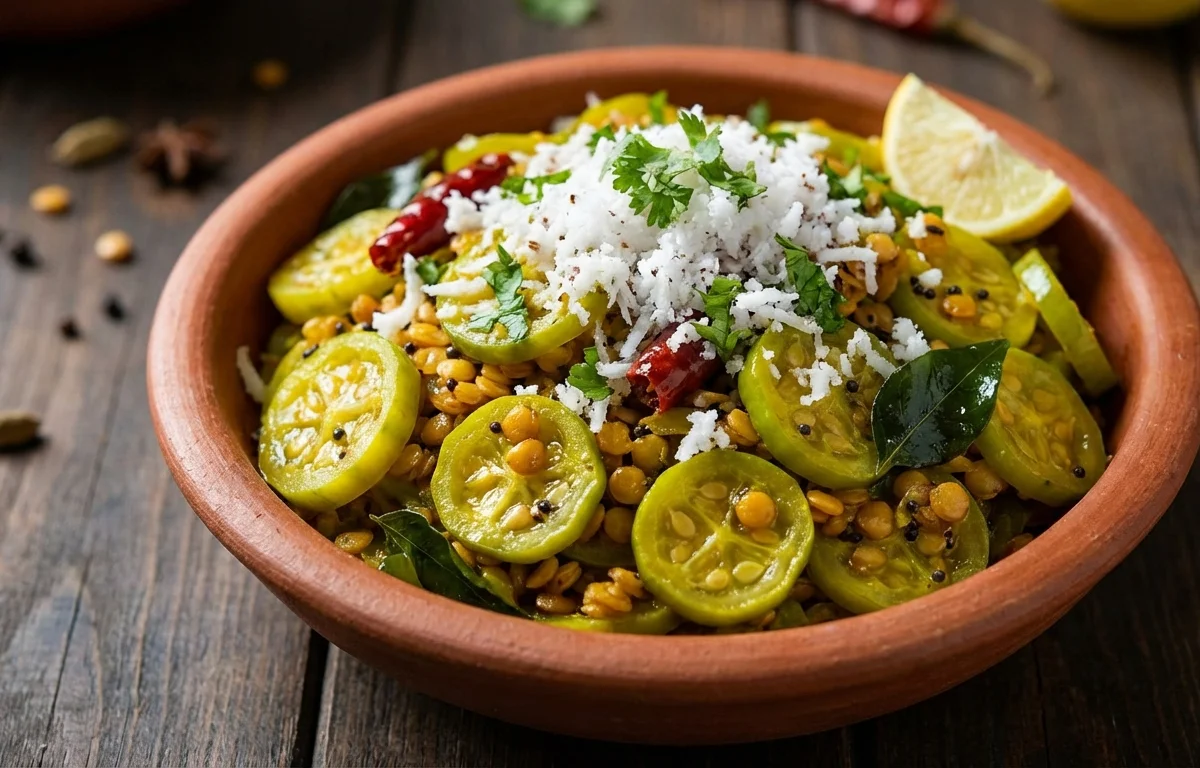
Thondekayi Palya
A simple, everyday Karnataka-style stir-fry made with tender ivy gourd slices. The ivy gourd is cooked until just soft but still lightly crisp, then finished with a tempering of mustard seeds, curry leaves and fresh grated coconut. A quick, light side dish that pairs perfectly with chapati or rice and sambar.
For 4 servings
- prep
Prep the ivy gourd.
Wash the ivy gourd thoroughly and pat dry. Trim both ends and slice into thin rounds, about 3-4 mm thick. Set aside.
TIPChoose tender ivy gourds that feel firm and have a vibrant green skin with no browning. - saute · ~10 min
Cook the ivy gourd.
1.Heat 1 tsp oil in a heavy-bottomed pan over medium heat.2.Add the sliced ivy gourd and a pinch of salt. Stir gently to coat.3.Cover and cook on low heat for 8-10 minutes, stirring once halfway. Cook until the slices are tender and lightly golden in spots.TIPDo not add water — the ivy gourd releases its own moisture. Too much stirring breaks the slices. - temper · ~2 min
Make the tempering.
1.Push the ivy gourd to the sides, making a well in the center. Add the remaining 1 tsp oil to the well.2.Drop in mustard seeds and let them splutter (30 sec).3.Add urad dal and cumin seeds, fry until the dal turns golden (30 sec).4.Add dried red chili and curry leaves and sauté for 15 seconds until fragrant.TIPMake a generous well in the center so the spices crackle directly in the hot oil. - mix · ~2 min
Season and finish.
1.Sprinkle turmeric powder, coriander powder and red chili powder over the ivy gourd.2.Mix everything gently until the spices coat all the slices evenly.3.Cook uncovered on low heat for 2 minutes, letting any excess moisture evaporate.4.Turn off the heat and squeeze fresh lemon juice over the top. - garnish
Garnish with fresh coconut and serve.
Sprinkle grated fresh coconut over the palya and toss once gently. Serve warm with chapati, ragi mudde, or steamed rice and sambar.
TIPGarnish with coconut just before serving to keep it fresh and moist.
What to keep in mind.
6 tips from the recipe — small details that make a real difference to the final dish.
- 1Choose tender ivy gourds that are firm, bright green, and free of blemishes for the best texture.
- 2Do not add water while cooking—ivy gourd releases enough moisture to steam itself tender.
- 3Make a wide well in the center of the pan when tempering so the spices crackle directly in the hot oil.
- 4Stir the ivy gourd gently and only once midway to keep the slices intact and prevent mushiness.
- 5Add the grated coconut just before serving to keep it fresh, moist, and vibrant.
- 6For extra crunch, increase the heat slightly in the final 2 minutes to evaporate any remaining moisture.
Adapt it for your goals.
Low-oil
Replace the oil with a splash of water for the initial cooking and use a dry tempering technique (toast spices in a small pan and sprinkle over) for a lighter version.
nuttyNutty
Add 1 tablespoon of roasted peanuts or crushed cashews along with the coconut for extra crunch and protein.
spicierSpicier
Increase the dried red chilies to 4 and add ½ teaspoon of crushed black pepper along with the red chili powder for a fiery kick.
herbalHerbal
Stir in 2 tablespoons of finely chopped fresh coriander leaves along with the coconut for a fresh herbal note.
Why this is on our healthy list.
Rich in Fiber
Ivy gourd is naturally high in dietary fiber, which supports healthy digestion and helps maintain steady energy levels.
Low in Calories
This stir-fry uses minimal oil and no heavy creams, making it a light, low-calorie side dish suitable for weight management.
Good Source of Antioxidants
Ingredients like curry leaves, turmeric, and fresh coconut provide antioxidants that help combat oxidative stress.
Supports Heart Health
The use of heart-friendly oils and spices like cumin and coriander may help support normal blood pressure and cholesterol levels.
Frequently asked questions
Fresh ivy gourd is best for texture, but frozen works if thawed completely and patted dry—expect slightly softer results.