Tomato Chutney
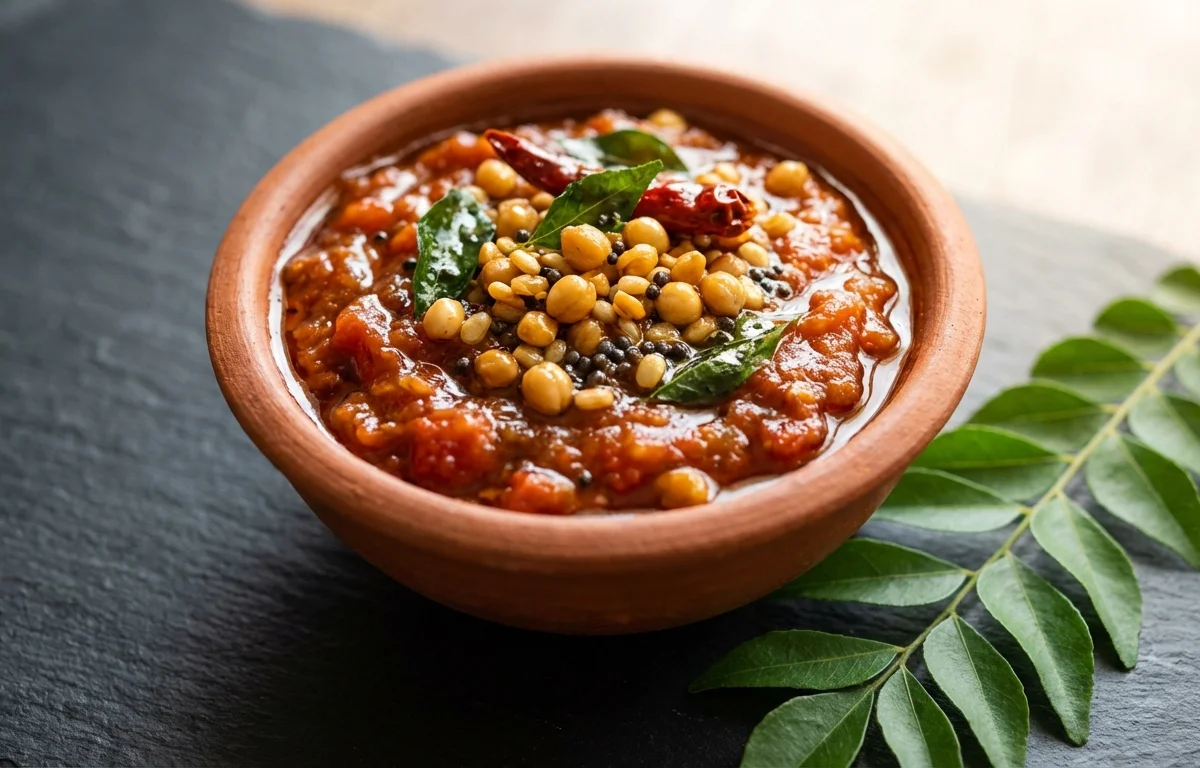
A tangy and spicy South Indian style chutney made without onion or garlic, adhering to Jain dietary principles. Ripe tomatoes are simmered with roasted lentils and aromatic spices, then finished with a classic tempering to create a versatile and flavorful condiment perfect for dosas, idlis, or rice.
For 4 servings
Roast Lentils and Spices
1.Heat 1 tbsp of sesame oil in a heavy-bottomed pan (kadai) over a low-medium flame.2.Add the chana dal and urad dal. Sauté for 2-3 minutes, stirring continuously until they turn light golden and fragrant. Do not let them burn.3.Add the dried red chilies and 1/4 tsp of asafoetida. Continue to sauté for another 60 seconds until the chilies puff up slightly.Cook the Tomatoes
1.Add the chopped tomatoes, tamarind paste, jaggery (if using), and salt to the pan.2.Stir well to combine. Cover the pan and cook on a medium-low flame for 10-12 minutes, stirring occasionally.3.The mixture is cooked when the tomatoes are completely soft and mushy, and oil begins to separate from the sides.Cool and Grind the Mixture
1.Turn off the heat and transfer the cooked mixture to a plate to cool down completely. This prevents steam buildup in the blender.2.Once at room temperature, transfer the mixture to a blender jar.3.Grind to a smooth or slightly coarse paste, adding 1-2 tablespoons of water only if needed to facilitate grinding.Prepare the Tempering (Tadka)
1.In a small tempering pan, heat the remaining 1 tbsp of sesame oil over medium heat.2.Once hot, add the mustard seeds and let them splutter completely, which takes about 30 seconds.3.Add the curry leaves (stand back as they will pop) and the remaining 1/4 tsp of asafoetida. Sauté for 15 seconds until the leaves are crisp.Combine and Serve
1.Pour the hot tempering over the ground chutney in a serving bowl.2.Mix thoroughly to incorporate the flavors.3.Serve the Jain Tomato Chutney with hot idlis, dosas, uttapam, or as a side with rice.
What to keep in mind.
6 tips from the recipe — small details that make a real difference to the final dish.
- 1Use ripe, fleshy tomatoes like Roma or Plum for the best flavor, color, and texture.
- 2Roasting the dals on a low flame is crucial for a nutty aroma. If they burn, the chutney will taste bitter.
- 3Always cool the tomato mixture completely before grinding. Grinding a hot mixture can cause the blender lid to pop off and can alter the taste.
- 4Asafoetida (hing) is a key ingredient in Jain cooking, providing a savory depth that mimics onion and garlic.
- 5For a thicker consistency, simmer the chutney for an additional 3-5 minutes after adding the tempering.
- 6Adjust the tanginess by increasing or decreasing the tamarind paste. If your tomatoes are very tangy, you may need less.
Adapt it for your goals.
Spice Level
For a milder chutney, use fewer red chilies or deseed them before roasting. For a spicier version, use a hot variety like Guntur chilies.
SweetnessSweetness
The jaggery is optional but balances the tanginess. You can substitute it with a pinch of sugar or omit it entirely for a purely savory and tangy taste.
TextureTexture
For a chunkier, more rustic chutney, pulse the mixture in the blender a few times instead of grinding it to a smooth paste.
FlavorFlavor
Add a pinch of turmeric powder along with the tomatoes for a brighter color and an earthy flavor note.
Why this is on our healthy list.
Rich in Antioxidants
Tomatoes are an excellent source of lycopene, a powerful antioxidant that helps protect cells from damage caused by free radicals and supports overall health.
Aids Digestion
The use of asafoetida (hing) provides a savory flavor while being easier on the digestive system for many. Curry leaves are also known to have properties that support healthy digestion.
Heart-Healthy
This chutney is low in saturated fat and is cholesterol-free. The use of sesame oil provides healthy unsaturated fats, contributing to cardiovascular wellness.
Frequently asked questions
One serving of Jain Tomato Chutney (approximately 1/4 cup) contains about 95-105 calories, primarily from the sesame oil and lentils.