Tondekayi Palya
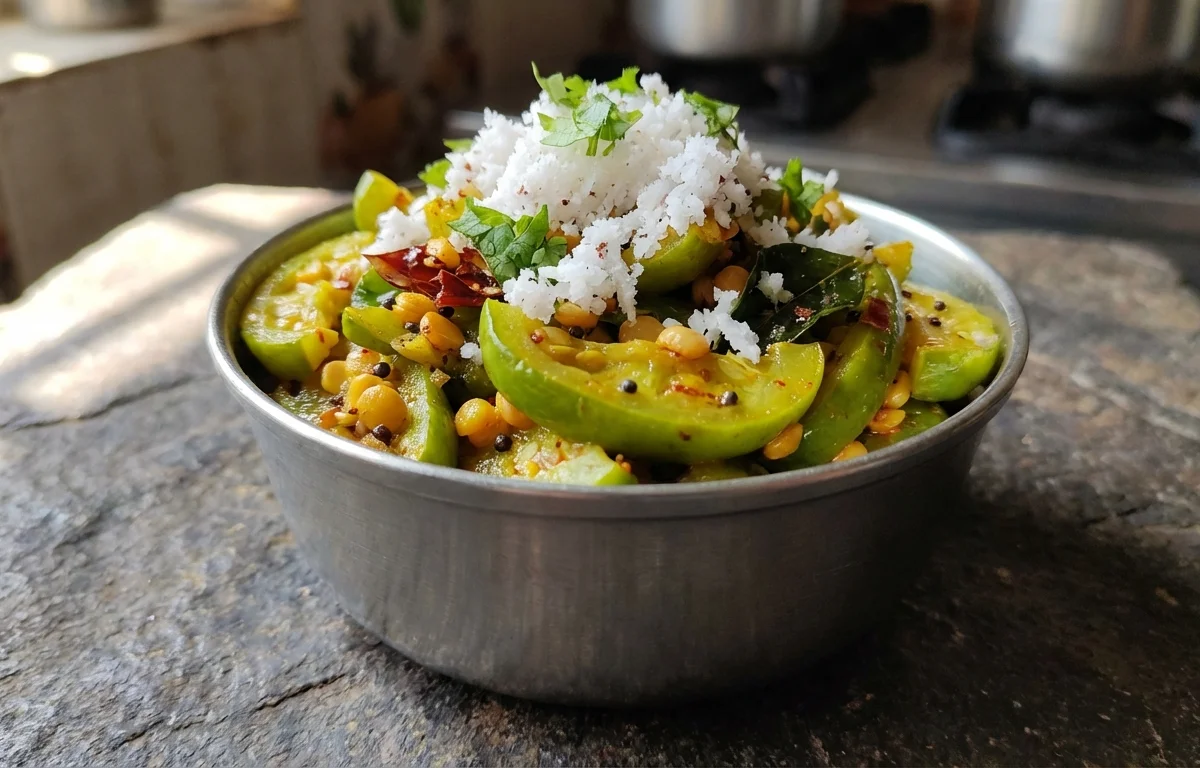
A simple, homestyle Karnataka-style stir-fry where tender ivy gourd slices are slow-cooked with coconut and a gentle tempering. The natural mild sweetness of the vegetable shines through, balanced by earthy cumin and fresh coconut, making it a comforting everyday side that pairs beautifully with rice and sambar.
For 4 servings
- prep
Prep the ivy gourd.
1.Wash 500g ivy gourd thoroughly and pat dry.2.Trim off both ends and slice each gourd into thin, even rounds, about 3-4 mm thick.3.Set the sliced ivy gourd aside in a bowl. - temper · ~2 min
Make the tempering.
1.Heat 2 tsp oil in a heavy-bottomed kadai over medium heat.2.Add 0.5 tsp mustard seeds and let them splutter completely, about 30 seconds.3.Add 0.5 tsp cumin seeds and 2 broken dried red chilies, fry until fragrant, about 20 seconds.4.Toss in 8 curry leaves and a pinch of asafoetida, stir for 10 seconds.TIPKeep the heat medium — high heat burns the mustard and asafoetida, making them bitter. - saute · ~10 min
Cook the ivy gourd with turmeric and salt.
1.Add the sliced ivy gourd to the kadai and stir well to coat with the tempering.2.Sprinkle a pinch of turmeric powder and 0.5 tsp salt over the ivy gourd.3.Mix everything together so the slices are evenly seasoned.4.Cover the kadai with a lid and cook on low heat for 8-10 minutes, stirring once halfway.5.Remove the lid once the ivy gourd is tender but retains a slight firmness.TIPAvoid adding any water — ivy gourd releases its own moisture and will cook perfectly in its own steam. - mix · ~2 min
Finish with fresh coconut.
1.Once the ivy gourd is cooked and any moisture has evaporated, add 3 tbsp grated fresh coconut.2.Stir gently and cook uncovered for 2 minutes to let the flavors meld.3.Turn off the heat.TIPUse freshly grated coconut for the best texture and natural sweetness — desiccated coconut won't give the same result. - garnish
Garnish with coriander leaves and serve hot.
Transfer the Tondekayi Palya to a serving bowl, sprinkle 1 tbsp chopped coriander leaves on top, and serve immediately with steamed rice and sambar or as a side with rotis.
What to keep in mind.
6 tips from the recipe — small details that make a real difference to the final dish.
- 1Choose tender ivy gourds that are bright green and firm – older ones can be bitter and seedy.
- 2Slice the ivy gourd into uniform 3–4 mm rounds so they cook evenly in the same time.
- 3Do not add water – the ivy gourd releases enough moisture to steam itself tender on low heat.
- 4Cook covered on low heat for the full 8–10 minutes; lifting the lid too early releases steam.
- 5Let the mustard seeds splutter fully before adding other tempering ingredients for best aroma.
- 6Freshly grated coconut is essential – desiccated coconut lacks moisture and natural sweetness.
Adapt it for your goals.
No-coconut
Omit the fresh coconut for a lighter, more tangy version – finish with a squeeze of lemon juice and a pinch of jaggery instead.
with dalWith dal
Add ¼ cup of cooked toor dal after cooking the ivy gourd for a thicker, more substantial side that pairs beautifully with rice.
spicierSpicier
Increase dried red chilies to 4 and add a slit green chili along with the curry leaves for extra heat in every bite.
peanut crunchPeanut crunch
Replace half the fresh coconut with 2 tbsp roasted crushed peanuts for a nutty texture variation.
Why this is on our healthy list.
Rich in Dietary Fiber
Ivy gourd is naturally high in fiber, which supports healthy digestion and helps maintain steady blood sugar levels.
Low in Calories
This stir-fry is very low in calories and uses minimal oil, making it a light, nutrient-dense side dish for weight-conscious meals.
Source of Antioxidants
Curry leaves, turmeric, and asafoetida provide antioxidant compounds that help combat oxidative stress in the body.
Contains Healthy Fats
Fresh coconut adds medium-chain triglycerides (MCTs) which are a quick source of energy and support heart health when used in moderation.
Frequently asked questions
Fresh ivy gourd is strongly recommended because frozen ones release excess water and become mushy. If using frozen, thaw and pat dry first, then reduce cooking time by a few minutes.