Ulli Karam
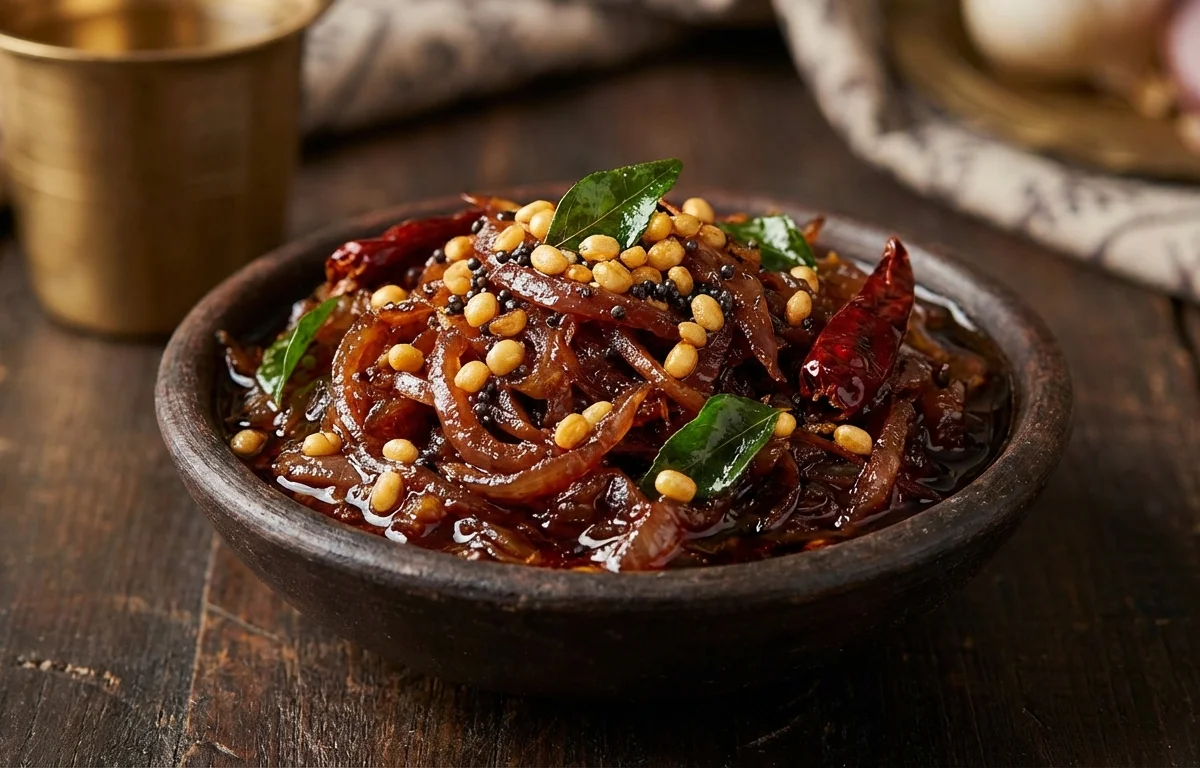
A fiery, tangy onion chutney from Andhra cuisine that wakes up your taste buds instantly. Caramelized shallots blended with tamarind, garlic, and red chilies until smooth, then finished with a crackling tempering of mustard seeds and curry leaves. Perfect alongside hot idlis, dosas, or steamed rice.
For 8 servings
- saute · ~7 min
Sauté the shallots, garlic, and red chilies.
1.Heat 2 tsp oil in a pan over medium heat.2.Add dried red chilies and fry for 30 seconds until they puff slightly.3.Add garlic cloves and sauté until golden (1 minute).4.Add chopped shallots and cook until soft and lightly caramelized (5-6 minutes).5.Turn off heat and let the mixture cool completely. - mix · ~2 min
Blend the chutney to a smooth paste.
1.Transfer the cooled shallot-chili mixture to a blender jar.2.Add tamarind and a pinch of salt.3.Blend to a smooth, thick paste adding 2-3 tablespoons of water as needed.4.Scrape into a serving bowl.TIPDon't add too much water — Ulli Karam should be thick and spoonable, not runny. - temper · ~2 min
Make the tempering.
1.Heat 1 tsp oil in a small tadka pan over medium heat.2.Add mustard seeds and let them splutter (30 seconds).3.Add cumin seeds and let them crackle briefly.4.Toss in curry leaves and a pinch of asafoetida. Fry until leaves are crisp (15 seconds).5.Pour the hot tempering over the chutney and mix well.TIPPour the tempering over the chutney immediately while it's sizzling — the sound tells you it's fresh. - serve
Serve the Ulli Karam with idli, dosa, or hot rice.
What to keep in mind.
6 tips from the recipe — small details that make a real difference to the final dish.
- 1To develop maximum sweetness, cook the shallots until they are deeply golden and soft, not just translucent.
- 2Blend the chutney while the mixture is completely cool to prevent steam from making it watery.
- 3Use a heavy-bottomed pan for sautéing shallots to prevent scorching before they caramelize.
- 4For a smokier depth, roast the dried red chilies in a dry pan for a few seconds before adding oil.
- 5Taste the tamarind first; adjust the quantity based on its sourness to balance heat and tang.
- 6Store leftover Ulli Karam in an airtight jar in the fridge for up to a week; tempering can be repeated before serving.
Adapt it for your goals.
Low-oil
Dry-roast the shallots, garlic, and red chilies in a non-stick pan without oil, then temper with just ½ tsp oil. Reduces total fat while keeping the flavour profile intact.
jainJain
Skip the garlic and asafoetida. Use a pinch of asafoetida substitute (hing-free) or just black salt to mimic the pungency. Jain-friendly version retains the tamarind-shallot-chili core.
extra spicyExtra-spicy
Add 2-3 fresh green chilies (slit) along with the garlic for a fiercer heat, or use spicier varieties like Byadgi or Guntur red chilies. Perfect for heat seekers.
Why this is on our healthy list.
Rich in Antioxidants
Dried red chilies and garlic provide capsanthin and allicin, compounds linked to reducing oxidative stress and supporting immune function.
Digestive Aid
Curry leaves, asafoetida, and mustard seeds stimulate digestive enzymes and can help reduce bloating — a traditional role in Andhra cuisine.
Low-Calorie Flavour Boost
This chutney delivers intense taste with minimal oil and no added sugar, making it a guilt-free condiment for rice or flatbreads.
Frequently asked questions
Yes, but shallots give a milder, sweeter, and less pungent flavour. If using onions, chop them finely and sauté a bit longer to reduce harshness.




.webp)