Upma Pesarattu
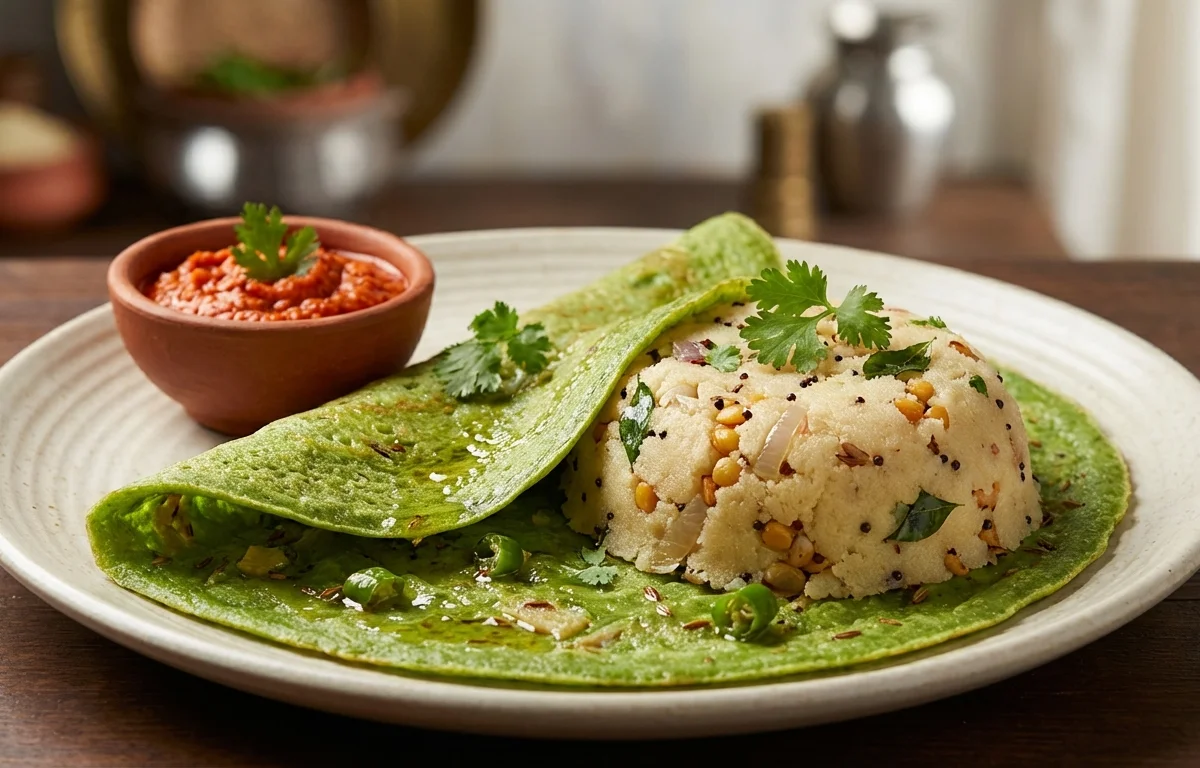
A classic Andhra breakfast where crisp green gram crepes are folded around warm, lightly spiced rava upma. The contrast of the nutty pesarattu and soft upma makes every bite hearty, satisfying, and full of homestyle flavor.
For 4 servings
- prep · ~360 min
Soak the green gram and rice.
Rinse the whole green gram and rice well. Soak them together in enough water for 6 hours, then drain fully before grinding.
- mix · ~7 min
Grind the pesarattu batter.
1.Add the soaked green gram and rice to a blender jar.2.Add green chili, ginger, cumin seeds, and 0.25 tsp salt.3.Pour in a little water and grind to a smooth but slightly grainy batter.4.Keep the batter thick enough to spread easily on a hot pan.TIPA batter that is too thin will not spread well or turn crisp. - saute · ~3 min
Roast the semolina.
Heat a dry pan over low-medium heat and roast the semolina for 2 to 3 minutes, stirring often, until it smells nutty. Transfer to a plate.
TIPDo not brown the semolina too much or the upma will taste toasted and heavy. - temper · ~3 min
Make the tempering for the upma.
1.Heat 1 tbsp oil in a pan over medium heat.2.Add mustard seeds and let them splutter.3.Add urad dal, chana dal, cashews, and curry leaves.4.Cook until the dals turn lightly golden and the cashews look pale golden. - saute · ~3 min
Cook the onion for the upma.
Add half of the chopped onion and sauté for 2 to 3 minutes until softened. Stir in 0.25 tsp salt.
- boil · ~5 min
Boil the water for the upma.
Pour 2.5 cups water into the pan and bring it to a boil.
- mix · ~5 min
Cook the upma.
1.Lower the heat and add the roasted semolina in a slow stream.2.Stir continuously to avoid lumps.3.Cook until the mixture thickens and the water is absorbed.4.Cover and cook on low heat for 2 minutes, then switch off the heat.TIPKeep stirring as you add semolina so the upma stays smooth and fluffy. - garnish
Finish the upma with cilantro.
- fry · ~4 min
Cook the first pesarattu.
1.Heat a dosa tawa or flat pan until hot, then lower to medium heat.2.Pour a ladle of batter in the center and spread it into a thin круг using circular motions.3.Drizzle a little oil around the edges and over the top.4.Sprinkle some of the remaining chopped onion over the surface and cook until the bottom turns crisp.TIPIf the pan is too hot, the batter will not spread smoothly; wipe lightly and continue. - assemble · ~1 min
Place the upma inside and fold.
Spoon a portion of warm upma onto one half of the cooked pesarattu. Fold it over and press gently.
- fry · ~12 min
Repeat with the remaining batter and upma.
Make 3 more pesarattu in the same way, adding a little oil as needed, and fill each one with upma.
- serve
Serve the upma pesarattu hot.
What to keep in mind.
8 tips from the recipe — small details that make a real difference to the final dish.
- 1Drain the soaked green gram very well before grinding, or the batter turns watery and the pesarattu won’t crisp.
- 2Keep the batter slightly coarse rather than silky smooth; that texture gives pesarattu its characteristic bite and nuttiness.
- 3Roast the rava only until aromatic, not brown, so the upma stays soft and light inside the crepe.
- 4Add semolina to boiling water in a slow stream while stirring constantly to prevent tiny lumps in the upma filling.
- 5Spread the batter only on a properly heated tawa; if it sticks, wipe the pan lightly and let it reheat before the next one.
- 6Sprinkle the chopped onion onto the pesarattu right after spreading the batter so it adheres before the surface sets.
- 7Keep the upma warm and fairly thick before stuffing; loose upma can make the folded pesarattu soggy.
- 8For make-ahead prep, refrigerate the batter overnight, but cook the upma fresh for the best contrast of crisp and soft.
Adapt it for your goals.
Low-oil
Use a well-seasoned cast-iron or nonstick tawa and reduce the oil drizzle; you still get a good crust with less fat.
spicierSpicier
Add extra green chili to the batter or mix crushed black pepper into the upma for a sharper breakfast-style heat.
no onionNo-onion
Skip the onion in both the upma and topping for an onion-free version that still keeps the classic moong and ginger flavor.
vegetable upmaVegetable-upma
Add finely chopped carrots, peas, or beans to the upma to make the filling more colorful and more substantial.
Why this is on our healthy list.
Protein-Rich Moong Base
Whole green gram makes the pesarattu more filling and adds plant protein along with fiber compared with plain rice crepes.
Digestive Spice Support
Ginger, cumin, curry leaves, and mustard seeds bring flavor while also making this hearty breakfast feel easier to digest.
Balanced Energy Breakfast
The combination of mung beans, semolina, and nuts provides sustained energy and a satisfying mix of textures.
Frequently asked questions
The batter is usually too thin or the pan is either too cool or overheated. Keep the batter thick, spread it thin, and cook on a well-heated medium tawa.



.webp)