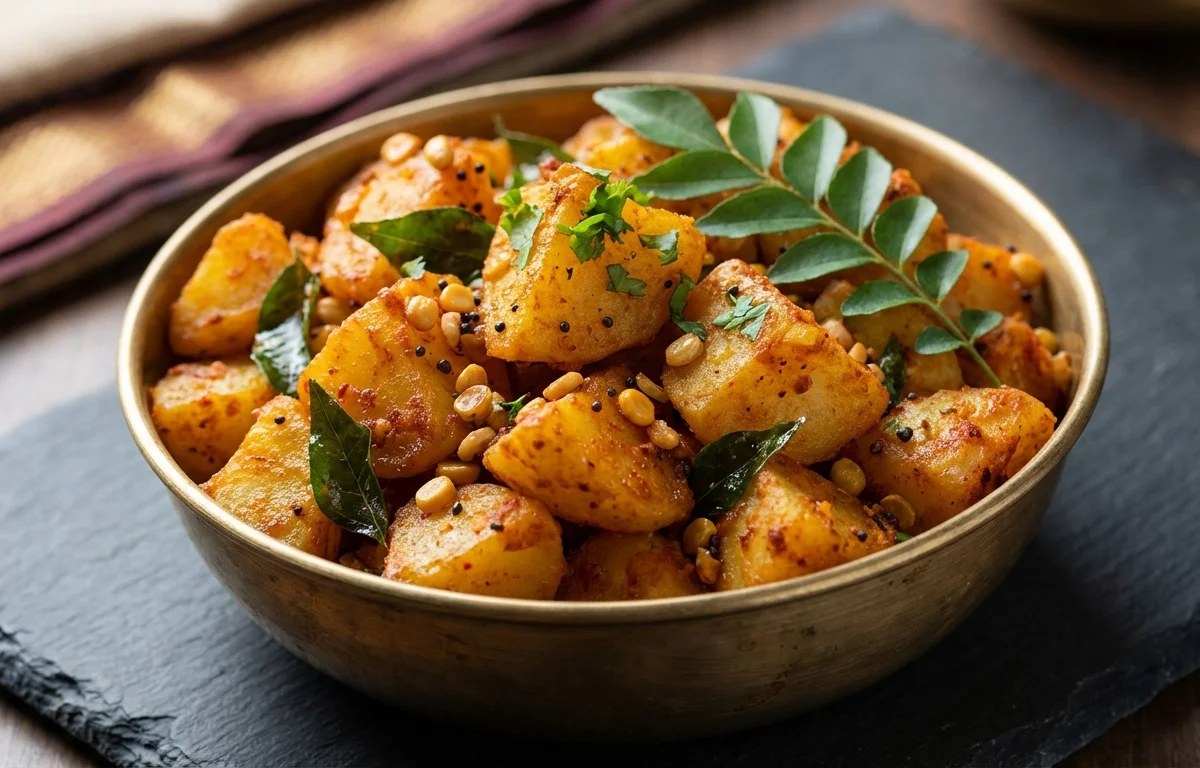
Urulai Kara Kari
A Tamil-style potato fry with crisp edges, soft centers, and bold spice from chili, fennel, and curry leaves. It makes a comforting side for rasam rice, sambar, or curd rice without needing many ingredients.
For 4 servings
- boil · ~17 min
Boil the potatoes until just tender.
1.Add potato cubes, water, and the salt for boiling water to a pot.2.Bring to a boil over medium-high heat.3.Cook until the potatoes are just tender but still hold their shape, 10 to 12 minutes.4.Drain well and let the potatoes sit for 5 minutes so the surface dries slightly.TIPDo not overcook the potatoes or they will break while frying. - temper · ~2 min
Make the tempering.
1.Heat oil in a wide pan over medium heat.2.Add mustard seeds and let them splutter.3.Add fennel seeds, urad dal, and curry leaves.4.Cook for 20 to 30 seconds until fragrant and the urad dal turns light golden.TIPUse a wide pan so the potatoes get more contact with the surface and crisp better. - saute · ~4 min
Cook the onion and garlic.
1.Add the sliced onion and cook until soft, 2 to 3 minutes.2.Add the chopped garlic and sauté until the raw smell fades, about 1 minute. - saute · ~1 min
Add the spices.
Lower the heat and add red chili powder, turmeric powder, black pepper, and the salt for the fry. Mix quickly so the spices bloom in the oil without burning.
TIPKeep the heat low at this stage or the chili powder can turn bitter. - fry · ~10 min
Fry the potatoes until crisp at the edges.
1.Add the boiled potatoes to the pan and toss gently to coat them well in the masala.2.Spread them in an even layer.3.Cook on medium heat, turning every 2 to 3 minutes, until the edges turn golden and slightly crisp, 8 to 10 minutes.TIPTurn the potatoes gently with a flat spatula to keep the cubes from breaking. - serve
Serve the Urulai Kara Kari hot.
What to keep in mind.
7 tips from the recipe — small details that make a real difference to the final dish.
- 1Drain the boiled potatoes very well and let them air-dry briefly so the masala clings and the edges crisp faster.
- 2Cut the potato cubes evenly; mixed sizes will make some pieces mashy while others stay underdone.
- 3Use a wide, heavy pan and avoid crowding, or the potatoes will steam instead of getting the classic kara kari crust.
- 4After adding the potatoes, leave them undisturbed for a couple of minutes before turning so a golden layer can form.
- 5Bloom the chili powder and turmeric on low heat only for a few seconds; burnt chili will make the fry taste harsh.
- 6If making ahead, reheat in a skillet rather than the microwave to bring back the crisp edges.
- 7For lunchbox packing, cool the fry for a few minutes before closing the box so trapped steam does not soften it.
Adapt it for your goals.
No-onion-no-garlic
Skip onion and garlic for a simpler temple-style version; increase curry leaves and black pepper to keep the fry aromatic.
extra spicyExtra-spicy
Add more red chili powder or a pinch of crushed pepper for a hotter side dish that stands up well to curd rice or mild sambar.
low oilLow-oil
Use a well-seasoned pan and a little less oil, then roast the parboiled potatoes a bit longer for a lighter everyday version.
jainJain
Omit onion and garlic, and rely on fennel, curry leaves, chili, and pepper for a clean, spice-forward potato fry.
Why this is on our healthy list.
Comforting Energy Source
Potatoes provide satisfying carbohydrates, making this side especially useful with lighter meals like rasam rice or curd rice.
Aromatic Spice Benefits
Garlic, curry leaves, black pepper, turmeric, and fennel add flavor complexity while contributing plant compounds from whole spices and herbs.
Moderate-Oil Home Style
This fry gets crispness from parboiling and pan-frying rather than deep-frying, which keeps it lighter than many potato side dishes.
Frequently asked questions
They were likely overboiled or stirred too aggressively. Cook only until just tender, drain well, and turn them gently with a flat spatula.