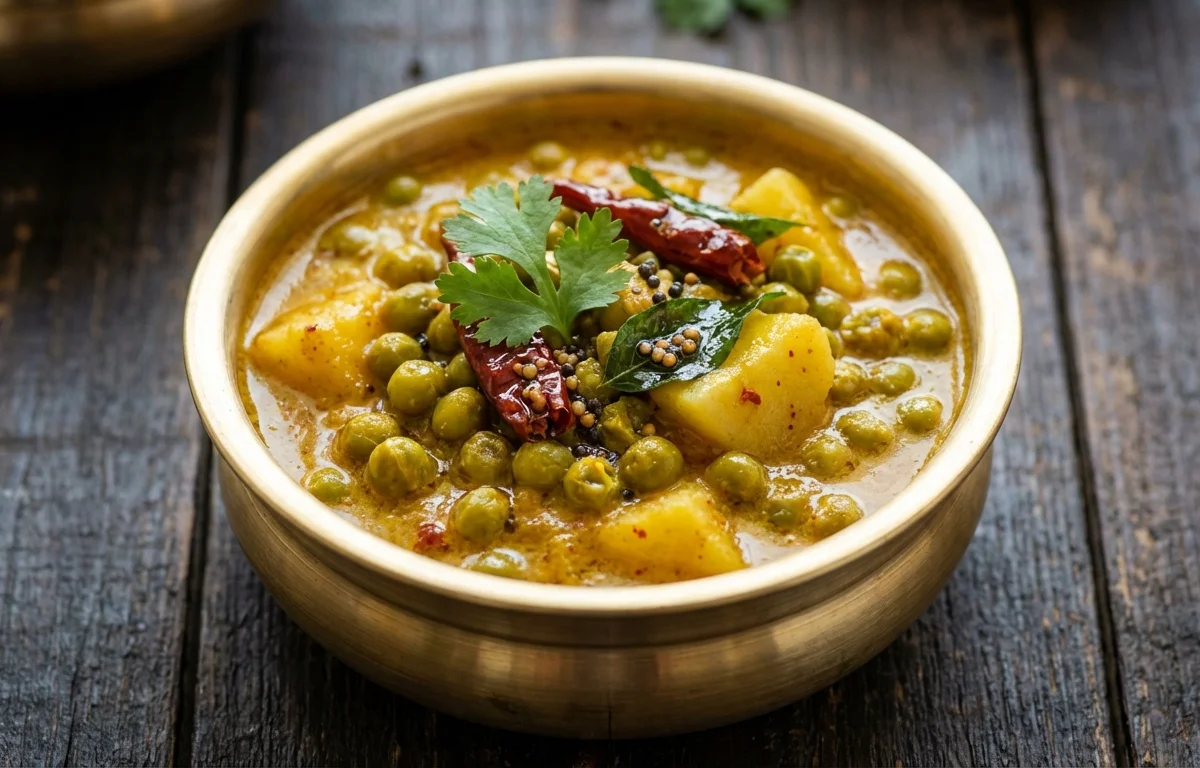
Vatana Ghashi
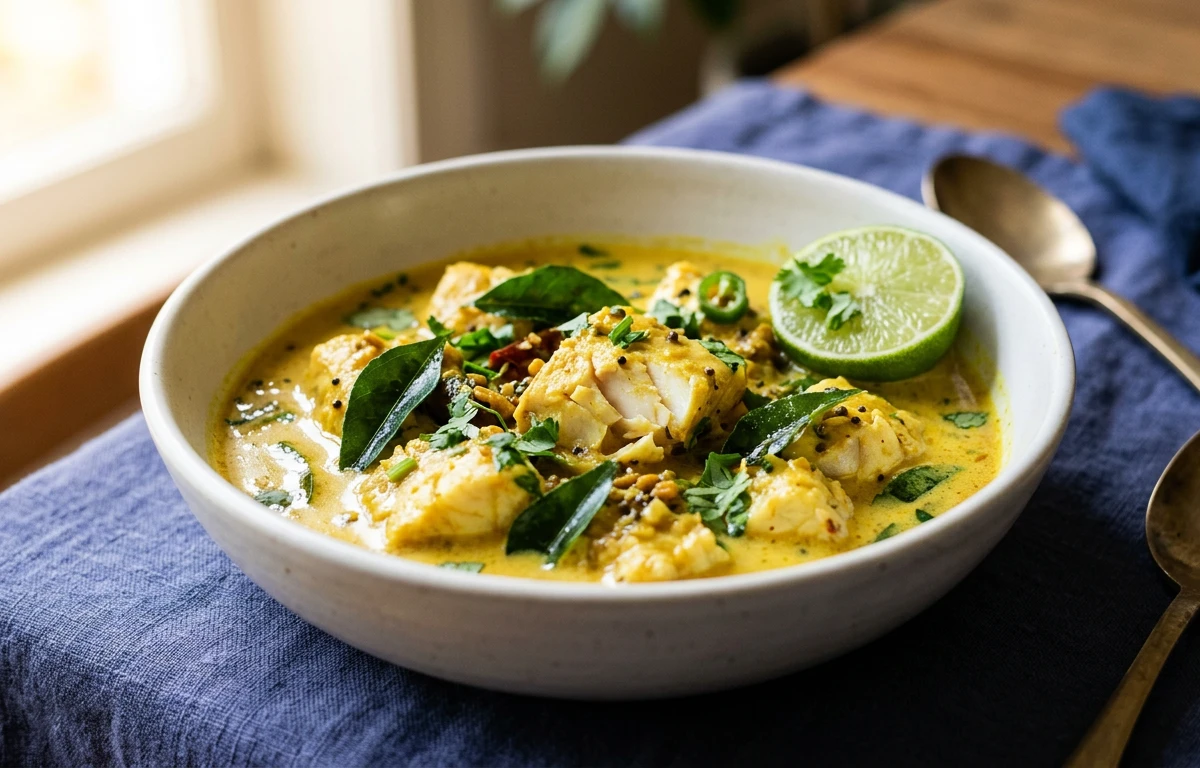
A creamy, mildly spiced coconut curry from the Konkan coast, where dried white peas soak up the rich flavors of roasted coconut, tamarind, and a handful of aromatic spices. This warm, comforting bowl pairs beautifully with steamed rice or roti.
For 4 servings
- pressure cook · ~25 min
Cook the soaked peas.
Drain the soaked white peas and add them to a pressure cooker with 2 cups of water, turmeric powder, and salt. Cook on medium heat for 4-5 whistles until soft but not mushy. Let the pressure release naturally.
- roast · ~8 min
Roast the coconut and spices.
1.In a heavy-bottomed pan, dry roast the grated coconut on low heat until golden brown (4-5 min). Stir continuously to avoid burning.2.Add the coriander seeds, cumin seeds, dried red chilies, and fenugreek seeds. Roast for another 2-3 minutes until fragrant.3.Remove from heat and let the mixture cool completely.TIPDon't step away — coconut can turn from golden to burnt in seconds. Keep the heat low and stir constantly. - mix · ~2 min
Blend the roasted masala into a smooth paste.
Transfer the cooled roasted mixture to a blender. Add the tamarind paste and about ½ cup of water. Blend to a smooth, creamy paste. Add a little more water if needed to get a thick but pourable consistency.
- simmer · ~10 min
Simmer the peas and masala together.
Pour the blended masala paste into the cooked peas in the pressure cooker. Mix well. Add water to reach your preferred curry consistency (about ¾ cup). Bring to a gentle boil, then reduce heat and let it simmer uncovered for 8-10 minutes so the flavors meld.
TIPThe gravy thickens as it simmers; aim for a consistency that coats the back of a spoon. - temper · ~2 min
Prepare the tempering.
1.Heat coconut oil in a small tadka pan over medium heat until shimmering.2.Add mustard seeds and let them pop and splutter (30 seconds).3.Add curry leaves and asafoetida; fry for 10-15 seconds until the leaves turn crisp and release their aroma.TIPFor the most authentic flavor, coconut oil is best — it complements the roasted coconut in the curry beautifully. - mix · ~1 min
Finish the curry.
Pour the hot tempering over the simmering peas. Stir everything well, simmer for one final minute, then take the pot off the heat. Let it rest for 5 minutes to allow the tempering flavors to bloom throughout the curry.
What to keep in mind.
6 tips from the recipe — small details that make a real difference to the final dish.
- 1Soak dried white peas for at least 8 hours or overnight to ensure even cooking and a creamy texture.
- 2Dry roast the grated coconut on low heat, stirring constantly, until it turns a deep golden brown for maximum flavor.
- 3Use Byadgi or Kashmiri dried red chilies for a vibrant red color and mild heat rather than intense spiciness.
- 4Let the pressure cooker release naturally after cooking the peas so they stay intact and don't turn mushy.
- 5Simmer the curry after adding the masala paste for at least 8-10 minutes so the flavors fully meld together.
- 6For the best aroma, use cold-pressed coconut oil in the tempering — it accentuates the coconut notes in the curry.
Adapt it for your goals.
Low-oil
Skip the tempering or use just 1 teaspoon of oil and dry roast the mustard seeds directly in the pan before adding curry leaves — reduces fat while keeping aroma.
high proteinHigh-protein
Add 1 cup of cooked chickpeas or black chickpeas along with the white peas for extra protein and a heartier texture.
jainJain
Replace asafoetida with a pinch of hing that's labeled 'jain' (no onion/garlic), and skip curry leaves if not available — the dish still tastes authentic from the roasted coconut masala.
Why this is on our healthy list.
Rich in Plant Protein
Dried white peas are an excellent source of plant-based protein, making this curry a filling and satisfying meal for vegetarians.
High in Dietary Fiber
White peas provide a good amount of dietary fiber, which supports healthy digestion and helps maintain steady energy levels.
Heart-Healthy Fats
Coconut and coconut oil contain medium-chain triglycerides (MCTs) that may support heart health when used in moderation.
Frequently asked questions
Yes, but reduce cooking time significantly — just simmer the canned peas in the masala for 5-7 minutes since they are already cooked.