
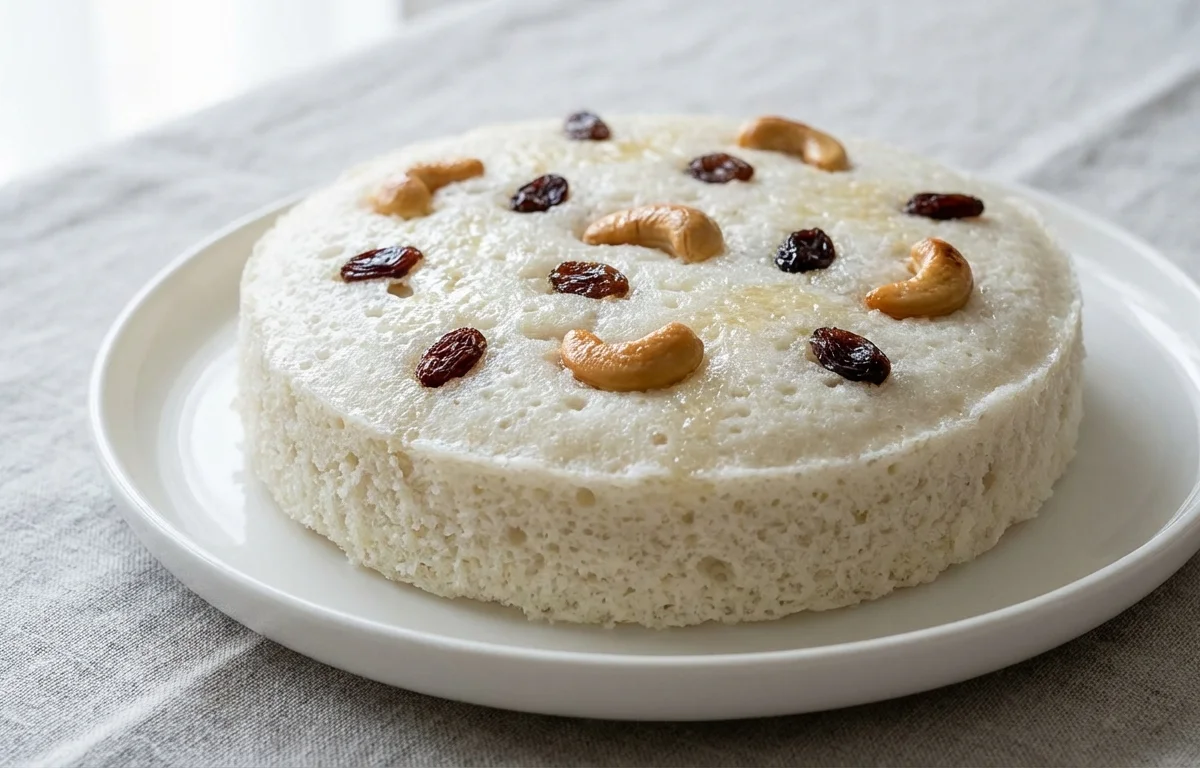
Vattayappam
Soft and fluffy steamed rice cakes from Kerala, naturally fermented with coconut and a hint of cumin. This mildly sweet breakfast or snack is gluten-free, light as air, and pairs beautifully with a spicy curry or simply with a cup of chai.
For 4 servings
- prep
Soak the raw rice.
Wash the raw rice thoroughly and soak in enough water for 4 hours. Drain completely before grinding.
- mix · ~10 min
Grind the batter.
1.Add the soaked and drained raw rice to a wet grinder.2.Add grated coconut, cooked rice, sugar, cumin seeds, and salt.3.Grind to a smooth, slightly thick batter, adding water gradually (about ¾ cup total). The batter should coat the back of a spoon. - rest · ~480 min
Ferment the batter overnight.
Pour the batter into a large bowl. Cover and let it ferment in a warm place for 8 hours or overnight. The batter will rise and turn frothy.
- prep
Prepare the steamer.
Grease the idli moulds lightly with oil. Stir the fermented batter gently to knock out large air bubbles. Pour the batter into the moulds, filling each about three-quarters full. Sprinkle a little grated coconut on top for garnish.
- steam · ~15 min
Steam the vattayappams.
Place the moulds in a preheated idli steamer. Steam on medium-high heat for 12 to 15 minutes or until a toothpick inserted into the center comes out clean.
TIPResist the urge to check too early — opening the steamer lid mid-way can cause them to deflate. - rest · ~5 min
Rest and unmould.
Remove the moulds from the steamer and let them cool for 5 minutes. Run a spoon around the edges and gently unmould the soft rice cakes.
- serve
Serve warm with a curry or chai.
Arrange the vattayappams on a plate and serve fresh and warm with a vegetable stew or a spicy egg curry on the side.
What to keep in mind.
6 tips from the recipe — small details that make a real difference to the final dish.
- 1Use fresh, tightly packed grated coconut from a young coconut for best fermentation and sweetness.
- 2A warm place (around 28–30°C) is crucial for fermentation; if your kitchen is cool, place the batter in the oven with the light on.
- 3Do not skip the cooked rice — it helps create a lighter, fluffier texture by adding extra starch.
- 4Grease the moulds thoroughly with oil, especially the edges, to prevent sticking after steaming.
- 5Let the steamed vattayappams rest for 5 minutes before unmoulding to set the structure and avoid tearing.
- 6For a more pronounced tangy flavour, let the batter ferment for 10–12 hours instead of 8.
Adapt it for your goals.
Savory version
Omit the sugar and increase salt to 1/2 tsp. Add 1 finely chopped green chilli and a pinch of asafoetida (hing) to the batter — perfect as a savoury breakfast alongside coconut chutney.
jaggery sweetenerJaggery sweetener
Replace the 3 tbsp sugar with 3 tbsp grated jaggery (or palm jaggery) for a deeper, caramel-like sweetness common in traditional Kerala vattayappam.
vegan friendlyVegan-friendly
This recipe is already vegan (no dairy or eggs). Just ensure the sugar used is vegan-friendly (organic cane sugar). Replace ghee-based garnish with extra grated coconut.
high fiberHigh-fiber
Swap half the raw rice (3/4 cup) with red rice (unpolished) for a nuttier flavour and more dietary fibre, while maintaining the soft texture.
Why this is on our healthy list.
Naturally Gluten-Free
Made entirely from rice and coconut, this dish is safe for those with gluten sensitivity or celiac disease.
Good Source of MCTs
Fresh coconut provides medium-chain triglycerides (MCTs), a type of fat that is quickly metabolized for energy.
Probiotic-Friendly
The overnight fermentation introduces beneficial lactic acid bacteria, supporting gut health and digestion.
Low in Sodium
With only a pinch of salt per batch, this dish is very low in sodium, making it suitable for low-salt diets.
Frequently asked questions
Fermentation requires warmth (28–30°C). If your room is cold, place the covered bowl in a warm oven (with just the light on) or near a stove pilot light for 8–10 hours.



.webp)
.webp)