
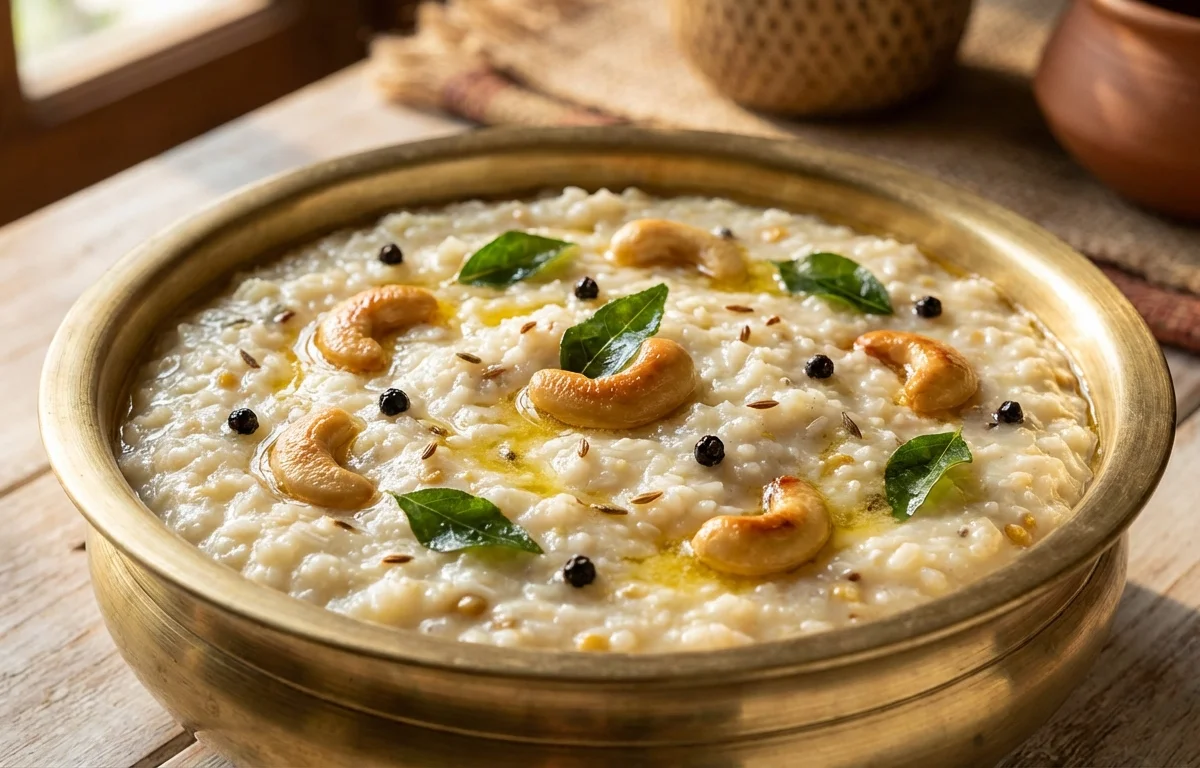
Ven Pongal
Warm, soft rice and moong dal cooked together until creamy, then finished with a fragrant ghee tempering of black pepper, cumin, curry leaves, ginger, and cashews. This comforting South Indian classic is simple, soothing, and deeply satisfying.
For 4 servings
- prep · ~3 min
Rinse the rice and dal.
Wash the raw rice and moong dal together in 2 to 3 changes of water until the water runs mostly clear. Drain well.
- pressure cook · ~20 min
Pressure cook the rice and dal.
1.Add the rinsed raw rice and moong dal to a pressure cooker.2.Pour in water and add salt.3.Cook on medium heat for 4 whistles, then let the pressure release naturally.4.Open the cooker and mash lightly for a soft, creamy texture.TIPUse a little extra water if you like pongal looser; it thickens as it sits. - temper · ~3 min
Make the ghee tempering.
1.Heat ghee in a small pan over medium heat.2.Add cashews and cook until light golden.3.Add cumin seeds, crushed black pepper, chopped ginger, curry leaves, and asafoetida.4.Cook for 20 to 30 seconds until fragrant.TIPKeep the heat medium so the spices bloom gently and the ginger does not burn. - mix · ~1 min
Mix the tempering into the pongal.
Pour the hot tempering over the cooked rice and dal. Mix well until the pongal looks creamy and evenly seasoned.
- serve
Serve hot.
What to keep in mind.
7 tips from the recipe — small details that make a real difference to the final dish.
- 1For deeper flavor, dry-roast the moong dal for 2 minutes before rinsing, just until lightly aromatic.
- 2Mash the cooked rice-dal mixture while still hot so the pongal turns creamy without needing extra fat.
- 3Keep the tempering on medium heat; cumin should sizzle and cashews turn pale gold, not dark brown.
- 4Crush the black pepper coarsely rather than powdering it, so you get warm bursts of heat in each bite.
- 5If the pongal tightens after resting, stir in a splash of hot water and reheat gently to loosen it.
- 6Add the hot ghee tempering immediately before serving for the brightest ginger, curry leaf, and pepper aroma.
- 7Ven Pongal is best eaten fresh, but leftovers reheat well with extra hot water to restore the soft texture.
Adapt it for your goals.
Pepper-forward
Increase the coarsely crushed black pepper for a sharper, more traditional heat that balances the mild rice and dal.
low gheeLow-ghee
Reduce the ghee and use just enough for the tempering if you want a lighter everyday version with the same core flavors.
milletMillet
Replace part or all of the rice with little millet or foxtail millet for a nuttier taste and a slightly heartier texture.
no cashewNo-cashew
Skip the cashews for an allergy-friendly version; the pongal will still be fragrant and comforting from the spice tempering.
Why this is on our healthy list.
Balanced Comfort Meal
Rice and moong dal together make this dish filling and gentle, with carbohydrates for energy and lentils adding protein.
Digestive Spice Support
Ginger, cumin, black pepper, and asafoetida are classic South Indian aromatics often used to make soft lentil dishes feel easier to digest.
Plant Protein from Moong Dal
Moong dal adds satisfying plant protein and helps make Ven Pongal more nourishing than plain rice alone.
Frequently asked questions
Pongal naturally thickens as it cools. Stir in hot water a little at a time and mix well until it returns to a soft, creamy consistency.


