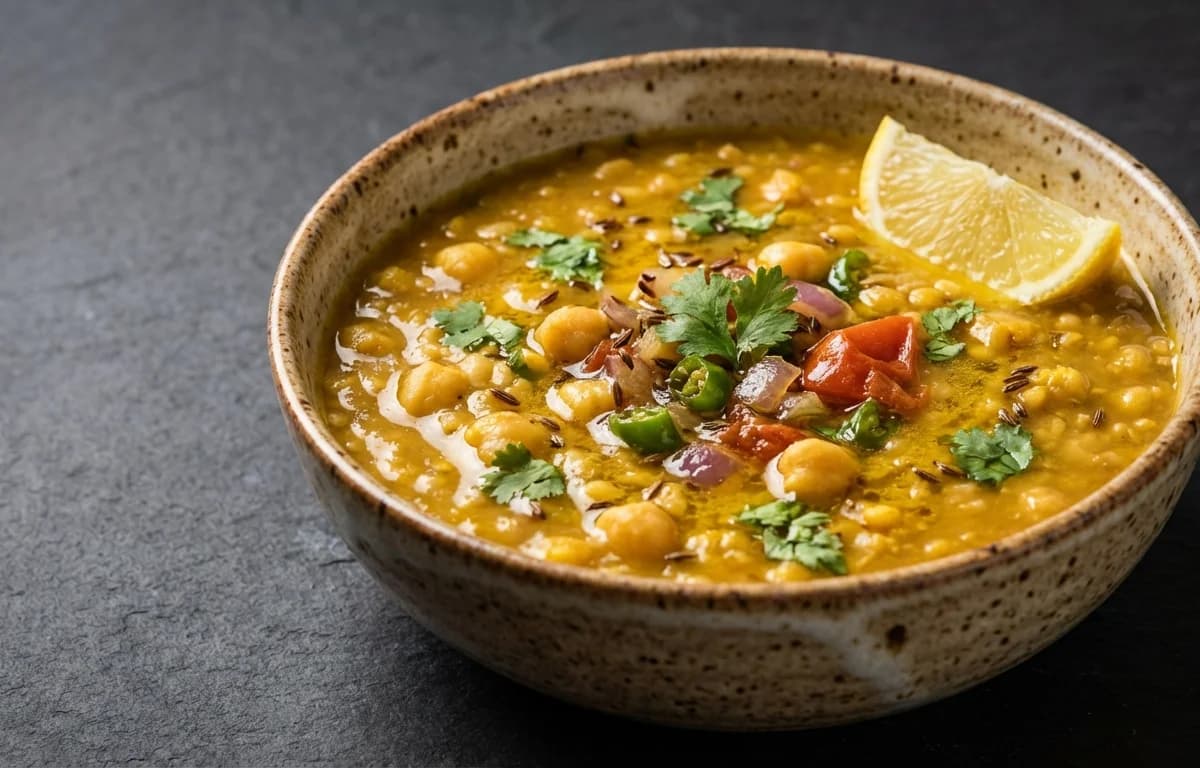
A classic Sindhi comfort food, Tidali Dal is a harmonious blend of three lentils: chana, urad, and moong. This hearty and nutritious dal is pressure-cooked to a creamy consistency and finished with a fragrant tempering of onions, tomatoes, and aromatic spices. Its rich texture and complex flavor make it a perfect main course served with rice or roti.
Prep20 min
Cook40 min
Soak120 min
Servings4
Serving size: 1 serving
275cal
13gprotein
38gcarbs
Ingredients
0.5 cup Chana Dal (Soaked for at least 2-4 hours)
0.25 cup Split Skinned Urad Dal
0.25 cup Split Skinned Moong Dal
3.5 cup Water (For pressure cooking, plus more if needed)
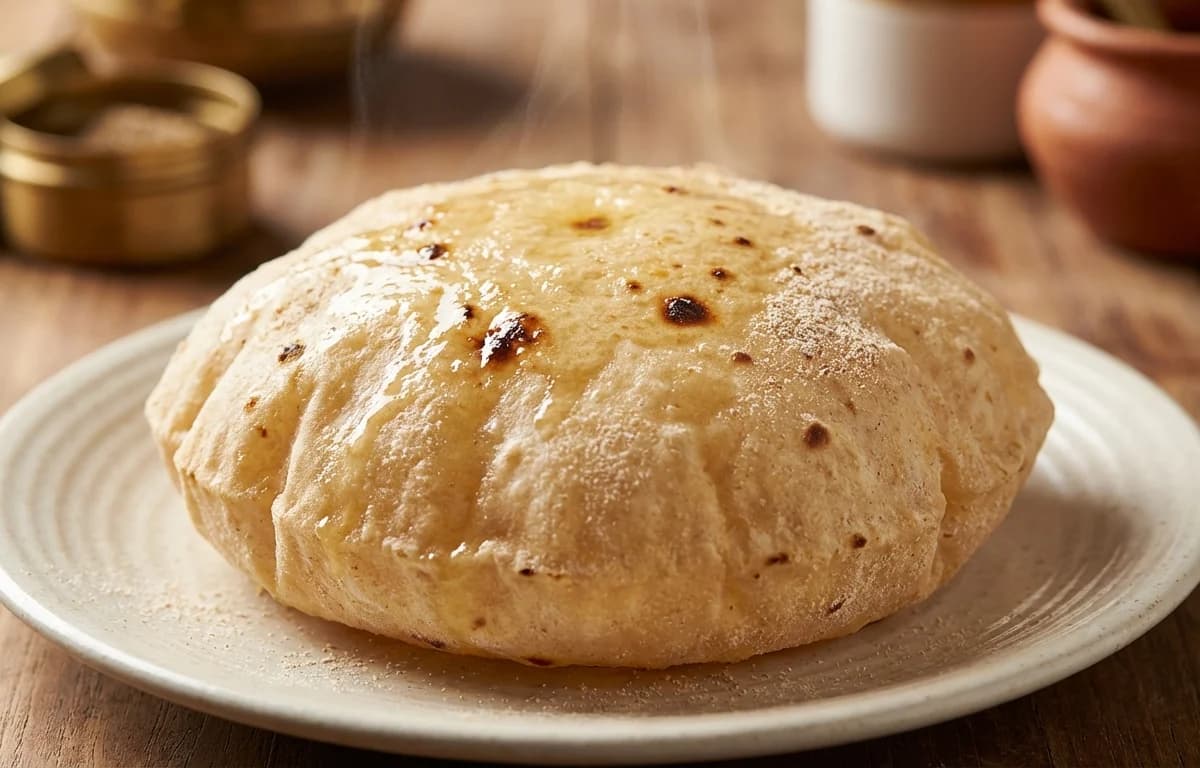
Soft, thin, and light Indian flatbreads made from whole wheat flour. They puff up beautifully on an open flame, making them a perfect, healthy accompaniment to any curry or dal.
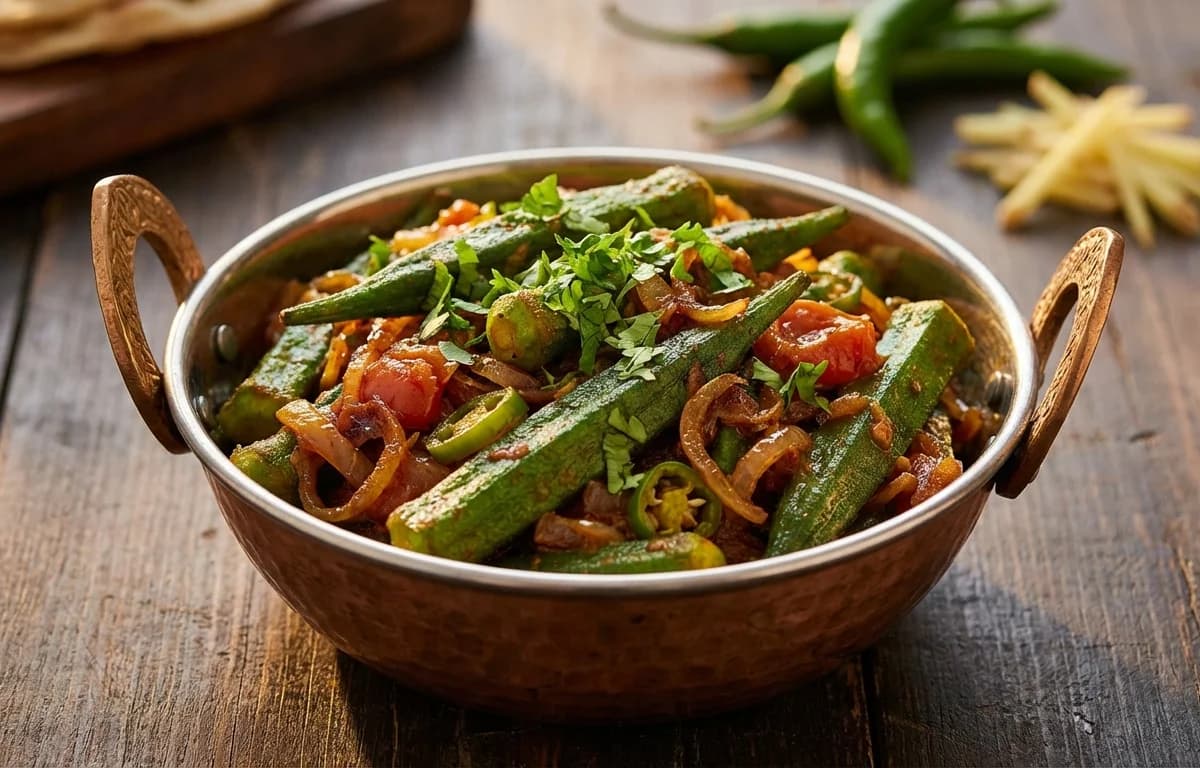
A simple and delicious North Indian okra stir-fry where tender okra is cooked with onions, tomatoes, and everyday spices. This homestyle sabzi comes together quickly and is perfect with rotis.
A refreshing and crunchy Indian salad made with chopped onions, tomatoes, and cucumbers. It's seasoned with lemon juice and spices, making it the perfect cooling side dish for spicy curries and biryanis.
About Tidali Dal, Phulka, Bhughi Bhindi and Kachumber Salad
Protein-packed Tidali Dal with fresh bhindi & phulkas – a perfectly spiced, homestyle comfort meal.
This sindhi dish is perfect for dinner. With 767.56 calories and 26.500000000000004g of protein per serving, it's a muscle-gain option for your meal plan.
9gfat
1 tbsp Ginger Garlic Paste
2 piece Green Chili (Slit lengthwise)
2 medium Tomato (Finely chopped)
0.75 tsp Red Chili Powder (Adjust to your spice preference)
1 tsp Coriander Powder
0.5 tsp Garam Masala
1 tbsp Lemon Juice (Freshly squeezed)
2 tbsp Coriander Leaves (Freshly chopped, for garnish)
Instructions
1
Prepare the Lentils (Soaking time: 2-4 hours)
Rinse the chana dal thoroughly and soak it in ample water for at least 2-4 hours. This is crucial for even cooking.
Just before cooking, drain the soaked chana dal.
In a separate bowl, rinse the urad dal and moong dal together until the water runs clear.
2
Pressure Cook the Dals (Time: 20-25 minutes)
Combine the soaked and drained chana dal, rinsed urad dal, and moong dal in a pressure cooker.
Add 3.5 cups of water, turmeric powder, and 1 teaspoon of salt. Stir well.
Secure the lid and cook on medium-high heat for 5-6 whistles. Then, reduce the heat to low and simmer for 5-7 minutes.
Turn off the heat and allow the pressure to release naturally. Once safe, open the cooker.
Check if the dals are soft and mushy. Lightly mash the dal with the back of a ladle for a creamier texture.
3
Prepare the Tempering (Tadka) (Time: 10-12 minutes)
Heat ghee in a separate pan or kadai over medium heat.
Once the ghee is hot, add the cumin seeds and let them splutter for about 30 seconds.
Add the hing, followed immediately by the finely chopped onion.
Sauté the onions for 5-6 minutes until they become soft and golden brown.
Add the ginger-garlic paste and slit green chilies. Cook for 1 minute until the raw aroma disappears.
Add the chopped tomatoes, red chili powder, coriander powder, and the remaining 0.25 tsp of salt. Mix well.
Cook the masala, stirring occasionally, for 4-5 minutes until the tomatoes break down and the ghee starts to separate from the mixture.
4
Combine and Simmer (Time: 5 minutes)
Pour the prepared tempering into the cooked dal in the pressure cooker.
Stir everything together gently to combine.
If the dal is too thick for your liking, add 1/2 to 1 cup of hot water to reach the desired consistency.
Place the cooker back on low heat and bring the dal to a gentle simmer. Let it cook for 3-5 minutes to allow the flavors to meld beautifully.
5
Garnish and Serve
Turn off the heat. Stir in the garam masala and fresh lemon juice. This final addition enhances the aroma and taste.
Garnish generously with freshly chopped coriander leaves.
Serve the delicious Tidali Dal hot with steamed basmati rice, jeera rice, or fresh rotis.
262cal
8gprotein
44gcarbs
8gfat
Ingredients
2 cup Atta (Also known as whole wheat flour)
0.5 tsp Salt
1 cup Lukewarm Water (Adjust as needed to form a soft, pliable dough)
2 tbsp Ghee (For brushing on top, optional)
Instructions
1
Prepare the Dough
In a large mixing bowl, combine 2 cups of atta and salt.
Gradually add lukewarm water, a little at a time, mixing with your fingers until the flour comes together to form a dough.
Knead the dough on a clean, flat surface for 8-10 minutes, pressing and stretching it with the heel of your hand. The final dough should be soft, smooth, and elastic, not sticky.
2
Rest the Dough
Lightly grease the dough with a few drops of oil or ghee to prevent it from drying out.
Cover the bowl with a damp cloth or a lid and let the dough rest for at least 20-30 minutes. This step is crucial for relaxing the gluten, which results in softer phulkas.
3
Divide and Roll
After resting, knead the dough again for one minute.
Divide the dough into 8 equal-sized portions and roll them into smooth balls.
Take one ball, flatten it between your palms, and dip it into the dry atta for dusting.
Place it on a rolling board (chakla) and roll it out evenly into a thin circle, about 6-7 inches in diameter. Use minimal dry flour for dusting to avoid making the phulka hard.
4
Cook on the Tawa (Griddle)
Heat a tawa over medium-high heat. To check if it's ready, sprinkle a pinch of dry flour; it should turn brown in a few seconds.
Place the rolled phulka on the hot tawa. Cook for about 15-20 seconds until you see small bubbles appear on the surface.
Flip the phulka using tongs and cook the other side for 30-40 seconds until light brown spots appear.
5
Puff on Open Flame
Using tongs, carefully lift the phulka off the tawa and place it directly on a high flame.
Within seconds, the phulka will puff up into a ball due to the trapped steam.
Immediately flip it to cook the other side on the flame for just a second or two. Be careful not to burn it.
6
Finish and Serve
Remove the puffed phulka from the flame. If desired, brush the top with a little ghee.
Place the finished phulka in a casserole or a container lined with a clean kitchen towel. This keeps them soft and warm.
Repeat the rolling, cooking, and puffing process for the remaining dough balls. Serve hot with your favorite dal or curry.
500 g Okra (Tender, washed, and patted completely dry)
2 medium Onion (Finely chopped)
2 medium Tomato (Finely chopped)
3 tbsp Vegetable Oil
2 pcs Green Chilli (Slit lengthwise)
1 tbsp Ginger Garlic Paste
1 tsp Cumin Seeds
0.5 tsp Turmeric Powder
1 tsp Red Chilli Powder (Adjust to your spice preference)
1.5 tsp Coriander Powder
0.75 tsp Amchur Powder (Also known as dry mango powder)
0.5 tsp Garam Masala
1 tsp Salt (Or to taste)
2 tbsp Coriander Leaves (Freshly chopped, for garnish)
Instructions
1
Prepare the Okra: Wash the okra (bhindi) and spread it on a kitchen towel. Pat dry thoroughly to ensure there is no moisture, as this is key to preventing a slimy texture. Trim the top and tail of each okra, then chop them into 1-inch pieces.
2
Sauté Aromatics: Heat oil in a wide, heavy-bottomed pan or kadai over medium heat. Once hot, add the cumin seeds and let them splutter for about 30 seconds. Add the finely chopped onions and sauté for 4-5 minutes until they become translucent and light golden. Then, add the ginger-garlic paste and slit green chillies, and sauté for another minute until the raw aroma disappears.
3
Cook the Masala Base: Add the chopped tomatoes to the pan. Stir in the turmeric powder, red chilli powder, coriander powder, and salt. Mix everything well. Cook this masala mixture for 5-6 minutes, stirring occasionally, until the tomatoes soften completely and you see oil separating from the sides of the masala.
4
Cook the Okra: Add the chopped okra to the pan. Gently toss to coat the okra pieces evenly with the masala without breaking them. Reduce the heat to low, cover the pan, and let it cook for 10-12 minutes. Stir gently every 3-4 minutes to prevent it from sticking to the bottom. Cook until the okra is tender but still retains a slight bite.
5
Finish and Garnish: Uncover the pan. Sprinkle the amchur powder and garam masala over the okra. Increase the heat to medium and stir-fry for 2-3 minutes. This final step helps to dry out any excess moisture and ensures the bhindi is not slimy. Garnish with freshly chopped coriander leaves.