Tidali Dal
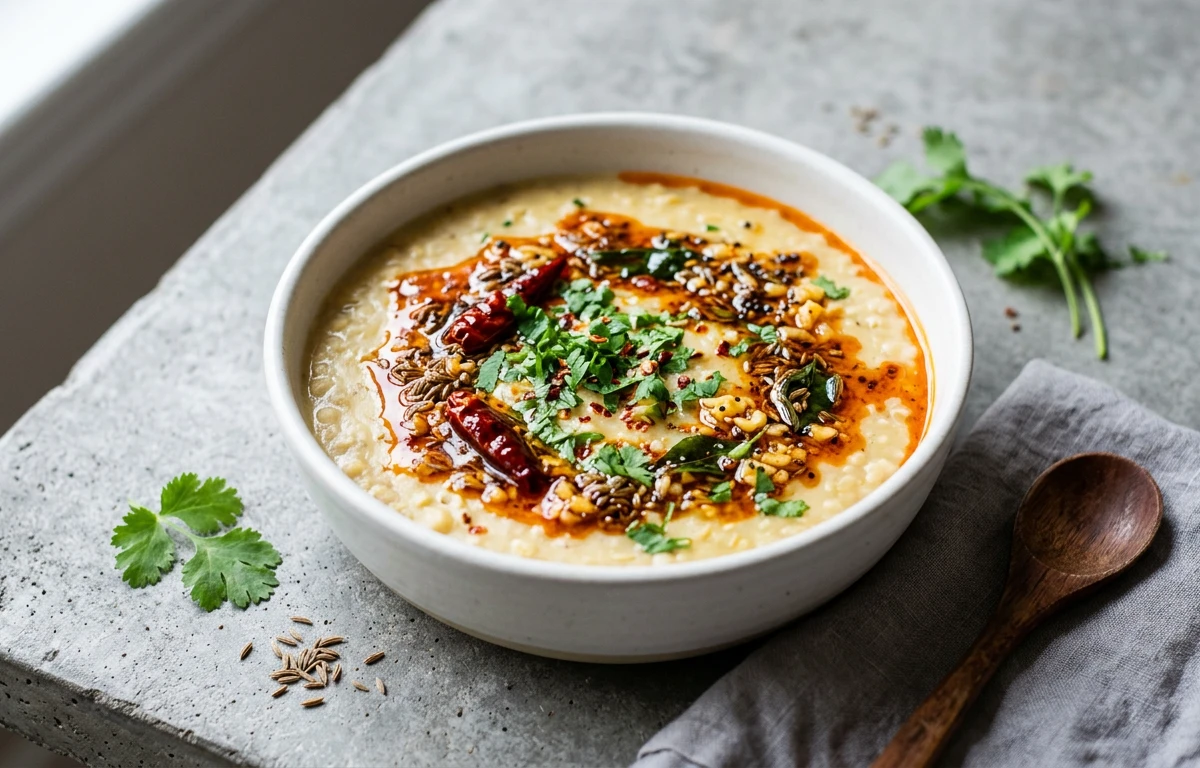
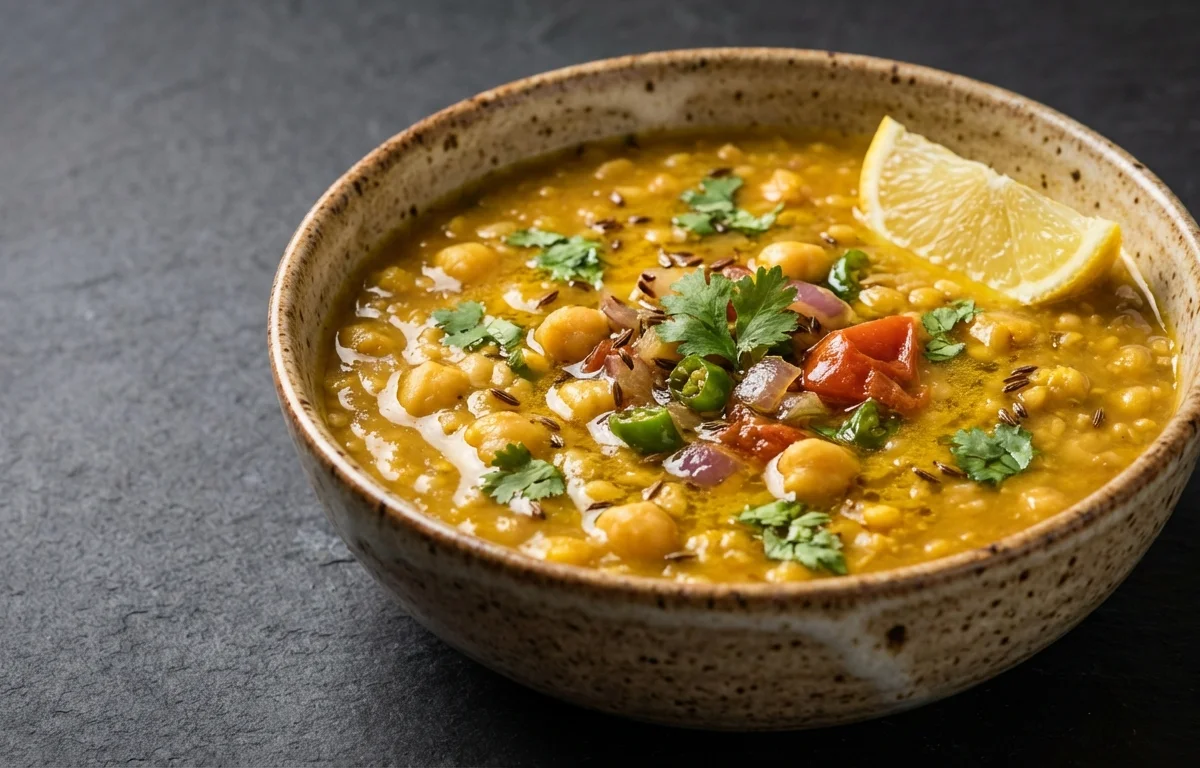
A hearty, comforting mix of three lentils slow-cooked to creamy perfection and finished with a sizzling cumin-garlic tadka. This protein-packed North Indian dal brings together toor, chana, and moong lentils for a deeply satisfying dish that pairs beautifully with steamed rice or roti.
For 4 servings
- prep
Wash and soak the lentils.
Wash toor dal, chana dal, and moong dal together under running water until water runs clear. Soak in enough water to cover for 30 minutes, then drain.
TIPSoaking reduces cooking time and makes the lentils easier to digest. - pressure cook · ~15 min
Pressure cook the dal.
1.Add soaked lentils to the pressure cooker with 3 cups water and turmeric powder.2.Close the lid and pressure cook on medium-high heat for 3 to 4 whistles.3.Let the pressure release naturally, then open the lid.4.Whisk the cooked dal vigorously until smooth and creamy.TIPNatural pressure release prevents the dal from spluttering and yields a creamier texture. - simmer · ~7 min
Season and simmer the dal.
1.Place the pressure cooker back on low heat.2.Add salt and mix well. If the dal is too thick, add 0.5 cup hot water to reach desired consistency.3.Simmer gently for 5 to 7 minutes, stirring occasionally.TIPSimmering after adding salt helps the dal absorb flavors evenly. - temper · ~8 min
Prepare the tadka.
1.Heat ghee in a tadka pan over medium heat until shimmering.2.Add cumin seeds and let them crackle for 30 seconds.3.Add chopped garlic and dried red chilies. Sauté until garlic turns light golden.4.Add hing and stir for 10 seconds.5.Add chopped onion and sauté until translucent and lightly browned, about 3 to 4 minutes.6.Add chopped tomato and red chili powder. Cook until tomato softens and oil separates, about 2 to 3 minutes.TIPKeep the heat at medium — high heat burns the garlic and spoils the tadka. - mix
Pour the tadka over the simmering dal.
Immediately pour the hot tadka into the dal. Stir well to combine.
- simmer · ~2 min
Incorporate garam masala and finish.
Sprinkle garam masala over the dal, stir gently, and simmer for 2 more minutes. Turn off the heat.
- garnish
Garnish with fresh coriander leaves.
Ladle the dal into serving bowls and garnish generously with chopped coriander leaves.
- serve
Serve hot with rice or roti.
Enjoy this comforting Tidali Dal hot with steamed rice, jeera rice, or soft rotis, alongside a wedge of lemon.
TIPA dollop of fresh butter on top just before serving adds extra richness.
What to keep in mind.
6 tips from the recipe — small details that make a real difference to the final dish.
- 1Soak the lentils for at least 30 minutes to reduce cooking time and improve digestibility.
- 2Whisk the cooked dal vigorously while still hot for a creamy, porridge-like texture.
- 3Let the pressure release naturally to prevent spluttering and ensure a creamier consistency.
- 4Sauté the garlic until just light golden — burnt garlic will make the tadka bitter.
- 5Add salt only after pressure cooking, as salt can toughen lentils if added too early.
- 6Simmer the dal for 5-7 minutes after seasoning to let the flavors meld together.
Adapt it for your goals.
Vegan
Replace ghee with coconut oil or a neutral vegetable oil when making the tadka to keep the dish 100% plant-based.
extra proteinExtra-protein
Add 1/4 cup of finely chopped paneer cubes after the tadka is poured in, or stir in a handful of boiled chana dal for additional texture and protein.
low spiceLow-spice
Skip the dried red chilies and reduce red chili powder to 1/4 tsp. This yields a mild, kid-friendly version while keeping the warm cumin-garlic base.
south indian tadkaSouth-indian-tadka
Swap the cumin seeds with mustard seeds, add a sprig of curry leaves, and use urad dal in the tadka for a regional twist.
Why this is on our healthy list.
Rich in Plant Protein
The triple lentil mix (toor, chana, moong) provides a hearty source of plant-based protein, making this dal a satisfying main dish for vegetarians.
High in Dietary Fiber
Lentils are naturally high in soluble fiber, which supports healthy digestion and helps maintain steady blood sugar levels.
Loaded with Essential Minerals
Moong dal offers magnesium and potassium, chana dal is rich in iron, and toor dal contributes folate — all supporting energy and heart health.
Anti-inflammatory Spices
Turmeric and asafoetida (hing) in this recipe provide natural anti-inflammatory compounds, while cumin aids digestion and garlic boosts immunity.
Frequently asked questions
Yes, soak the lentils for 2-3 hours, then simmer in a pot with 4-5 cups of water for 35-45 minutes until tender. Whisk to get the creamy consistency.



.webp)