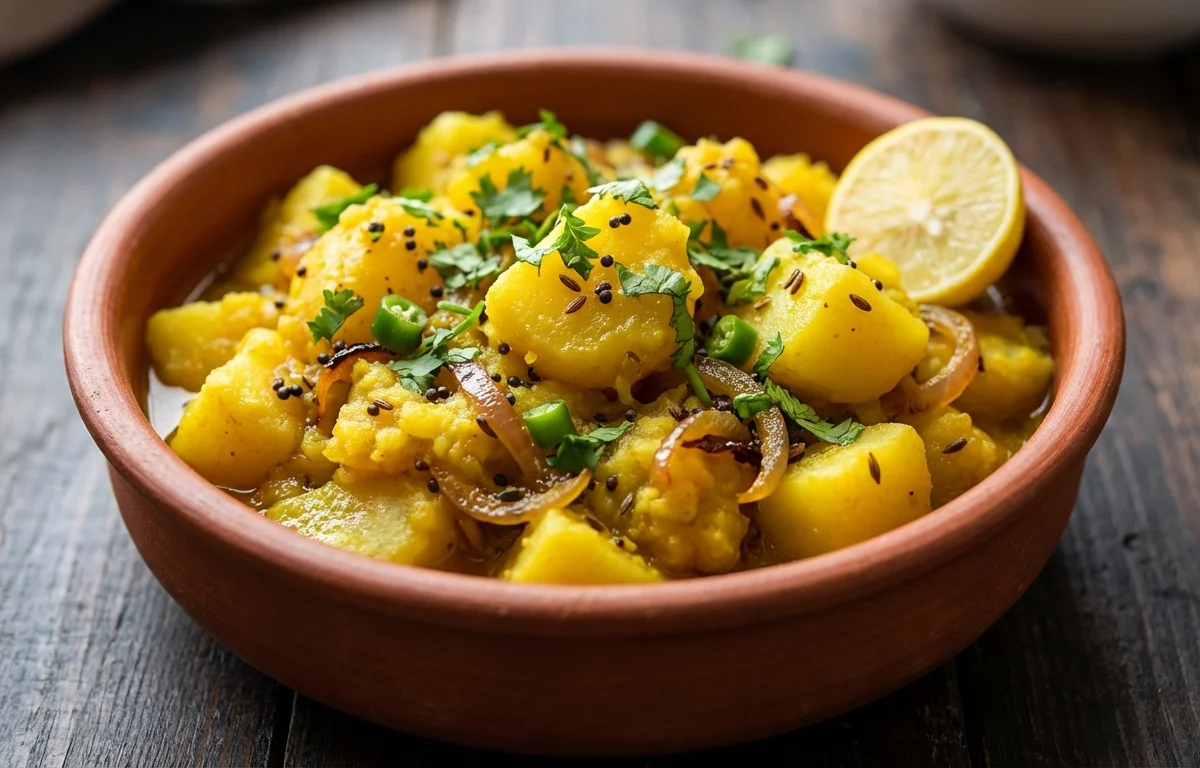
Aloo Bhaji
A simple Indian potato stir-fry made with boiled potatoes, onions, green chili, and a light tempering of mustard seeds and turmeric. Soft, gently spiced, and easy to pair with poori, dosa, or chapati.
For 4 servings
- prep · ~15 min
Boil and crumble the potatoes.
Boil the potatoes until just tender, then peel and roughly crumble them into medium pieces. Keep a few chunks larger so the bhaji has texture.
TIPDo not overboil the potatoes or they will turn pasty in the pan. - temper · ~2 min
Make the tempering.
1.Heat oil in a pan over medium heat.2.Add mustard seeds and let them splutter.3.Add urad dal and cook until lightly golden.4.Add curry leaves and asafoetida and stir for a few seconds.TIPKeep the heat medium so the dal turns golden without burning. - saute · ~5 min
Cook the onion, chili, and ginger.
1.Add sliced onion and green chili to the pan.2.Cook for 3 to 4 minutes until the onion turns soft and lightly translucent.3.Add chopped ginger and turmeric powder.4.Mix well and cook for 30 seconds. - mix · ~2 min
Add the potatoes and season.
Add the crumbled potatoes and salt. Mix gently so the potatoes are coated well with the onion and spice mixture without turning mushy.
- simmer · ~5 min
Cook the bhaji until soft.
Sprinkle in the water, cover, and cook on low heat for 4 to 5 minutes so the flavors come together and the potatoes soften slightly more.
TIPA small splash of water helps the potatoes absorb flavor and gives the bhaji its soft finish. - garnish · ~1 min
Finish with coriander leaves and lemon juice.
Turn off the heat and mix in the coriander leaves and lemon juice. Taste and adjust the salt if needed.
- serve
Serve the aloo bhaji hot.
What to keep in mind.
7 tips from the recipe — small details that make a real difference to the final dish.
- 1Boil the potatoes only until fork-tender; overcooked potatoes will mash into the pan instead of staying fluffy.
- 2Roughly crumble by hand rather than dicing neatly, so the edges catch the turmeric tempering and absorb more flavor.
- 3Let the mustard seeds fully splutter before adding urad dal, or the dal can brown too fast and taste bitter.
- 4Cook the onions just to soft and translucent, not deeply browned; this keeps the bhaji light and classic for dosa or poori.
- 5Add the water in a sprinkle, not a pour, so the potatoes soften and bind without turning wet or gluey.
- 6Mix gently after adding the potatoes, using a flat spatula, to keep some larger chunks for better texture.
- 7Stir in lemon juice only after switching off the heat to preserve its fresh brightness.
Adapt it for your goals.
No-onion
Skip the onions for a simpler version that pairs especially well with dosa; add a little extra ginger and curry leaves for aroma.
spicierSpicier
Increase the green chilies or add a pinch of red chili powder with the turmeric for a sharper, hotter bhaji.
veganVegan
This recipe is naturally vegan if your asafoetida is pure and not blended with wheat-based additives.
jainJain
Avoid onion, ginger, and asafoetida, then rely on curry leaves, green chili, lemon juice, and coriander for a lighter Jain-style adaptation.
Why this is on our healthy list.
Comforting Plant-Based Side
Made from potatoes, onions, herbs, and a light tempering, this bhaji fits easily into a vegetarian and vegan-style meal.
Contains Digestive Spices
Ginger, curry leaves, mustard seeds, and asafoetida bring traditional aromatics that add flavor without needing heavy sauces.
Fresh Herb and Citrus Finish
Coriander leaves and lemon juice add freshness and brightness, helping balance the soft, starchy potatoes.
Frequently asked questions
Yes. Make it a few hours ahead and reheat gently with a small splash of water to bring back its soft texture before serving.