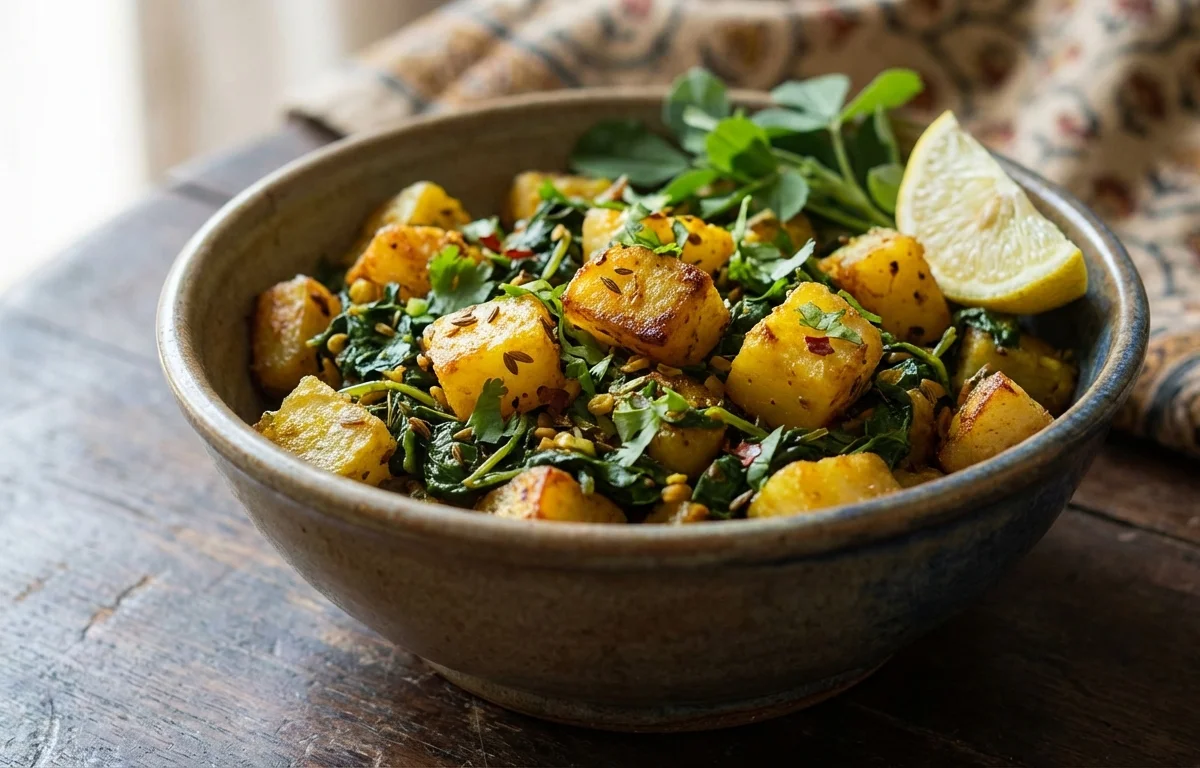
Aloo Methi Fry
A simple home-style stir-fry where tender potatoes soak up the earthy, slightly bitter flavor of fresh fenugreek leaves. It is comforting, lightly spiced, and pairs beautifully with roti, dal, or plain rice.
For 4 servings
- prep · ~15 min
Prep the potatoes and methi.
1.Peel the potatoes and cut them into small even cubes.2.Pluck and clean the methi leaves well, then roughly chop them.3.Chop the onion, slit the green chilies, and finely chop the ginger. - saute · ~5 min
Start the base.
1.Heat oil in a wide pan over medium heat.2.Add cumin seeds and let them sizzle for a few seconds.3.Add onion, green chili, and ginger, then cook until the onion turns soft and light golden. - saute · ~3 min
Cook the potatoes with spices.
1.Add the potato cubes and mix well with the onion base.2.Add turmeric powder, red chili powder, coriander powder, and salt.3.Stir well so the potatoes are coated evenly in the spices.TIPCut the potatoes small and even so they cook at the same pace. - saute · ~12 min
Cover and cook until the potatoes are tender.
Lower the heat, cover the pan, and cook the potatoes until tender, stirring every few minutes so they do not stick. If needed, sprinkle 1 to 2 tbsp water to help them soften without burning.
TIPUse low to medium heat so the potatoes cook through before the outside browns too much. - saute · ~6 min
Add the methi and finish the fry.
Add the chopped methi leaves and cook uncovered, stirring often, until the leaves wilt and the extra moisture dries out. The potatoes should be lightly crisp at the edges and the methi should look cooked and glossy.
TIPCooking the methi uncovered helps keep the fry dry and prevents any bitterness from tasting harsh. - garnish
Mix in the lemon juice.
- serve
Serve hot with roti or rice.
What to keep in mind.
7 tips from the recipe — small details that make a real difference to the final dish.
- 1Wash methi thoroughly, then dry it well so the fry stays dry instead of steaming.
- 2Cut the potatoes into small, even cubes so they turn tender at the same time.
- 3Cook the potatoes covered first, but add methi only after they are nearly done.
- 4Stir every few minutes while covered to prevent the spice-coated potatoes from catching at the bottom.
- 5Finish the methi uncovered until the pan looks dry and the potato edges turn lightly crisp.
- 6Add lemon juice only after switching off the heat to keep its brightness fresh.
- 7This sabzi reheats well; warm it in a pan rather than the microwave to bring back the dry-fry texture.
Adapt it for your goals.
Low-oil
Use less oil and a good nonstick pan, adding tiny splashes of water while covering the potatoes. Ideal if you want a lighter everyday sabzi.
no onionNo-onion
Skip the onion and increase ginger slightly for a simpler vrat-style or pantry-friendly version with a cleaner methi flavor.
garlicGarlic
Add a few chopped garlic cloves with the ginger for a more robust, savory version that pairs especially well with dal and roti.
peasPeas
Add a handful of green peas near the end for extra sweetness and color, which softens methi's pleasant bitterness.
Why this is on our healthy list.
Leafy Green Goodness
Fresh methi leaves add plant compounds and fiber, bringing more nutritional value than a plain potato fry.
Gentle Digestive Support
Ginger, cumin, and coriander are classic spices used in home cooking to make simple vegetable dishes feel lighter and more digestible.
Balanced Comfort Dish
Potatoes provide satisfying energy, while methi and spices add depth and freshness, making the sabzi more balanced than plain fried potatoes.
Frequently asked questions
Clean the leaves well, cook them only after the potatoes are nearly tender, and finish with lemon juice. Cooking uncovered also helps the bitterness taste less harsh.



.webp)