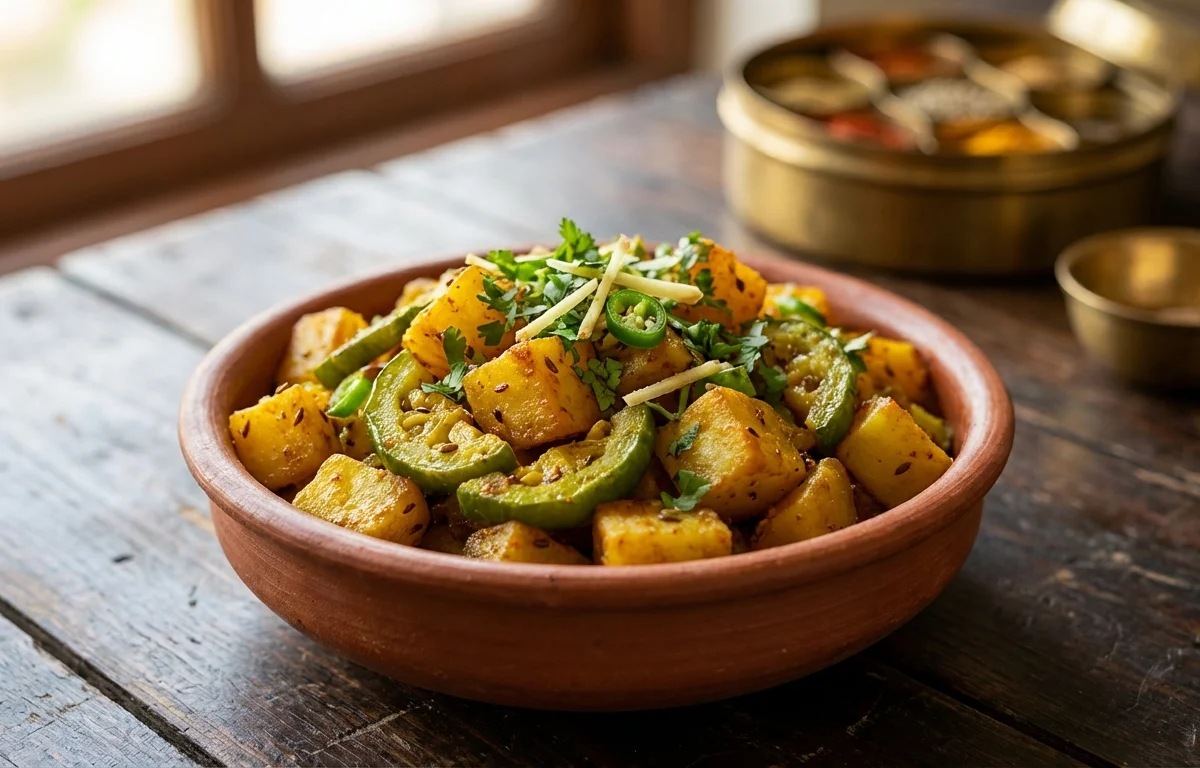
Aloo Parwal Bhujia
A simple home-style stir-fry of pointed gourd and potato cooked with everyday spices until tender and lightly crisp at the edges. It makes a comforting North Indian side that goes beautifully with roti or dal-chawal.
For 4 servings
- prep · ~15 min
Prep the vegetables.
1.Trim the ends of the parwal and slice them thinly.2.Peel the potato and cut it into thin sticks so it cooks evenly with the parwal.3.Slit the green chilies and keep the spices measured nearby.TIPThin, even cuts help the bhujia cook quickly and keep the potato from turning mushy. - temper · ~1 min
Heat the oil and crackle the cumin.
Heat the oil in a wide pan over medium heat. Add cumin seeds and let them sizzle for a few seconds, then add the green chilies.
- saute · ~5 min
Cook the potato first.
Add the potato and cook for 4 to 5 minutes, stirring now and then, until the edges start to turn light golden.
TIPStarting with the potato gives it a head start, since parwal softens faster. - saute · ~3 min
Add the parwal and spices.
1.Add the sliced parwal and mix well with the potato.2.Sprinkle in turmeric powder, red chili powder, coriander powder, and salt.3.Stir gently so the vegetables are evenly coated with the spices. - simmer · ~12 min
Cover and cook until tender.
Add water, mix once, then cover the pan and cook on low heat for 10 to 12 minutes, stirring once or twice, until both vegetables are tender.
TIPKeep the heat low and use only a little water so the bhujia stays dry rather than turning into a gravy. - saute · ~4 min
Dry out and finish the bhujia.
Remove the lid and cook for 3 to 4 minutes, stirring gently, until any moisture dries up and the vegetables look lightly crisp at the edges. Sprinkle amchur and mix.
- garnish
Garnish with cilantro.
- serve
Serve hot with roti or dal-chawal.
What to keep in mind.
7 tips from the recipe — small details that make a real difference to the final dish.
- 1Slice the parwal thin and keep the potato sticks similar in size so both finish cooking together.
- 2Let the cumin crackle fully in the oil before adding chilies; this gives the bhujia its base aroma.
- 3Cook the potatoes until just lightly golden before adding parwal, or they can stay underdone in the final dish.
- 4Use only the small amount of water called for; too much will steam the vegetables and make the bhujia soggy.
- 5For crisp edges, uncover in the last few minutes and avoid over-stirring so the potato does not break.
- 6Add the amchur right at the end to keep its tang bright instead of dulling during covered cooking.
- 7This sabzi reheats well in a pan; a quick dry sauté brings back the lightly crisp texture better than microwaving.
Adapt it for your goals.
Low-oil
Use a well-seasoned nonstick pan and reduce the oil slightly; the covered cooking method still softens the vegetables well.
jainJain
Skip the potato and make a simple parwal bhujia with the same spices for a no-root-vegetable version.
extra spicyExtra-spicy
Add one more slit green chili or a little extra red chili powder if you want a sharper heat with roti.
onion garlicOnion-garlic
Sauté a little sliced onion and garlic after the cumin for a more robust everyday dhaba-style flavor.
Why this is on our healthy list.
Vegetable-Forward Side Dish
Pointed gourd and potato make this a satisfying sabzi with plant foods at the center rather than a heavy gravy.
Moderate Oil Cooking
The bhujia uses a small amount of oil and relies on covered cooking plus a brief dry sauté for texture.
Digestive Spice Support
Cumin, coriander, and green chili add flavor while bringing traditional Indian spices often used in everyday home cooking.
Frequently asked questions
No, usually just trim the ends and slice it thin. The tender skin cooks well and helps the slices hold their shape.



.webp)