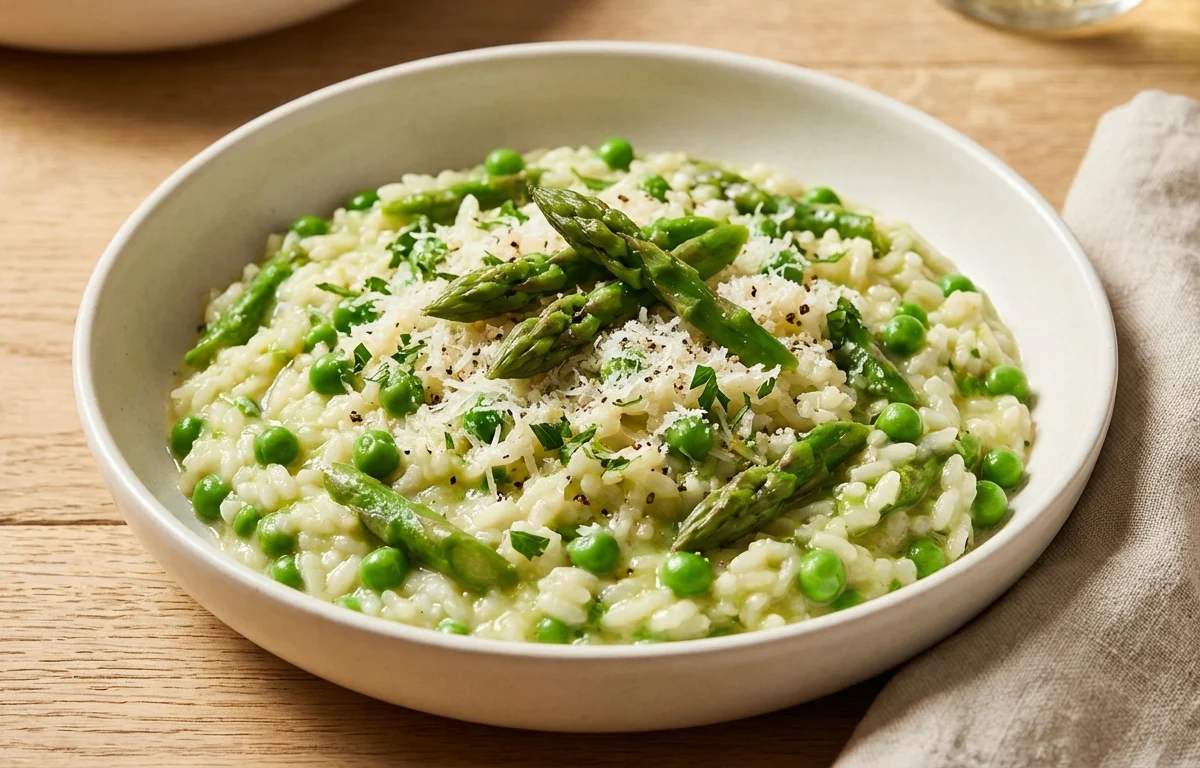
Asparagus and Pea Risotto
Creamy, delicate risotto with tender asparagus tips and sweet green peas folded through each velvety spoonful. A bright springtime dish that comes together in one pan with simple pantry staples and fresh seasonal produce.
For 4 servings
- prep
Prep the asparagus and warm the water.
1.Snap off woody ends from asparagus and cut stalks into 1-inch pieces.2.Zest the lemon with a microplane, then halve and juice one half (reserve the rest).3.Pour 4 cups of water into a saucepan and warm over low heat — keep it just below a simmer.TIPKeep the water warm but not boiling — cold water shocks the rice and stops the starch from releasing, which is what makes risotto creamy. - boil · ~3 min
Blanch the asparagus and peas.
1.Bring a small pot of water to a rolling boil.2.Drop in asparagus pieces and cook for 2 minutes until bright green and just tender.3.Add the green peas and cook 30 seconds more.4.Drain immediately and plunge into a bowl of ice-cold water to stop cooking.TIPShock in ice water — this locks in the vibrant green color and keeps the vegetables firm. - saute · ~6 min
Sauté the onion and garlic.
1.Heat 1 tablespoon olive oil and 1 tablespoon butter in a large heavy-bottomed pan over medium heat.2.Add chopped onion and cook until soft and translucent (4-5 minutes).3.Add minced garlic and sauté until fragrant, about 30 seconds.TIPKeep the heat moderate — you want soft, translucent onion with no browning. - saute · ~2 min
Toast the rice.
1.Add the arborio rice to the pan with the onion mixture.2.Stir constantly for 2 minutes until the edges of the rice grains turn translucent and the rice smells nutty.TIPWatch for the translucent edge — if you toast too long the grains harden and won't absorb liquid properly. - simmer · ~20 min
Add warm water one ladle at a time, stirring continuously.
1.Add one ladle of warm water and stir until almost fully absorbed (1-2 minutes).2.Repeat, adding the next ladle only when the previous one is mostly absorbed.3.Continue for 18-20 minutes total until the rice is creamy and al dente — tender with a slight bite.TIPConstant stirring is key — it rubs the starch off the grains and makes the risotto velvety. Don't rush this step. - mix · ~2 min
Fold in the vegetables, cheese, and lemon.
1.Remove pan from heat once rice is al dente and the liquid is creamy.2.Fold in the blanched asparagus, peas, remaining tablespoon of butter, and grated parmesan.3.Add half the lemon zest, a squeeze of lemon juice, and the salt and pepper.4.Stir gently until everything is combined and glossy.TIPRemove from heat before adding cheese — residual heat melts it perfectly without making it stringy or oily. - rest · ~1 min
Rest the risotto for 1 minute.
Cover the pan with a lid and let it sit off the heat for 1 minute. This brief rest allows the starches to settle into a perfectly creamy consistency.
TIPThe rest is the secret step most people skip — it gives the risotto its signature flowing, oozy texture. - garnish
Finish with remaining lemon zest and serve immediately.
Spoon into shallow bowls and finish with a scatter of reserved lemon zest and an extra crack of black pepper.
What to keep in mind.
7 tips from the recipe — small details that make a real difference to the final dish.
- 1Use warm liquid—cold water shocks the rice and stops starch release, ruining creaminess.
- 2Blanch asparagus and peas, then shock in ice water to lock in bright green color and crisp-tender texture.
- 3Stir risotto constantly to rub starch off the grains, creating a velvety, flowing consistency.
- 4Toast the arborio rice just until the edges turn translucent—over-toasting hardens the grains.
- 5Remove the pan from heat before adding Parmesan; residual heat melts it smoothly without stringiness.
- 6Let the risotto rest for 1 minute off heat to allow starches to settle into a perfectly creamy texture.
- 7For best flavor, use freshly grated Parmesan and a microplane-zested lemon—pre-grated cheese won't melt as smoothly.
Adapt it for your goals.
Vegan
Substitute the butter with extra-virgin olive oil and use a high-quality vegan Parmesan (or nutritional yeast) in place of dairy Parmesan. This keeps the risotto rich and creamy without animal products, ideal for plant-based diets.
high proteinHigh-protein
Add 1 cup of cooked edamame or shelled fava beans along with the peas. For extra protein, stir in 200g of pan-seared shrimp or cubed chicken breast at the end. This turns the dish into a more substantial main course.
low oilLow-oil
Reduce the olive oil to 1 tablespoon and use only 1 tablespoon of butter. Sauté the onion in a splash of vegetable broth instead of oil to cut fat while still achieving a flavorful base. Great for those watching their oil intake.
Why this is on our healthy list.
Rich in Fiber
Asparagus and green peas provide dietary fiber that supports healthy digestion and helps maintain steady blood sugar levels.
Source of Plant Protein
Green peas add a modest amount of plant-based protein, making this risotto more satiating and nutritionally balanced.
Packed with Vitamins
Asparagus is rich in folate and vitamins A, C, and K, while peas contribute vitamin C and thiamine, supporting immune function and bone health.
Lower in Sodium
This recipe uses minimal added salt and relies on the natural flavors of fresh vegetables and Parmesan, making it suitable for sodium-conscious eaters.
Frequently asked questions
Yes, frozen peas work perfectly. Add them directly to the blanching water during the last 30 seconds, then shock in ice water. They'll be sweet and tender.