
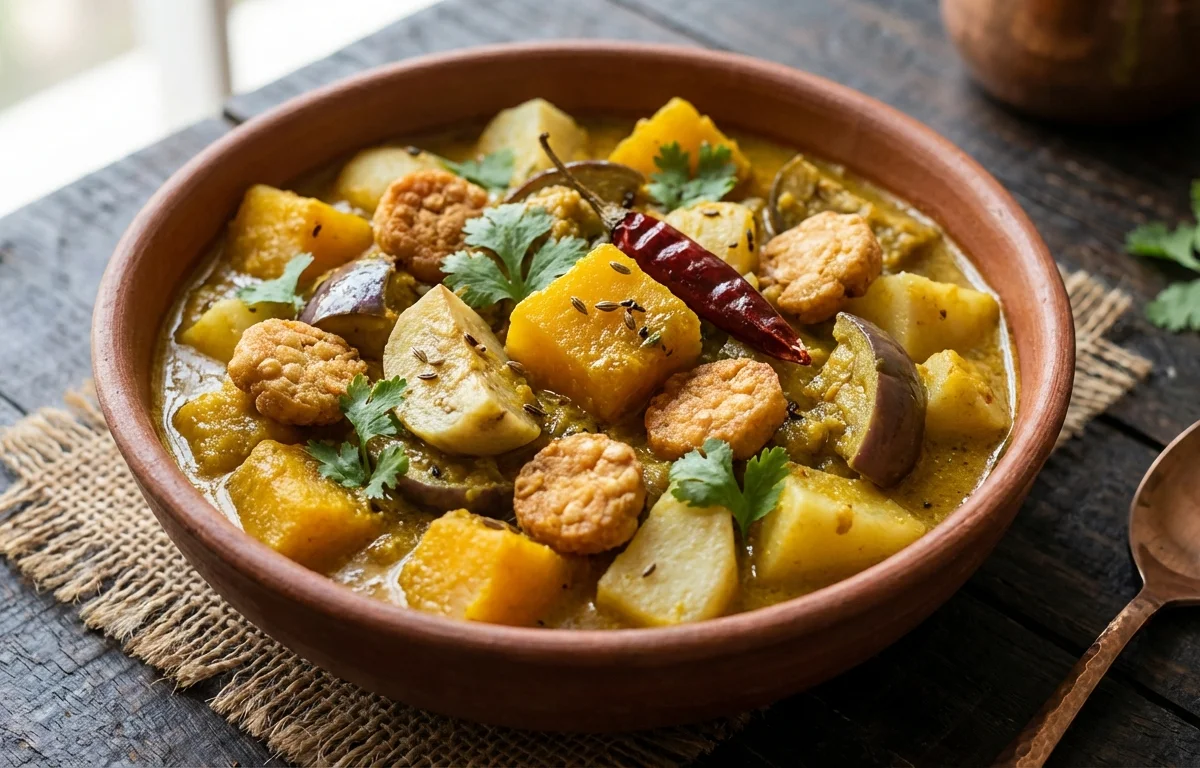
Bairi Tarkari
Soft, spiced sun-dried lentil dumplings simmered in a fragrant potato and tomato curry. This rustic Odia classic brings together earthy bairi and tender potatoes in a warming, everyday gravy that pairs beautifully with steamed rice.
For 4 servings
- prep · ~30 min
Soak the bairi dumplings.
Place the dried bairi in a bowl of warm water. Let them soak for about 30 minutes until they soften and expand slightly.
TIPDon't oversoak — 30 minutes is ideal. Overly soft bairi will break apart in the gravy. - fry · ~4 min
Shallow fry the bairi.
Gently squeeze the soaked bairi to remove excess water. Heat 1 tbsp mustard oil in a pan over medium heat. Fry the bairi until golden and slightly crisp on the outside, about 3-4 minutes. Remove and set aside.
TIPFry in batches if needed — don't crowd the pan, or they won't get crispy. - temper · ~5 min
Make the tempering.
1.In the same pan, add the remaining 1 tbsp mustard oil and heat until it smokes lightly, then reduce heat.2.Add cumin seeds, dried red chili, and bay leaf. Let them splutter for 30 seconds.3.Add the chopped onions and sauté until translucent (3-4 min).TIPMustard oil tastes best when heated to its smoking point, then cooled slightly before adding spices. - saute · ~7 min
Build the masala base.
1.Add ginger garlic paste and slit green chilies. Sauté until the raw smell disappears (1 min).2.Add chopped tomatoes, turmeric powder, red chili powder, cumin powder, and coriander powder.3.Cook until the tomatoes break down completely and the oil starts to separate from the masala (5-7 min).TIPKeep stirring to prevent the spice powders from sticking to the bottom of the pan and burning. - simmer · ~12 min
Simmer the potatoes with the masala.
Add the cubed potatoes and salt to the pan. Stir to coat them well with the masala. Pour in 2 cups of water, cover the pan, and simmer for 10-12 minutes until the potatoes are fork-tender.
TIPCheck the potatoes with a fork — they should be soft but not falling apart before the next step. - simmer · ~6 min
Add the fried bairi and finish cooking.
Gently add the fried bairi to the simmering curry. Stir carefully to avoid breaking them. Cover and simmer on low heat for 5-7 minutes, allowing the bairi to absorb the gravy's flavors.
TIPStir gently and only once or twice — bairi are delicate and will crumble if over-handled. - garnish · ~2 min
Finish with garam masala and coriander.
Sprinkle the garam masala on top, gently mix, and turn off the heat. Garnish with fresh chopped coriander leaves. Let it rest for 2 minutes before serving.
TIPAdding garam masala at the very end preserves its aromatic oils and gives the brightest flavor.
What to keep in mind.
7 tips from the recipe — small details that make a real difference to the final dish.
- 1Soak bairi in warm water for exactly 30 minutes — oversoaking makes them mushy and prone to breaking in the gravy.
- 2Always heat mustard oil until it lightly smokes, then reduce heat before adding spices — this tames its pungency and deepens flavor.
- 3Fry the soaked bairi in a single layer without crowding the pan to achieve a crispy golden exterior.
- 4Cook the tomato masala until oil visibly separates — this ensures the gravy has a rich, well-blended base without raw tanginess.
- 5Add the fried bairi to the curry only after potatoes are fork-tender, then simmer gently to avoid crumbling the dumplings.
- 6Stir the curry minimally once bairi are added — use a gentle folding motion to keep them intact.
- 7Sprinkle garam masala off the heat to retain its volatile aromatic oils for the brightest finish.
Adapt it for your goals.
Low-oil
Skip the shallow-fry step for bairi — simply soak them well and add directly to the simmering gravy after the potatoes are tender. This reduces oil significantly while still yielding soft, flavorful dumplings, ideal for a lighter everyday meal.
no onion no garlicNo-onion-no-garlic
Omit onion and ginger garlic paste; instead add 1/2 tsp asafoetida (hing) to the tempering and increase tomatoes to 3. This variation keeps the dish sattvic and suitable for Jain or temple-style cooking while retaining the earthy, tangy character.
high proteinHigh-protein
Add 1/2 cup of cooked chickpeas or paneer cubes along with the bairi to boost protein content. The mild legumes or paneer absorb the spiced gravy beautifully, making the dish more filling without altering its rustic Odia soul.
Why this is on our healthy list.
Rich in Plant-Based Protein
Bairi (sun-dried black gram dumplings) are a concentrated source of legume protein, making this curry a satisfying vegetarian main that supports muscle repair and satiety.
Gut-Friendly Fiber
Potatoes and lentils in this dish provide dietary fiber that aids digestion and promotes a steady release of energy, keeping you full longer.
Anti-Inflammatory Spices
Turmeric, cumin, and coriander in the gravy offer natural anti-inflammatory and antioxidant compounds that may support overall wellness.
Low in Saturated Fat
Mustard oil is used as the primary fat — it is low in saturated fat and rich in heart-healthy monounsaturated and polyunsaturated fatty acids when used in moderation.
Frequently asked questions
Yes, but the texture will be different. Fresh vada are softer and more fragile; reduce simmering time to 2-3 minutes to prevent them from dissolving into the gravy.


