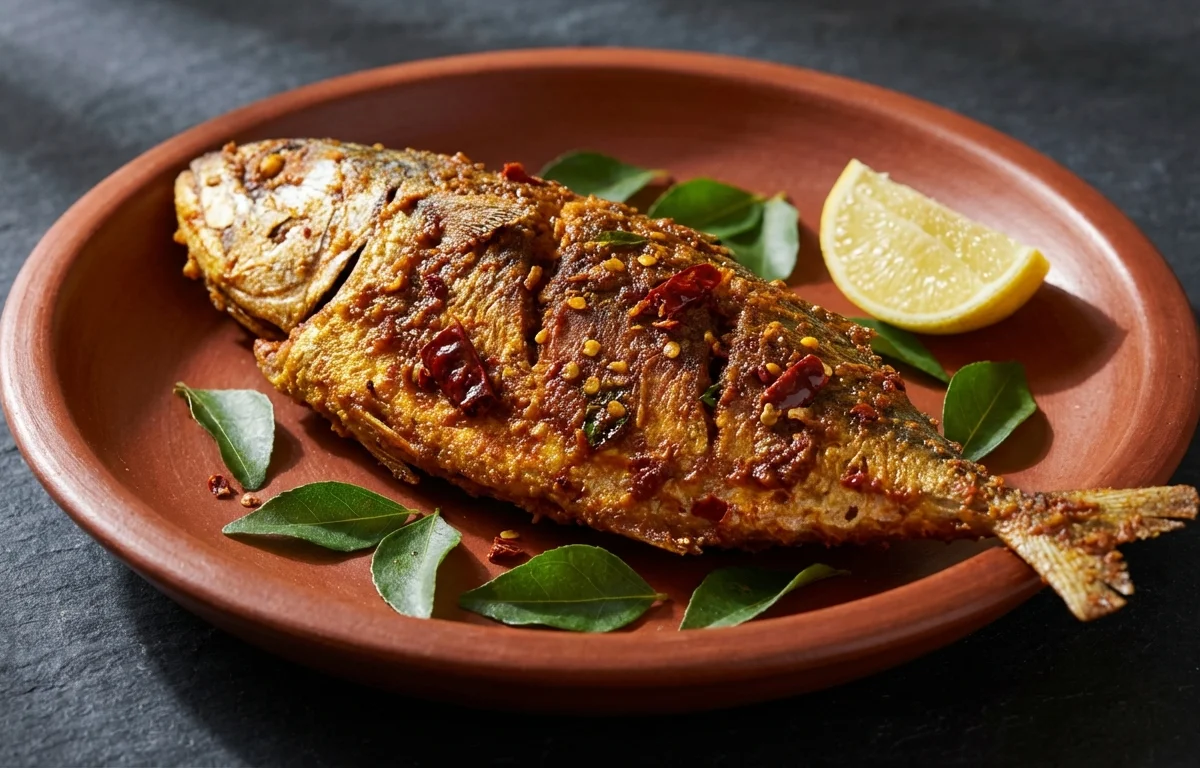
Bangude Pulimunchi Fry
Whole mackerel marinated in a fiery, tangy paste of roasted chilies, tamarind, and garlic, then pan-fried to crispy perfection. This Mangalorean coastal delicacy fills your kitchen with the aroma of toasted spices and delivers a bold, spicy, and sour punch that pairs beautifully with steamed rice or ganji.
For 4 servings
- prep
Clean and score the mackerel.
Wash the mackerel thoroughly under running water. Pat dry with paper towels. Make 3-4 diagonal slashes on both sides of each fish without cutting all the way through. This ensures the masala penetrates deep into the flesh.
TIPEnsure the fish is completely dry before marinating — excess water dilutes the masala and causes spluttering while frying. - prep · ~15 min
Soak the tamarind.
In a small bowl, soak the seedless tamarind in 3 tablespoons of warm water for 15 minutes. After soaking, squeeze and extract the thick pulp. Discard any fibers.
- roast · ~7 min
Roast the spices and garlic.
1.Heat a small pan over medium-low heat. Dry roast the deseeded Byadgi and Guntur chilies for 1-2 minutes until aromatic and slightly darkened. Remove and set aside.2.In the same pan, dry roast the cumin seeds and black peppercorns for 30 seconds until fragrant. Remove.3.Add the garlic cloves to the pan and dry roast for 2-3 minutes until they get light charred spots and soften slightly. Cool all roasted ingredients completely.TIPRoast on low heat to prevent the chilies from burning. Burnt chilies turn bitter and ruin the vibrant red color of the masala. - mix · ~2 min
Grind the pulimunchi masala paste.
Transfer the cooled roasted chilies, cumin, peppercorns, and garlic to a mixer grinder. Add the extracted tamarind pulp, turmeric powder, and salt. Grind to a smooth, thick paste using very little water — just enough to keep the blades moving. The masala should be thick enough to coat the back of a spoon.
TIPUse water sparingly. A thick paste clings better to the fish and forms a flavorful crust when fried. - mix · ~10 min
Marinate the mackerel with the masala.
Apply the ground masala paste generously all over the mackerel, pushing it into the slashes and the cavity. Sprinkle rice flour evenly over the masala-coated fish and gently pat it down. Let the fish rest for 10 minutes to absorb the flavors.
TIPThe rice flour draws out excess moisture and gives the fish an irresistible crispy exterior. - fry · ~11 min
Pan-fry the mackerel on medium heat.
1.Place a wide cast iron skillet over medium heat and add coconut oil.2.Once the oil is hot but not smoking, gently lay the marinated fish in the pan in a single layer.3.Cook uncovered for 5-6 minutes on the first side until the masala forms a dark, crispy crust and the fish is cooked halfway through.4.Carefully flip using a flat spatula and cook the other side for another 4-5 minutes. Press down lightly with the spatula to ensure even contact with the pan.TIPDo not move the fish around in the first few minutes. Let it sear undisturbed to develop a crust that prevents sticking. - fry · ~2 min
Baste and crisp up the fish.
If there is any remaining masala paste, smear it over the frying fish. Drizzle a few extra drops of coconut oil over the fish if it looks dry. Continue frying for 1-2 minutes until the skin is crisp and the flesh is cooked through.
TIPMackerel is cooked when the flesh turns opaque and flakes easily with a fork. - serve
Serve the Bangude Pulimunchi Fry immediately.
Transfer the fried mackerel to a serving plate. Serve piping hot with steamed rice, boiled red rice (ganji), or as a side with fish curry meals. A wedge of lime and sliced raw onion on the side cuts through the richness perfectly.
What to keep in mind.
7 tips from the recipe — small details that make a real difference to the final dish.
- 1Score the mackerel deeply but do not cut through the bone to ensure even cooking.
- 2Dry the fish thoroughly with paper towels before marinating to prevent the masala from sliding off.
- 3Roast the chilies on low heat until just fragrant — burnt chilies make the paste bitter.
- 4Grind the masala into a thick paste using minimal water; a watery paste won't stick to the fish.
- 5Let the marinated fish rest for 10 minutes so the flavors penetrate the flesh.
- 6Use a cast iron skillet for even heat and the best crispy crust.
- 7Do not flip the fish too early — let it sear undisturbed for 5-6 minutes to develop a non-stick crust.
Adapt it for your goals.
Air-fryer version
Marinate the fish as directed, then spray with coconut oil and air-fry at 200°C (400°F) for 12-15 minutes, flipping halfway. Great for a lower-oil alternative that still yields a crispy exterior.
oven bakedOven-baked
Place the marinated fish on a greased baking tray, drizzle with oil, and bake at 220°C (425°F) for 15-18 minutes. Perfect for cooking multiple portions at once without standing over a pan.
high proteinHigh-protein
Replace mackerel with any firm white fish like kingfish or seer fish. Mackerel is naturally rich in omega-3s, but this variation offers a milder flavor while keeping the protein high.
Why this is on our healthy list.
Rich in Omega-3 Fatty Acids
Mackerel is packed with heart-healthy omega-3s that support brain function and reduce inflammation.
High in Vitamin D
Mackerel is one of the best natural sources of vitamin D, essential for bone health and immunity.
Low in Carbs, High in Protein
This dish is naturally low in carbohydrates and provides a generous serving of complete protein from fish, ideal for muscle maintenance.
Antioxidant-Rich Spices
Cumin, black pepper, turmeric, and red chilies contain antioxidants that help combat oxidative stress and support digestion.
Frequently asked questions
Yes, but thaw it completely in the refrigerator and pat it very dry before scoring and marinating to avoid excess moisture.