Bavarian Weisswurst
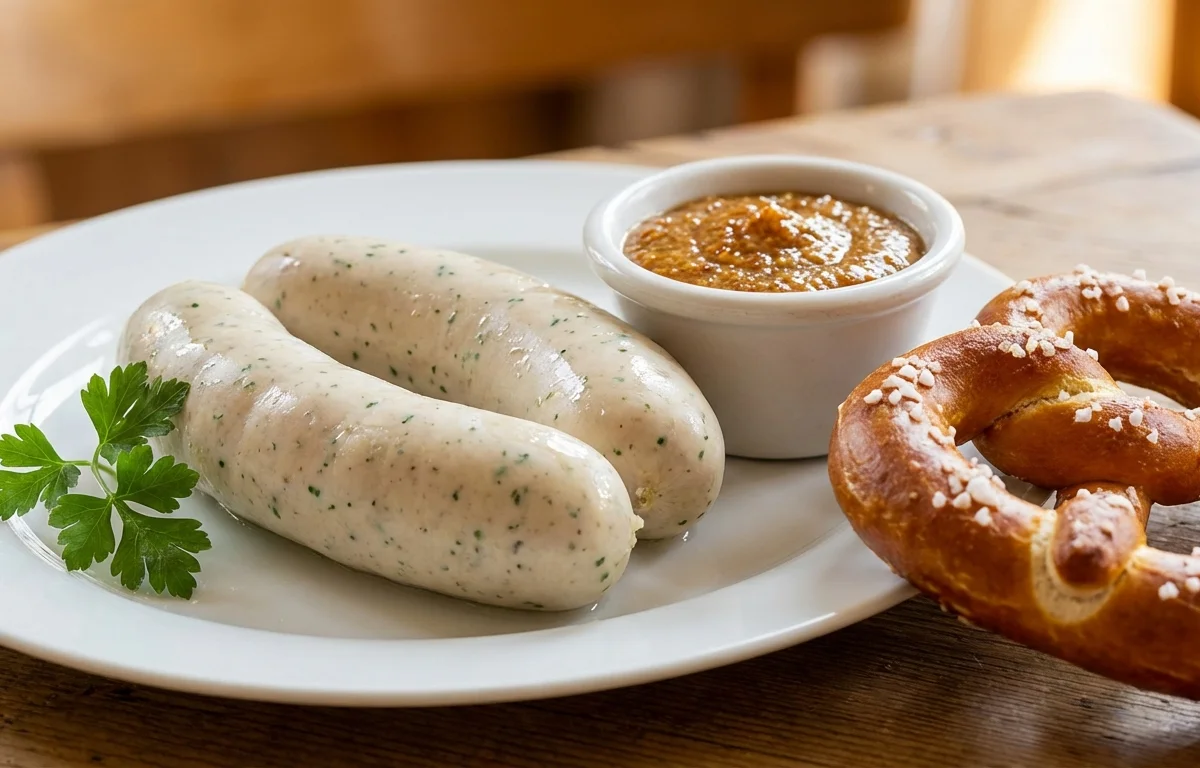
A classic Bavarian specialty, these delicate white sausages are made with veal and pork, seasoned with parsley and lemon. Traditionally enjoyed for breakfast with sweet mustard and a pretzel, they are gently poached to perfection, resulting in a uniquely smooth and tender texture.
For 6 servings
Chill Equipment and Ingredients
1.Place your meat grinder parts (blade, plate, auger), a large metal mixing bowl, and the paddle attachment for your stand mixer in the freezer for at least 1 hour.2.Ensure the cubed veal and pork fat are extremely cold, almost frozen, before you begin.Grind the Meat and Fat
1.Assemble the chilled meat grinder using a fine grinding plate (3mm or 1/8 inch).2.Pass the cold veal and pork fat cubes through the grinder into the chilled bowl.3.For the smoothest texture, return the ground mixture to the freezer for 15-20 minutes, then grind it a second time.Create the Sausage Emulsion (Farce)
1.Transfer the ground meat to the chilled bowl of a stand mixer fitted with the paddle attachment.2.Add salt, white pepper, mace, ginger, cardamom, minced onion, parsley, and lemon zest.3.Mix on low speed for 1 minute to distribute the seasonings.4.Increase speed to medium and gradually add the crushed ice. Continue mixing for 5-7 minutes until the mixture becomes a fine, sticky, and uniform paste (an emulsion). Do not overmix or allow the mixture to get warm.Stuff the Casings
1.Thoroughly rinse the soaked pork casings with cool water, inside and out.2.Load the casing onto the nozzle of your sausage stuffer, leaving a few inches of overhang.3.Fill the stuffer with the meat mixture, pressing down to remove any air pockets.4.Stuff the casings evenly, ensuring they are full but not overly tight to prevent bursting. Twist into 5-inch (12-13 cm) links.Poach the Weisswurst
1.In a large pot, bring 2 liters of water and 18g of salt to a simmer (around 175°F / 80°C). Immediately reduce the heat to low. The water should be steaming, but never boiling.2.Gently place the sausages into the hot water. Poach for 15-20 minutes until they are firm, plump, and heated through. An instant-read thermometer should register 160°F (71°C) in the center.3.Do not let the water boil at any point, as this will split the casings.Serve Traditionally
1.Remove the Weisswurst from the pot using a slotted spoon.2.Serve immediately in a tureen or deep bowl with some of the hot poaching water to keep them warm at the table.3.Enjoy with sweet Bavarian mustard (Süßer Senf), soft pretzels (Brezn), and a glass of Weissbier (wheat beer).
What to keep in mind.
5 tips from the recipe — small details that make a real difference to the final dish.
- 1Keeping the meat, fat, and equipment ice-cold is the single most important factor for a successful emulsion and smooth texture.
- 2If you don't have a stand mixer, you can create the emulsion in a food processor by pulsing the ground meat with the ice and seasonings. Work in small batches to avoid overheating.
- 3To check the seasoning before stuffing all the sausages, poach or pan-fry a small test patty of the mixture.
- 4Weisswurst is highly perishable and traditionally eaten fresh, before noon. For best flavor, consume the same day they are made.
- 5The traditional way to eat Weisswurst is by 'zuzeln' (sucking the meat from the casing) or by cutting the sausage lengthwise and peeling the casing off.
Adapt it for your goals.
Herb Variation
For a slightly different flavor profile, you can add a pinch of ground nutmeg or a tablespoon of fresh chives along with the parsley.
Meat VariationMeat Variation
While classic Weisswurst uses veal, you can substitute it with very lean, pale pork loin for a different but still delicious sausage. The texture and color will vary slightly.
Why this is on our healthy list.
Excellent Source of Protein
The veal and pork provide high-quality protein, which is essential for building and repairing tissues, supporting muscle mass, and overall body function.
Rich in B Vitamins
This dish is a good source of B vitamins, particularly B12 and niacin, which are crucial for energy production, brain function, and maintaining a healthy nervous system.
Provides Essential Minerals
Weisswurst contains important minerals like zinc, which supports the immune system, and iron, which is vital for creating red blood cells and preventing anemia.
Frequently asked questions
A typical serving of two Weisswurst sausages (around 260g) contains approximately 600-700 calories, primarily from fat and protein. This can vary based on the specific fat content of the meat used.