Bhindi Masala
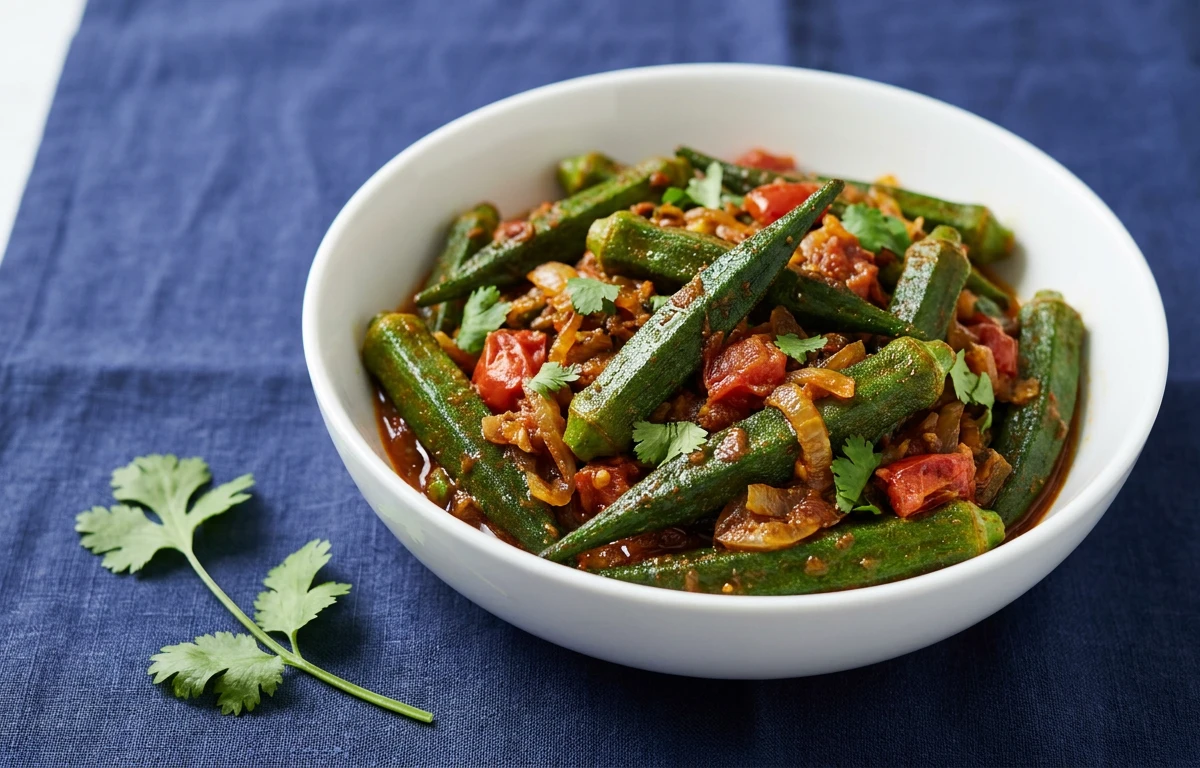
Tender okra stir-fried with onions and a fragrant blend of earthy spices. This North Indian dry curry is cooked low and slow to avoid stickiness, turning bhindi into a richly spiced, deliciously savory side that pairs perfectly with roti or dal chawal.
For 4 servings
- prep · ~10 min
Prepare the bhindi.
1.Wash the bhindi thoroughly and dry each piece completely with a clean kitchen towel.2.Trim the tops and tails, then cut into 1-inch pieces. Ensure there is no moisture left.TIPMoisture is the enemy — any water left on the bhindi will make it sticky and slimy during cooking. - fry · ~12 min
Sauté the bhindi first.
1.Heat 1 tbsp oil in a heavy-bottomed pan or kadhai over medium heat.2.Add the chopped bhindi and sauté for 10-12 minutes, stirring occasionally, until lightly browned and no longer slimy.3.Remove from the pan and set aside on a plate.TIPDon't cover the pan; cooking bhindi open allows the steam to escape and prevents stickiness. - saute · ~8 min
Cook the onion base.
1.In the same pan, add the remaining 1 tbsp oil and heat over medium flame.2.Add the sliced onions and sauté for 6-7 minutes until they turn golden brown.3.Add the ginger-garlic paste and sauté for another minute until the raw smell goes away. - saute · ~6 min
Build the masala.
1.Add the chopped tomatoes, turmeric powder, red chili powder, coriander powder, and cumin powder.2.Stir well and cook for 5-6 minutes until the tomatoes soften completely and the oil starts to separate from the masala. - mix · ~4 min
Combine bhindi with the masala.
1.Return the sautéed bhindi to the pan and add salt.2.Gently mix everything together so the bhindi is well coated with the masala.3.Cook on low heat for another 3-4 minutes to let the flavors meld. Avoid mashing the bhindi. - garnish · ~1 min
Finish and serve.
1.Sprinkle garam masala and amchur powder over the top and give it a final gentle mix.2.Turn off the heat and garnish with freshly chopped coriander leaves.
What to keep in mind.
7 tips from the recipe — small details that make a real difference to the final dish.
- 1Dry each okra pod thoroughly with a clean towel after washing to prevent slime.
- 2Sauté the bhindi uncovered on medium heat to let steam escape and avoid stickiness.
- 3Use a heavy-bottomed pan or kadhai for even heat distribution and better browning.
- 4Cook the masala until oil separates from the tomatoes for deep, developed flavor.
- 5Add salt only after returning the bhindi to the pan to avoid drawing out moisture early.
- 6Sprinkle amchur at the end for a bright tang that cuts through the richness.
- 7Serve immediately while hot; leftover bhindi masala can be refrigerated for up to 2 days.
Adapt it for your goals.
Low-oil
Reduce oil to 1 tbsp total and dry-roast the bhindi in a non-stick pan until browned, then follow the same method. This cuts fat while keeping the dish light and non-sticky.
high proteinHigh-protein
Add 150 g of paneer cubes (sautéed separately until golden) or 100 g of roasted chickpeas after combining the bhindi with masala. Perfect for a more filling main dish.
veganVegan
The recipe is naturally vegan as written, but ensure the oil used is plant-based and skip any dairy-based garnishes. Serve with vegan roti or rice.
jainJain
Omit ginger and garlic, and skip onions if your Jain tradition avoids them. Use asafoetida (hing) in oil before adding tomatoes to mimic the savory depth. Keep all other spices unchanged.
Why this is on our healthy list.
Rich in Dietary Fiber
Okra is a good source of soluble fiber, which supports healthy digestion and helps maintain steady blood sugar levels.
High in Vitamin K
Okra provides vitamin K, important for bone health and proper blood clotting.
Low in Fat
With only 2 tbsp of oil for the entire dish, this bhindi masala is a low-fat preparation suitable for everyday eating.
Antioxidant Spices
Turmeric, cumin, coriander, and garam masala are rich in antioxidants and anti-inflammatory compounds that support overall wellness.
Frequently asked questions
Dry the okra completely after washing, sauté it uncovered on medium heat until lightly browned, and avoid adding salt until after the bhindi is cooked. Moisture and early salting both trigger sliminess.



.webp)