Biyyam Rava Dosa
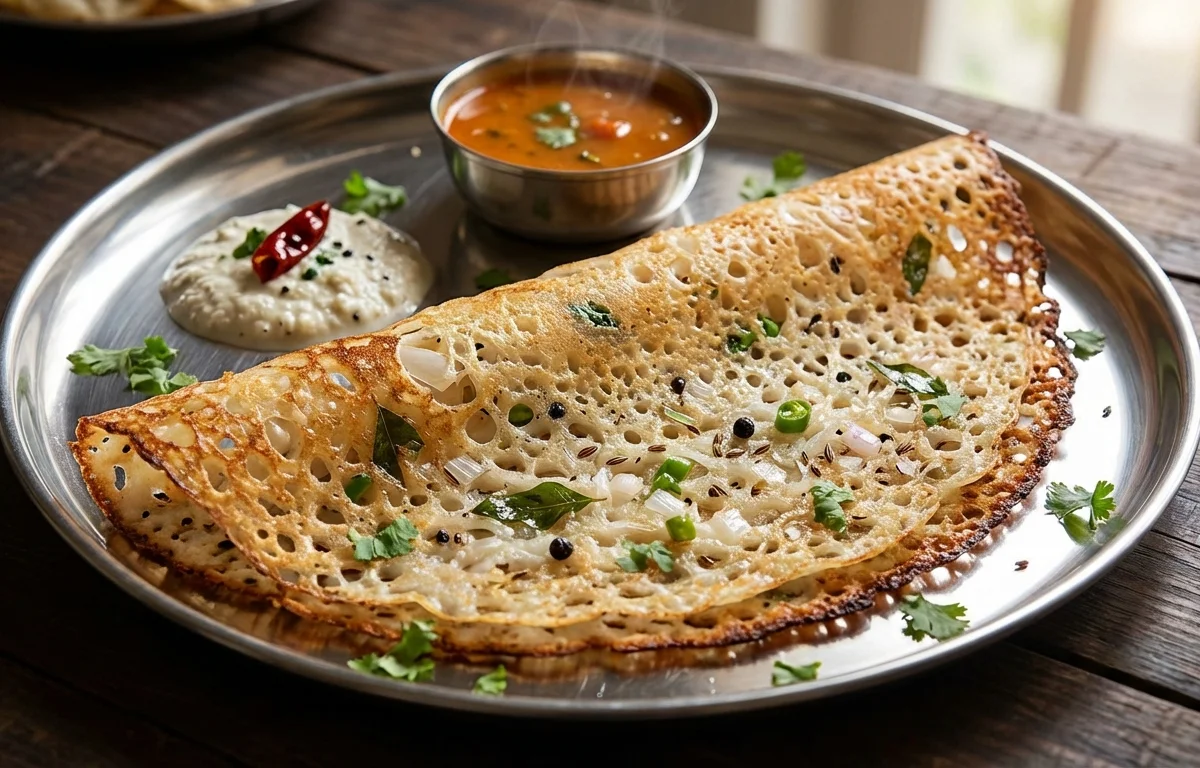
A crisp Andhra-style dosa made with rice rava and urad dal batter, lightly fermented for a gentle tang. It cooks up golden at the edges and stays soft in the center, making it perfect with coconut chutney or sambar.
For 8 servings
- prep · ~240 min
Soak the rice rava and urad dal.
1.Wash the rice rava well and soak it in water for 4 hours.2.Wash the urad dal and fenugreek seeds together and soak them in water for 4 hours.3.Drain both separately before grinding.TIPKeep the rice rava and urad dal separate while soaking so the batter stays light and easy to grind. - mix · ~15 min
Grind the urad dal and mix the batter.
1.Grind the soaked urad dal and fenugreek seeds with water to a smooth, fluffy batter.2.Lightly pulse the soaked rice rava with a little water if it feels too coarse, but do not make it completely smooth.3.Combine both in a large bowl and mix well to a thick pouring batter. - rest · ~480 min
Ferment the batter.
Cover the bowl and leave the batter in a warm place for 8 hours or overnight until slightly risen and airy.
TIPDo not add salt before fermenting in a cool kitchen, as it can slow the rise. - mix · ~2 min
Season and thin the batter.
Add salt and enough water to make a spreadable dosa batter. Mix well; it should be looser than idli batter but not watery.
- fry · ~15 min
Cook the dosas.
1.Heat a dosa tawa over medium heat and lightly grease it with oil.2.Pour a ladle of batter in the center and spread it outward in a thin circle.3.Drizzle a little oil around the edges and cook until the bottom turns golden and crisp.4.Flip if needed and cook the other side briefly, then remove.TIPIf the batter sticks, the tawa is either too cool or too hot; wipe it lightly and let the heat settle before the next dosa. - serve
Serve hot.
What to keep in mind.
7 tips from the recipe — small details that make a real difference to the final dish.
- 1Grind the urad dal until very fluffy; this trapped air helps the dosa stay light despite the coarse rice rava.
- 2Keep the rice rava slightly grainy instead of smooth, or the dosa will lose its classic textured bite.
- 3After fermentation, stir gently once and then adjust water little by little; over-thinning makes spreading difficult.
- 4Use a medium-hot tawa: the batter should spread easily without clumping, yet still sizzle as it hits the pan.
- 5For crisper edges, drizzle a few extra drops of oil around the rim and cook until the center loses its wet sheen.
- 6If making several dosas, stir the batter between each one because the rice rava tends to settle at the bottom.
- 7Leftover batter keeps well in the fridge for a day or two; bring it closer to room temperature before making dosas.
Adapt it for your goals.
Low-oil
Cook on a well-seasoned cast-iron or nonstick tawa with minimal oil; you still get crisp edges with less fat.
instant styleInstant-style
Skip full fermentation for a milder version and rest the mixed batter briefly; useful when you want a quicker breakfast.
onion chiliOnion-chili
Scatter finely chopped onion, green chili, and curry leaves over the spread batter for a more savory Andhra-style dosa.
softer dosaSofter-dosa
Spread the batter slightly thicker and cook with a lid for a softer center, ideal for serving with sambar.
Why this is on our healthy list.
Naturally Fermented Batter
The light fermentation can make the rice-and-dal batter easier to digest and adds depth without heavy ingredients.
Balanced Rice and Dal Base
Rice rava provides energy, while urad dal contributes plant protein and makes the dosa more satisfying.
Moderate Ingredient List
This dosa uses a simple batter with lentils, rice, fenugreek, and limited oil, keeping the dish relatively straightforward and wholesome.
Frequently asked questions
Usually the tawa temperature is off or the surface is not seasoned enough. Wipe it lightly, regulate the heat, and try again once the pan is evenly hot.