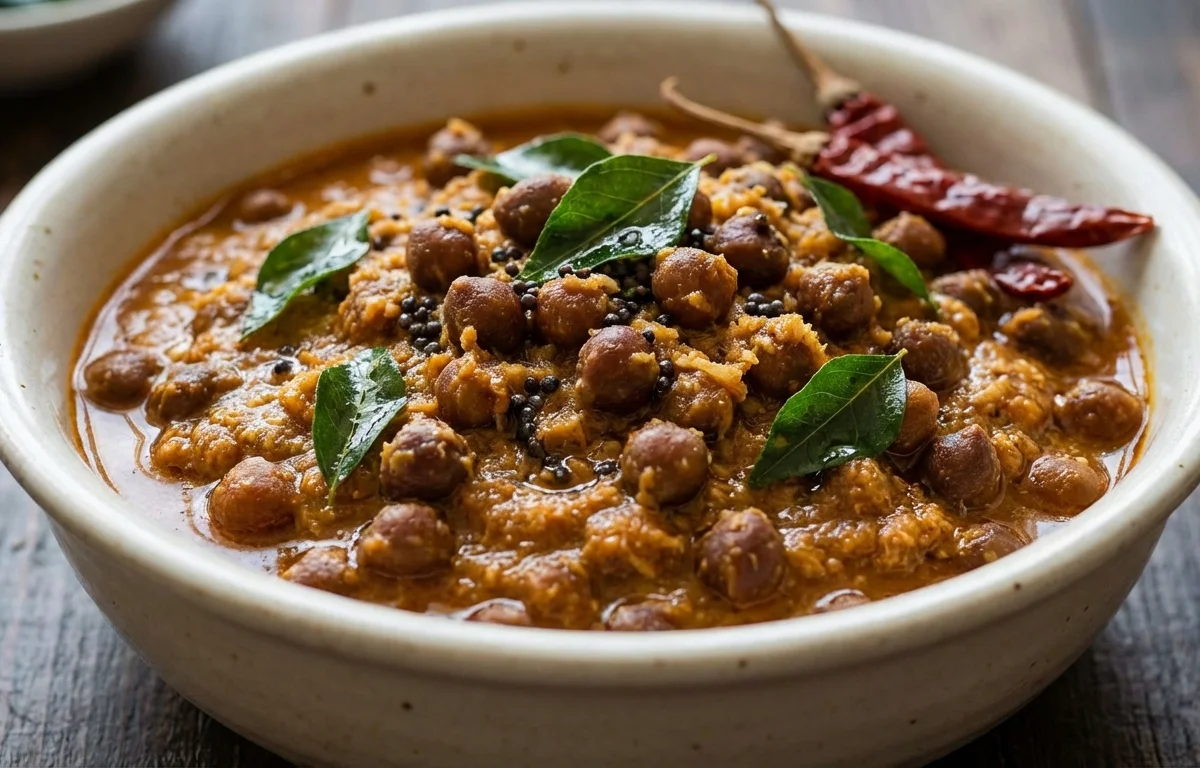
Chane Ghashi
A comforting Konkani-style chickpea curry made with a fresh coconut and roasted spice paste. It has a rich, mellow heat, a touch of tang from tamarind, and a homestyle flavor that pairs beautifully with rice.
For 4 servings
- pressure cook · ~25 min
Pressure cook the chickpeas.
1.Drain the soaked chickpeas and add them to a pressure cooker with 3 cups water.2.Add salt and close the cooker.3.Cook until the chickpeas are very soft and hold their shape, about 20-25 minutes after pressure builds.TIPSoft chickpeas give the curry its best texture, so avoid undercooking them. - roast · ~6 min
Roast the coconut and spices.
1.Heat a small pan over medium-low heat.2.Dry roast the coriander seeds, dried red chili, and cumin seeds until fragrant, 1-2 minutes.3.Add the grated coconut and roast until lightly golden and nutty, 3-4 minutes.4.Stir in the turmeric powder and switch off the heat.TIPKeep the heat medium-low so the coconut browns evenly and does not burn. - mix · ~3 min
Grind the masala.
Cool the roasted mixture slightly, then grind it with tamarind paste and a little water to a smooth, thick paste.
- simmer · ~10 min
Simmer the curry.
1.Transfer the cooked chickpeas with their cooking liquid to a pot if needed.2.Add the ground coconut masala and mix well.3.Add a splash of water if the curry looks too thick.4.Bring to a gentle simmer and cook for 8-10 minutes, stirring now and then.TIPThe gravy should be medium thick and spoonable, not dry. - temper · ~1 min
Make the tempering.
1.Heat oil in a small pan over medium heat.2.Add mustard seeds and let them splutter.3.Add curry leaves and fry for a few seconds. - assemble · ~1 min
Finish the curry.
Pour the hot tempering over the simmering curry and mix gently. Let it cook for 1 more minute so the flavors come together.
- serve
Serve hot.
What to keep in mind.
7 tips from the recipe — small details that make a real difference to the final dish.
- 1Cook the chickpeas until creamy inside; firm chickpeas make the ghashi taste flat and separate from the gravy.
- 2Roast the coconut on medium-low only, stopping at light golden for a sweet, nutty masala without bitterness.
- 3Grind the roasted mixture with minimal water first so the curry gets a thick, velvety Konkani-style body.
- 4Use some of the chickpea cooking liquid while simmering; it adds starch and helps the masala cling better.
- 5Add tamarind carefully and taste after simmering, since the coconut softens acidity and the tang blooms later.
- 6Pour the hot mustard-curry leaf tempering over the curry at the end to keep its aroma bright and fresh.
- 7This curry tastes even better after 30 minutes of resting, when the coconut masala fully settles into the chickpeas.
Adapt it for your goals.
Low-oil
Use half the oil in the tempering or skip the final mix-in; the curry still stays flavorful because the roasted coconut masala carries most of the taste.
milderMilder
Reduce the dried red chilies for a softer heat while keeping the same coconut, coriander, and tamarind profile.
no onion no garlicNo-onion-no-garlic
This version already suits cooks avoiding onion and garlic, making it a good homestyle festive or sattvic-style curry option.
with brown chanaWith-brown-chana
Swap white chickpeas for kala chana for a nuttier, earthier curry with a firmer bite and more rustic character.
Why this is on our healthy list.
Plant Protein and Fiber
Chickpeas bring filling plant protein and fiber, which make this curry satisfying and well-suited for a hearty meal with rice.
Spice-Based Digestive Support
Cumin, coriander, curry leaves, and mustard seeds are traditionally used in Indian cooking to add aroma while supporting easier digestion.
Naturally Dairy-Free
The rich body comes from fresh coconut instead of cream or dairy, making the curry naturally dairy-free while still luscious.
Frequently asked questions
Yes. Use cooked canned chickpeas, but simmer them a little longer in the masala so they absorb flavor. Add water as needed because you will not have the starchy cooking liquid.