Chawli chi Bhaji
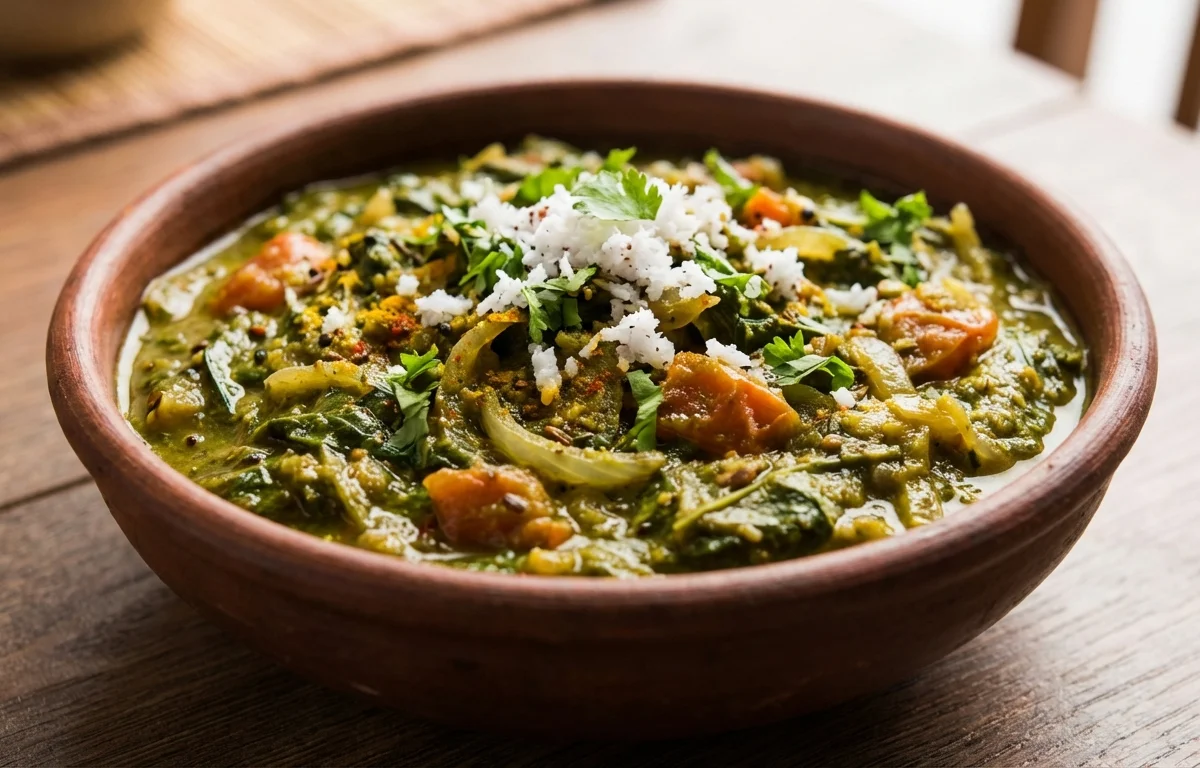
A rustic, homestyle Maharashtrian curry made with tender black-eyed peas simmered in a fragrant coconut and spice paste. The earthy beans soak up the tangy, mildly spiced gravy, making it a comforting main dish that pairs beautifully with steaming rice or soft bhakri.
For 4 servings
- pressure cook · ~15 min
Pressure cook the black-eyed peas.
Drain the soaked black-eyed peas and add them to a pressure cooker with 1 cup of fresh water. Cook on medium heat for 3-4 whistles, then let the pressure release naturally until the peas are soft but hold their shape.
TIPDon't add salt to the beans while pressure cooking — it can toughen the skins. - temper · ~1 min
Make the tempering.
1.Heat oil in a kadhai or deep pan over medium heat.2.Add mustard seeds and let them crackle completely (30 sec).3.Add cumin seeds, asafoetida, and curry leaves. Sauté until fragrant (10 sec).TIPLet the mustard seeds finish popping before adding the next spices. - saute · ~8 min
Build the onion masala base.
1.Add chopped onion and cook until soft and translucent (3-4 min).2.Stir in minced garlic and green chili. Sauté until the raw garlic smell disappears (1 min).3.Add chopped tomato, a pinch of turmeric powder, and a pinch of red chili powder.4.Cook until the tomato softens completely and the mixture looks glossy (3-4 min).TIPCook the tomatoes well — the raw sourness should mellow into sweetness before moving to the next step. - saute · ~2 min
Add coconut and dry spices.
1.Lower the heat and add the grated fresh coconut. Stir continuously for 1 minute.2.Add coriander powder and mix well. Sauté until the raw aroma of the spice fades (30 sec).TIPKeep the heat low so the coconut doesn't burn. - simmer · ~10 min
Simmer the curry with beans.
1.Add the cooked black-eyed peas along with their cooking liquid to the pan.2.Add salt and mix well. Bring to a gentle boil.3.Stir in the tamarind paste dissolved in water.4.Simmer on low heat for 8-10 minutes until the gravy thickens slightly and the beans absorb the flavors.TIPMash a few beans against the side of the pan with your spoon — this naturally thickens the gravy. - mix · ~2 min
Finish with garam masala.
Turn off the heat. Sprinkle garam masala over the curry and stir gently to combine. Let the dish rest covered for 2 minutes so the fragrance settles in.
- garnish
Garnish with fresh coriander and serve hot.
Transfer to a serving bowl and scatter chopped coriander leaves on top. Serve with steamed rice or jowar bhakri.
What to keep in mind.
6 tips from the recipe — small details that make a real difference to the final dish.
- 1Soak the black-eyed peas for at least 6 hours or overnight to ensure even cooking and a creamy texture.
- 2Do not add salt while pressure cooking the beans — salt can toughen their skins and prevent them from softening.
- 3Cook the tomatoes until they turn glossy and the raw sourness mellows; this builds a balanced, sweet-tangy base.
- 4Let the mustard seeds finish crackling completely before adding the next tempering ingredients for full aroma.
- 5Mash a few cooked beans against the side of the pan while simmering — this naturally thickens the gravy.
- 6Add the garam masala only after turning off the heat, then let the curry rest covered for 2 minutes for a deeper fragrance.
Adapt it for your goals.
Vegan
This recipe is already vegan as written, but you can boost richness by using a splash of coconut milk in place of some water.
low oilLow-oil
Reduce oil to 1 tsp and dry-roast the mustard and cumin seeds before adding a splash of water to sauté the onions — ideal for a lighter everyday version.
high proteinHigh-protein
Add a handful of boiled peanuts or cubed paneer along with the beans for extra protein without overpowering the Maharashtrian flavour profile.
gluten freeGluten-free
This curry is naturally gluten-free. Just ensure your asafoetida brand is gluten-free (many commercial blends contain wheat flour).
Why this is on our healthy list.
Rich in Plant Protein
Black-eyed peas provide a solid source of plant-based protein, making this curry a satisfying main dish for vegetarians.
High in Dietary Fiber
The beans and coconut supply ample fiber, which supports healthy digestion and helps maintain steady energy levels.
Good Source of Folate
Black-eyed peas are naturally rich in folate, an essential B vitamin important for cell growth and red blood cell formation.
Anti-Inflammatory Spices
Turmeric, ginger, and garlic in the masala base contain compounds with natural anti-inflammatory properties.
Frequently asked questions
Yes, use 1.5 to 2 cups of drained, rinsed canned beans. Skip the pressure cooking step, and add the beans directly to the masala; simmer for only 5 minutes to avoid mushy beans.



.webp)