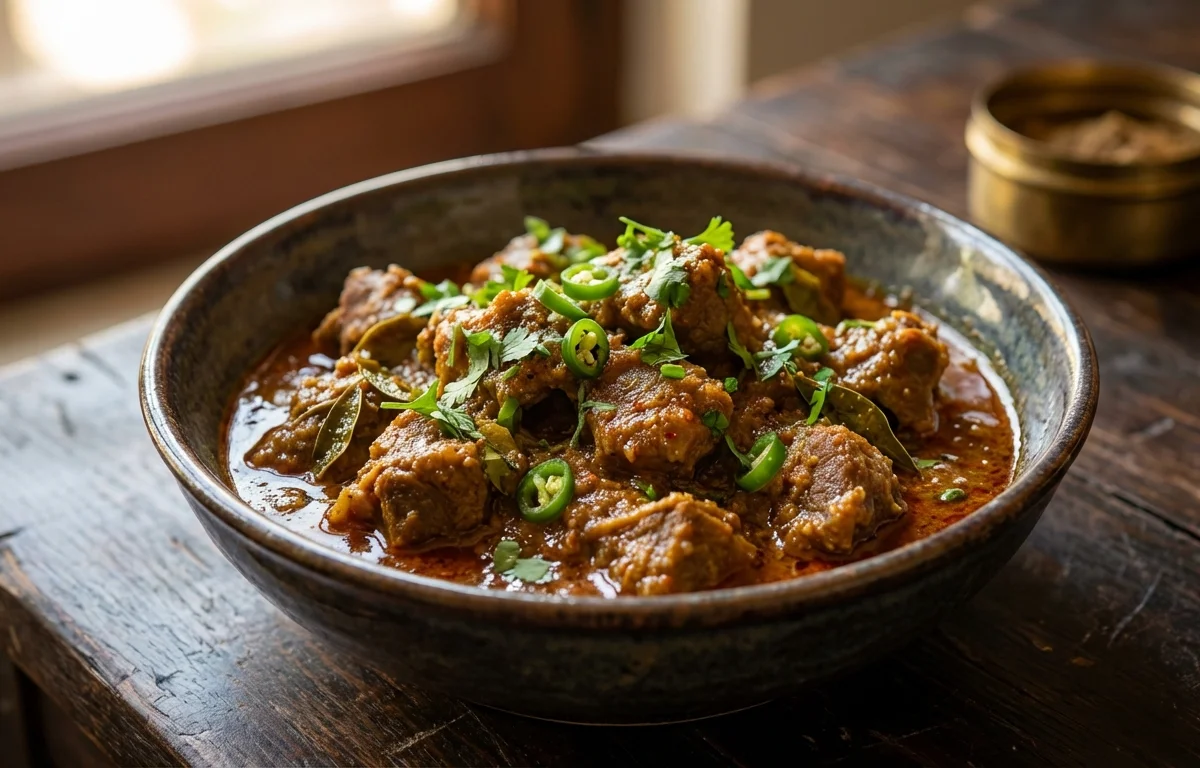
Chigur Gosht
A Hyderabadi delicacy where tender bone-in mutton is slow-cooked with young tamarind leaves, lending a uniquely tangy, earthy flavor. The chigur (tender tamarind shoots) infuses the meat with gentle sourness, balanced by aromatic spices and creamy yogurt.
For 4 servings
- prep · ~10 min
Prepare the tamarind leaves.
1.Pluck the tender tamarind leaves from stems and measure 1 cup packed.2.Wash thoroughly in 2-3 changes of water to remove all dirt.3.Place leaves in a small pan with 0.5 cup water and boil for 5 minutes until softened.4.Drain and set aside. - prep · ~5 min
Wash and marinate the mutton.
1.Wash mutton pieces well and drain.2.In a bowl, mix mutton with whisked yogurt, turmeric powder, and 0.25 tsp salt.3.Set aside and let marinate while preparing the rest.TIPMarinating with yogurt tenderizes the meat and balances the tang from tamarind leaves. - temper · ~2 min
Make the tempering.
1.Heat oil in a pressure cooker over medium heat.2.Add cumin seeds, black peppercorns, green cardamom, cloves, and cinnamon stick.3.Sauté for 30 seconds until spices sizzle and release aroma. - saute · ~15 min
Fry the onions until deep brown.
1.Add sliced onions to the pressure cooker and a pinch of salt.2.Sauté on medium-high heat, stirring frequently, until deep golden brown (10-12 minutes).3.Add ginger-garlic paste and slit green chilies.4.Sauté for 2 more minutes until raw smell disappears.TIPTake your time browning the onions — this is where the deep curry flavor comes from. - saute · ~3 min
Add spice powders and cook the masala.
1.Reduce heat to low.2.Add red chili powder, coriander powder, cumin powder, and remaining 0.25 tsp salt.3.Stir continuously for 2 minutes to avoid burning the spices.4.Add a splash of water if masala sticks to the bottom.TIPKeep the heat low — spice powders burn easily and turn bitter. - saute · ~10 min
Sauté the marinated mutton.
1.Add the marinated mutton to the pressure cooker.2.Increase heat to medium and sear mutton pieces, stirring often.3.Cook for 8-10 minutes until the meat is browned on all sides and oil separates.TIPSearing the mutton locks in juices and adds deeper flavor to the curry. - pressure cook · ~25 min
Pressure cook the mutton with tamarind leaves.
1.Add the boiled tamarind leaves and 1.5 cups water to the pressure cooker.2.Stir everything together and check salt.3.Close the lid and pressure cook on medium heat for 4-5 whistles.4.Turn off heat and let the pressure release naturally.TIPNatural pressure release keeps the mutton tender. Don't rush with quick release. - simmer · ~10 min
Adjust consistency and simmer.
1.Open the pressure cooker and check tenderness of mutton.2.If gravy is too thin, simmer uncovered for 5-10 minutes until it reaches desired thickness.3.Sprinkle garam masala and stir gently. - garnish
Garnish with fresh coriander leaves and serve hot.
Transfer to a serving bowl and garnish generously with chopped coriander leaves. Serve hot with steamed rice or roti.
What to keep in mind.
6 tips from the recipe — small details that make a real difference to the final dish.
- 1Use only young, tender tamarind leaves for the signature tangy flavor.
- 2Brown the onions until deep golden for a rich, caramelized curry base.
- 3Sear the mutton well until oil separates to lock in juices and flavor.
- 4Always let pressure release naturally to keep the mutton fork-tender.
- 5If the gravy is too thin after cooking, simmer uncovered to thicken.
- 6Adjust salt only after adding tamarind leaves, as they can vary in sourness.
Adapt it for your goals.
Chicken variation
Substitute bone-in chicken (800 g) for mutton and reduce pressure cooking to 2 whistles. This creates a quicker, lighter version ideal for weeknight dinners.
dairy freeDairy-free
Replace yogurt with 3 tbsp raw papaya paste (for tenderizing) and ¼ cup coconut milk for richness. Suitable for those avoiding dairy while keeping the dish tender.
extra tangyExtra tangy
Add 1 tbsp dried pomegranate powder (anardana) along with the tamarind leaves for a deeper, fruity sourness. Recommended for lovers of intensely tangy curries.
no pressure cooker methodNo-pressure cooker method
Cook in a heavy-bottomed pot on low heat for 1.5–2 hours, adding extra water as needed. This yields a more traditional, slowly infused flavor profile.
Why this is on our healthy list.
Rich in Iron from Mutton
Bone-in mutton is a good source of heme iron, which is easily absorbed by the body and supports healthy blood oxygen transport.
Probiotic Support from Yogurt
The yogurt marinade introduces beneficial live cultures that aid digestion and support gut health.
Antioxidant-Rich Tamarind Leaves
Young tamarind leaves contain antioxidants that help combat oxidative stress, adding a unique nutritional layer to this dish.
Low in Processed Ingredients
This recipe relies on whole spices and fresh aromatics, avoiding artificial additives and providing natural flavor without preservatives.
Frequently asked questions
Yes, but the flavor will be milder. Use ⅓ cup dried leaves, soak in hot water for 20 minutes, and add along with the water during pressure cooking.