Daddojanam
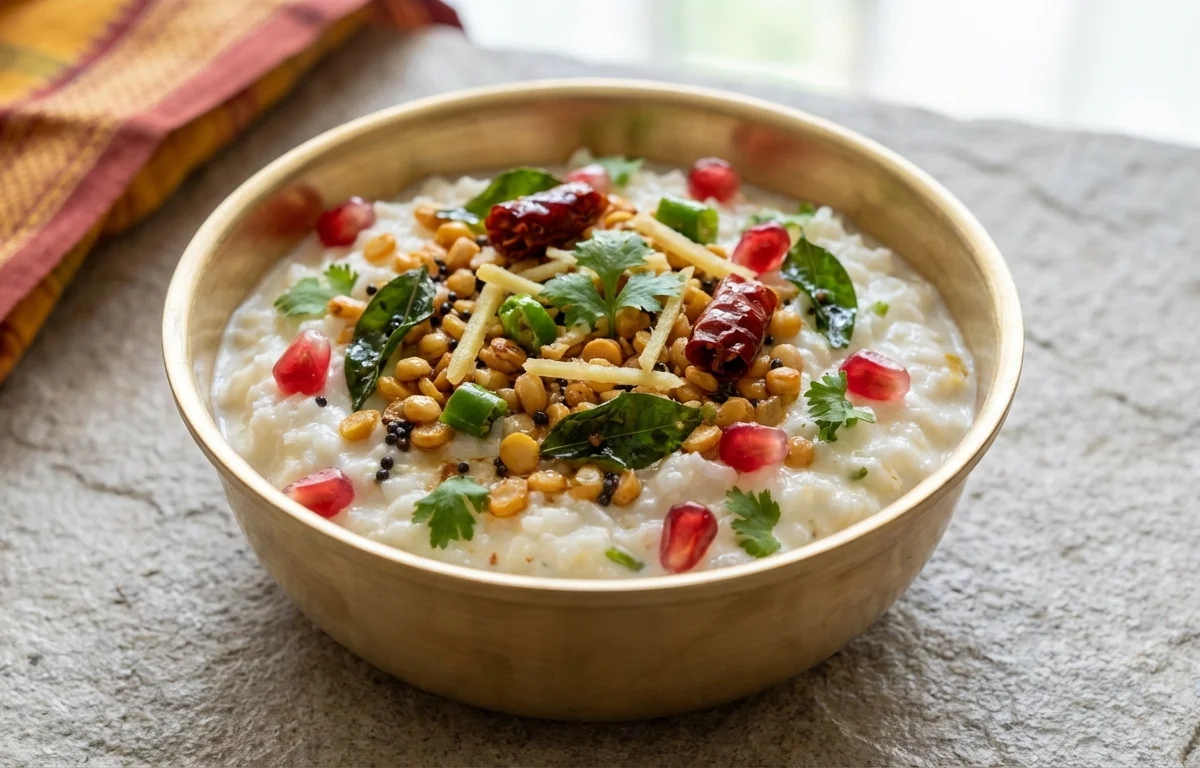
Cool, creamy curd rice from South India made with soft-cooked rice, yogurt, milk, and a simple tempering of mustard seeds, curry leaves, and ginger. It is soothing, lightly tangy, and especially comforting on warm days.
For 4 servings
- boil · ~20 min
Cook the rice until very soft.
Add rice and water to a pot and cook until the grains are soft and slightly mushy. Lightly mash the hot rice with the back of a spoon, then let it cool until just warm.
TIPSoft rice gives daddojanam its creamy texture, so use a little extra water and do not keep the grains separate. - mix · ~3 min
Mix the rice with milk, yogurt, and salt.
Add warm milk to the slightly cooled rice and mix well. Stir in yogurt and salt until smooth and creamy.
- temper · ~2 min
Make the tempering.
1.Heat oil in a small pan over medium heat.2.Add mustard seeds and let them splutter.3.Add urad dal and chana dal; cook until lightly golden.4.Add ginger, green chili, curry leaves, and asafoetida; sauté for 20 to 30 seconds.TIPKeep the heat moderate so the dals turn golden without burning and the curry leaves stay fragrant. - assemble · ~1 min
Pour the tempering over the curd rice.
Add the hot tempering to the rice mixture and stir well so the flavors spread evenly through the dish.
- garnish
Garnish with coriander leaves and pomegranate.
- serve
Serve slightly chilled or at room temperature.
What to keep in mind.
7 tips from the recipe — small details that make a real difference to the final dish.
- 1Let the rice cool to just warm before adding yogurt, or the curd can split and turn overly sour.
- 2Mash the rice while it is still hot so the grains break down easily into the classic creamy texture.
- 3If serving after a few hours, stir in a splash of milk before serving since curd rice thickens as it sits.
- 4Fry the urad dal and chana dal only until light golden; darker browning makes the tempering taste bitter.
- 5Add the hot tempering directly over the yogurt-rice mixture and mix right away so the mustard, ginger, and curry leaf flavor spreads evenly.
- 6For the best contrast, add pomegranate arils just before serving so they stay juicy and pop against the soft rice.
- 7If refrigerating leftovers, bring them closer to room temperature and loosen with milk before eating for a softer texture.
Adapt it for your goals.
No-chili
Skip the green chili for a gentler, soothing version that is closer to the comfort-food side of daddojanam.
veganVegan
Use unsweetened plant yogurt and plant milk for a dairy-free version while keeping the same creamy, cooling style.
temple styleTemple-style
Omit pomegranate and keep the seasoning simple for a more traditional, understated curd rice flavor.
lunchboxLunchbox
Add a little extra milk before packing so the rice stays soft and creamy by mealtime.
Why this is on our healthy list.
Cooling Fermented Dairy
Yogurt brings fermented dairy goodness and a soothing tang that makes this dish easygoing and comforting.
Gentle on the Stomach
Soft-cooked rice, milk, and yogurt create a mild, easy-to-eat combination often chosen when lighter meals feel best.
Digestive Spice Support
Ginger, curry leaves, and asafoetida add traditional seasoning ingredients that also make the dish feel more balanced.
Small Boost from Lentils and Herbs
The urad dal, chana dal, coriander, and pomegranate add texture along with extra plant nutrients and freshness.
Frequently asked questions
Curd rice naturally firms up as the rice absorbs the milk and yogurt. Stir in a little milk before serving to loosen it.