
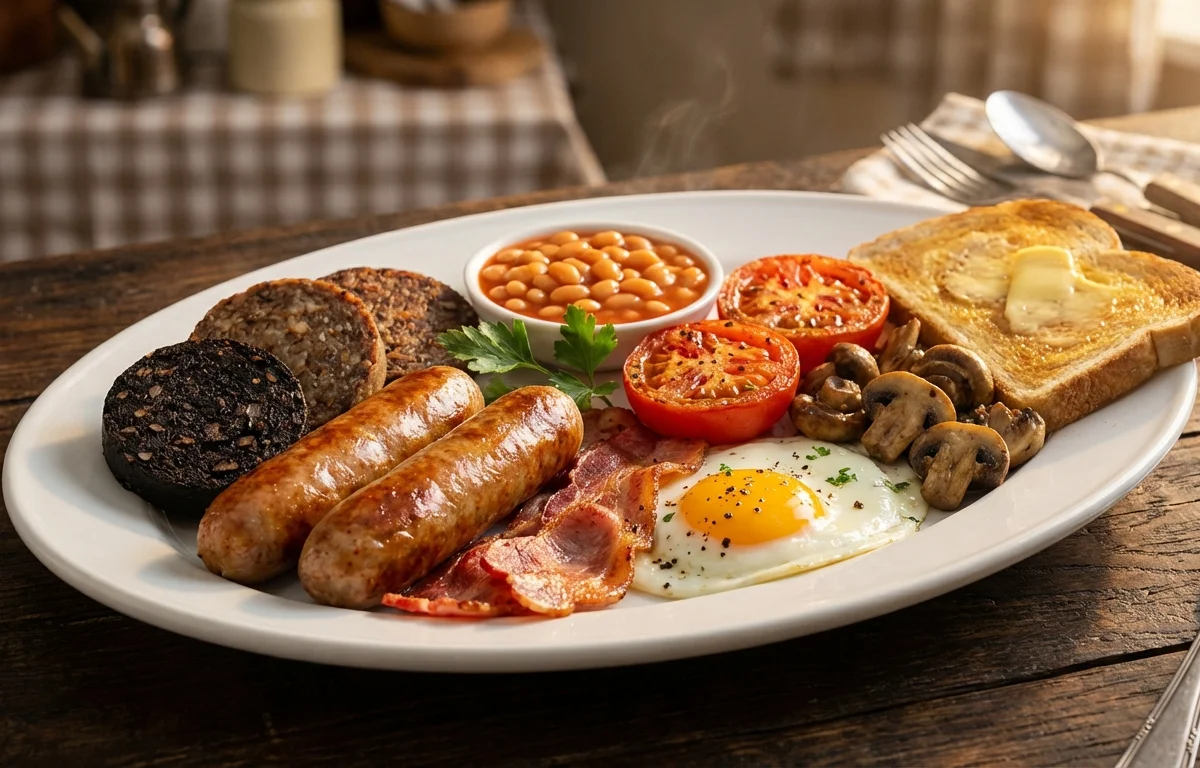
Full Irish Breakfast
A hearty, stick-to-your-ribs Irish fry-up featuring crispy bacon rashers, savory pork sausages, perfectly fried eggs, black and white pudding slices, grilled tomatoes, and classic soda bread. Every component is cooked to order and piled high on one glorious plate—the ultimate weekend feast.
For 4 servings
- prep
Preheat oven and set up warming tray.
Preheat the oven to 200°F (95°C). Place a baking sheet inside to keep cooked items warm as you go.
- boil
Warm the baked beans.
Empty baked beans into a small saucepan and warm over low heat, stirring occasionally. Keep at a gentle bubble while you cook everything else.
TIPLow and slow prevents the tomato sauce from catching and burning. - fry · ~8 min
Fry the bacon rashers.
1.Melt 1 tablespoon butter in a large cast-iron skillet over medium heat.2.Lay rashers in a single layer and fry 3–4 minutes per side until crispy at the edges and golden.3.Transfer to the baking sheet in the oven to keep warm. - fry · ~15 min
Cook the sausages.
1.Add sausages to the same skillet with the rendered bacon fat.2.Turn occasionally and cook 12-15 minutes until deeply browned all over and cooked through.3.Move sausages to the oven tray.TIPPrick the sausages once with a fork halfway through to release steam and prevent bursting. - fry · ~6 min
Fry the black and white pudding slices.
1.Add pudding slices to the skillet in a single layer.2.Fry 2–3 minutes per side until the edges are crisp and the centers are heated through.3.Transfer to the warming tray.TIPHandle gently—pudding slices can crumble if turned too roughly. - fry · ~6 min
Sauté the mushrooms.
1.Add remaining butter to the skillet if the pan looks dry.2.Toss in mushrooms and season with salt and black pepper.3.Cook 5–6 minutes, stirring now and then, until golden and tender.TIPDon't crowd the pan—mushrooms release water and steam if packed too tightly. - grill · ~4 min
Grill the tomatoes.
1.Place tomato halves cut-side down in the skillet.2.Sear 2 minutes without moving, then flip carefully.3.Cook another 2 minutes until softened and lightly charred. - fry · ~4 min
Fry the eggs sunny side up.
1.In a separate non-stick pan, melt a small knob of butter over medium-low heat.2.Crack eggs gently into the pan, keeping them spaced apart.3.Fry 3–4 minutes until whites are set but yolks remain runny.TIPBaste the tops of the eggs with hot butter from the pan to set the whites without flipping. - grill · ~4 min
Toast the soda bread.
1.Spread a thin layer of butter on both sides of each soda bread slice.2.Place directly in the hot skillet and toast 1–2 minutes per side until golden and crisp.3.Slice each piece diagonally. - assemble
Plate the Full Irish Breakfast.
1.Arrange 2 rashers, 2 sausages, 1 slice each of black and white pudding, 1 egg, 1 tomato half, a spoonful of mushrooms, and a portion of beans on each plate.2.Add 2 triangles of grilled soda bread.3.Finish with a crack of black pepper and serve immediately.TIPWarm the plates in the oven for a minute so everything stays hot at the table.
What to keep in mind.
6 tips from the recipe — small details that make a real difference to the final dish.
- 1Cook components in the order given to maximize that skillet's rendered fat for flavor.
- 2If your skillet is small, fry sausages in batches to avoid overcrowding and ensure deep browning.
- 3For perfectly runny yolks, use room-temperature eggs and a low-medium heat for the eggs.
- 4White and black pudding slices are delicate; use a thin spatula to flip them gently.
- 5Warm your serving plates in the oven for at least 5 minutes so everything stays hot.
- 6Toast soda bread directly in the rendered fat left in the skillet for extra savory flavor.
Adapt it for your goals.
Vegetarian
Replace bacon, sausages, and puddings with vegetarian bacon, meat-free sausages, and store-bought veggie black/white pudding. Use plant-based butter for the eggs and toast to keep the fry-up hearty without the meat.
Low Carb / KetoLow-Carb / Keto
Skip the soda bread and baked beans. Serve extra eggs and mushrooms, or add a side of sautéed spinach to keep it filling while keeping carbs minimal and fat high.
Ulster FryUlster Fry
Add a second type of potato bread (e.g., potato farls or boxty) and a few slices of fried soda bread to this plate for the traditional Northern Irish variation.
Spicy KickSpicy Kick
Add a halved jalapeño or a drizzle of sriracha to the baked beans, and season the mushrooms with a pinch of cayenne or red pepper flakes for a mildly spicy twist.
Why this is on our healthy list.
High in Protein
With eggs, pork sausages, bacon, and puddings, this meal provides a substantial amount of protein to keep you satisfied and energized through the morning.
Source of Iron
Black pudding is traditionally rich in iron from the blood content, making it a notable source of this essential mineral for healthy red blood cells.
Contains Fiber
The baked beans and the oatmeal in white pudding provide dietary fiber, which supports digestive health and helps maintain steady energy levels.
Frequently asked questions
It’s best fresh, but you can par-cook sausages and bacon, then reheat them in a hot skillet or oven while you fry the eggs and toast the bread just before serving.


