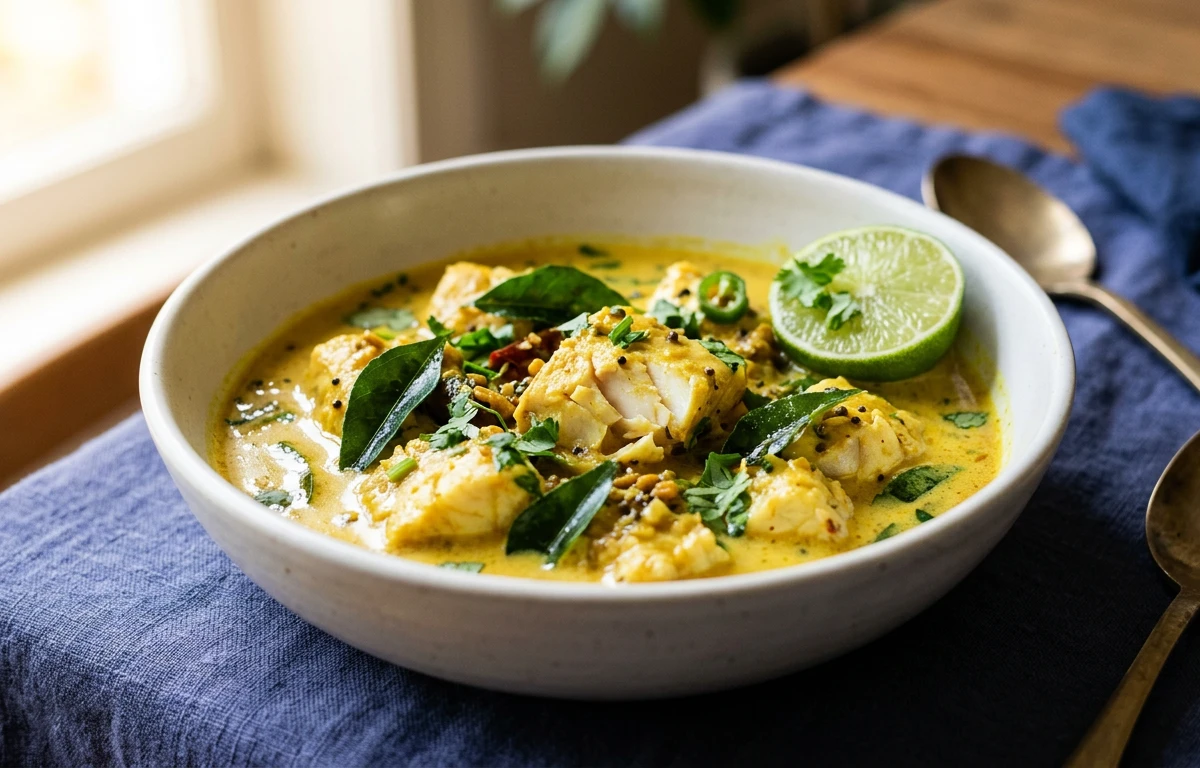
Gahori Manxo
A rustic Assamese pork curry where tender chunks of pork are slow-cooked with ginger, garlic, and aromatic spices. The meat absorbs the bold flavors of black pepper, bay leaf, and green chilies, resulting in a hearty, minimally spiced dish that's deeply satisfying with rice.
For 4 servings
- prep · ~10 min
Marinate the pork.
In a bowl, mix the pork pieces with turmeric powder and half the crushed garlic. Let it sit for 10 minutes.
- saute · ~8 min
Sauté the onions and aromatics.
1.Heat mustard oil in a pressure cooker over medium heat until it smokes lightly.2.Add bay leaves and let them sizzle for 10 seconds.3.Add sliced onions and sauté until golden brown (6-7 minutes).4.Add grated ginger, remaining garlic, and slit green chilies. Sauté for 1 minute until fragrant.TIPSauté the onions well until they catch color — it builds the curry's base flavor. - saute · ~7 min
Brown the marinated pork.
Add the marinated pork pieces to the cooker. Stir well and cook on medium-high heat for 5-7 minutes, turning occasionally, until the meat is lightly browned and sealed on all sides.
- pressure cook · ~20 min
Pressure cook the pork.
1.Add black pepper, salt, and water to the cooker. Stir to combine.2.Close the lid and cook on medium heat for 3-4 whistles.3.Let the pressure release naturally. Open the lid.TIPNatural release keeps the meat tender and prevents it from turning dry. - simmer · ~7 min
Simmer until the gravy thickens.
If there's too much liquid, cook uncovered on low heat for another 5-7 minutes, stirring occasionally, until the gravy reduces and coats the pork pieces well.
- garnish
Garnish with fresh coriander leaves and serve hot.
What to keep in mind.
7 tips from the recipe — small details that make a real difference to the final dish.
- 1Always use pork with a good amount of fat for moist, tender meat.
- 2Let the mustard oil smoke lightly before adding aromatics to tame its pungency.
- 3Sauté the onions to a deep golden brown for a richer, sweeter base.
- 4Marinate the pork with turmeric and garlic for at least 10 minutes to boost flavor.
- 5Allow the pressure to release naturally to keep the pork juicy and tender.
- 6Simmer the curry after pressure cooking to thicken the gravy and concentrate the taste.
- 7Garnish with fresh coriander just before serving for a bright, herbal finish.
Adapt it for your goals.
High-protein
Replace half the pork with cubed chicken breast for a lighter, higher-protein version that still absorbs the aromatic base well.
low oilLow-oil
Reduce mustard oil to 1 tablespoon and sear the pork in a non-stick pan for a lower-fat option without losing too much flavor.
spicySpicy
Double the green chilies and add a teaspoon of red chili flakes for those who want a fiery kick.
jainJain
Substitute pork with firm tofu or paneer and skip the garlic and onion — use asafoetida (hing) and extra ginger to maintain the dish's soul.
Why this is on our healthy list.
Rich in Complete Protein
Pork provides all essential amino acids, supporting muscle repair and growth.
Anti-Inflammatory Spices
Turmeric and ginger contain natural compounds that may help reduce inflammation.
Good Source of B Vitamins
Pork is rich in B vitamins, including B12, which support energy metabolism and nerve function.
Low in Carbohydrates
This curry is naturally low in carbs, making it suitable for low-carb diets when served without rice.
Frequently asked questions
Yes, but you'll need to simmer the pork on low heat for 1.5–2 hours, adding more water as needed, until fork-tender.