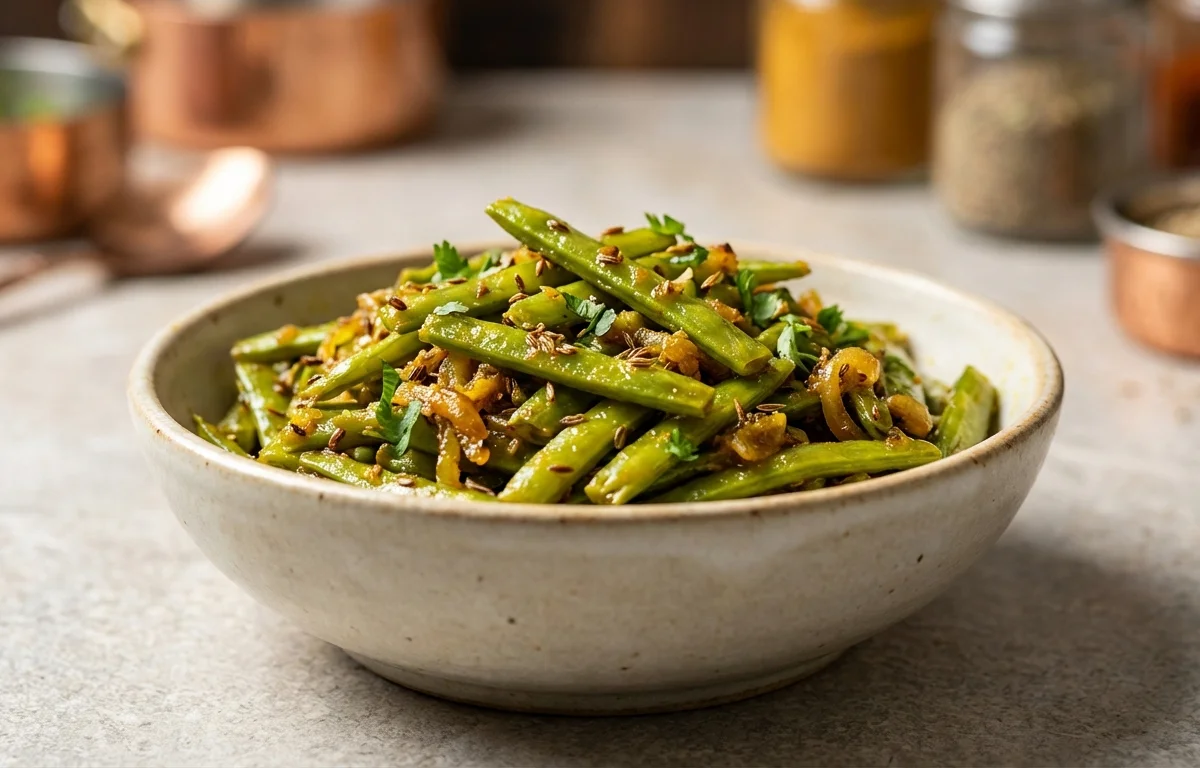
Gawar Phali ki Sabzi
A simple home-style cluster beans sabzi with onions, tomatoes, and everyday spices. It cooks down into a lightly spiced, semi-dry dish that pairs really well with roti, dal, and plain rice.
For 4 servings
- prep · ~10 min
Prep the gawar phali.
1.Wash the gawar phali well.2.Trim both ends and pull away any tough strings if needed.3.Cut the beans into small even pieces so they cook quickly. - saute · ~8 min
Cook the base.
1.Heat oil in a kadai over medium heat.2.Add cumin seeds and let them sizzle for 20 to 30 seconds.3.Add onion, green chili, and ginger, then cook until the onion turns soft and light golden.4.Add tomato and cook until it softens and looks pulpy.TIPKeep the heat medium so the cumin and ginger do not burn. - saute · ~3 min
Add the spices and beans.
Add turmeric powder, red chili powder, coriander powder, and salt. Mix well, then add the chopped gawar phali and stir for 2 to 3 minutes so the beans get coated with the मसाला.
- simmer · ~12 min
Cover and cook until tender.
Pour in water, mix once, then cover and cook on low heat until the gawar phali is tender but not mushy. Stir once or twice in between to prevent sticking.
TIPIf the pan dries out before the beans are done, sprinkle in 1 to 2 tablespoons more water. - garnish · ~1 min
Finish with amchur and coriander leaves.
Remove the lid, cook off any extra moisture, then add amchur powder and coriander leaves. Mix gently and cook for 1 more minute.
- serve
Serve hot.
Serve the gawar phali ki sabzi hot with roti, plain rice, or as part of a simple Indian meal.
What to keep in mind.
8 tips from the recipe — small details that make a real difference to the final dish.
- 1Trim any visible strings from the gawar phali; older beans can stay fibrous if you skip this.
- 2Cut the beans into small, even pieces so they soften at the same rate and absorb the masala well.
- 3Cook the onions only to light golden, not dark brown, so the sabzi stays home-style and not overly sweet.
- 4After adding the beans, saute for a couple of minutes before covering to reduce their raw, slightly bitter edge.
- 5Keep the water minimal and cook covered on low heat for a semi-dry sabzi, not a gravy.
- 6Add amchur only at the end; cooking it too long can dull its bright tang.
- 7The sabzi is done when the beans are tender when pressed but still hold their shape without turning mushy.
- 8This tastes even better after 15 to 20 minutes of rest, when the gawar phali absorbs the onion-tomato masala.
Adapt it for your goals.
Aloo-gawar
Add small diced potatoes with the beans for a heartier sabzi that pairs especially well with roti.
garlic flavoredGarlic-flavored
Saute a few chopped garlic cloves with the ginger for a deeper, more robust everyday North Indian flavor.
low oilLow-oil
Reduce the oil slightly and use a splash of water while sauteing the onion-tomato base if you want a lighter version.
peanut stylePeanut-style
Add a spoon of coarsely crushed roasted peanuts at the end for nutty texture and a slightly richer finish.
Why this is on our healthy list.
Fiber-Rich Vegetable Dish
Cluster beans and onions make this sabzi a good everyday choice for a filling meal with wholesome roughage.
Plant-Based and Satisfying
Made entirely from vegetables, spices, and oil, this sabzi fits well into simple vegetarian home meals.
Digestive Spice Support
Ginger, cumin, and coriander are classic Indian cooking spices that add flavor while making the dish feel lighter to eat.
Frequently asked questions
Cluster beans naturally have a slight bitterness. Proper trimming, a brief saute, and the final amchur help balance that flavor well.



.webp)